
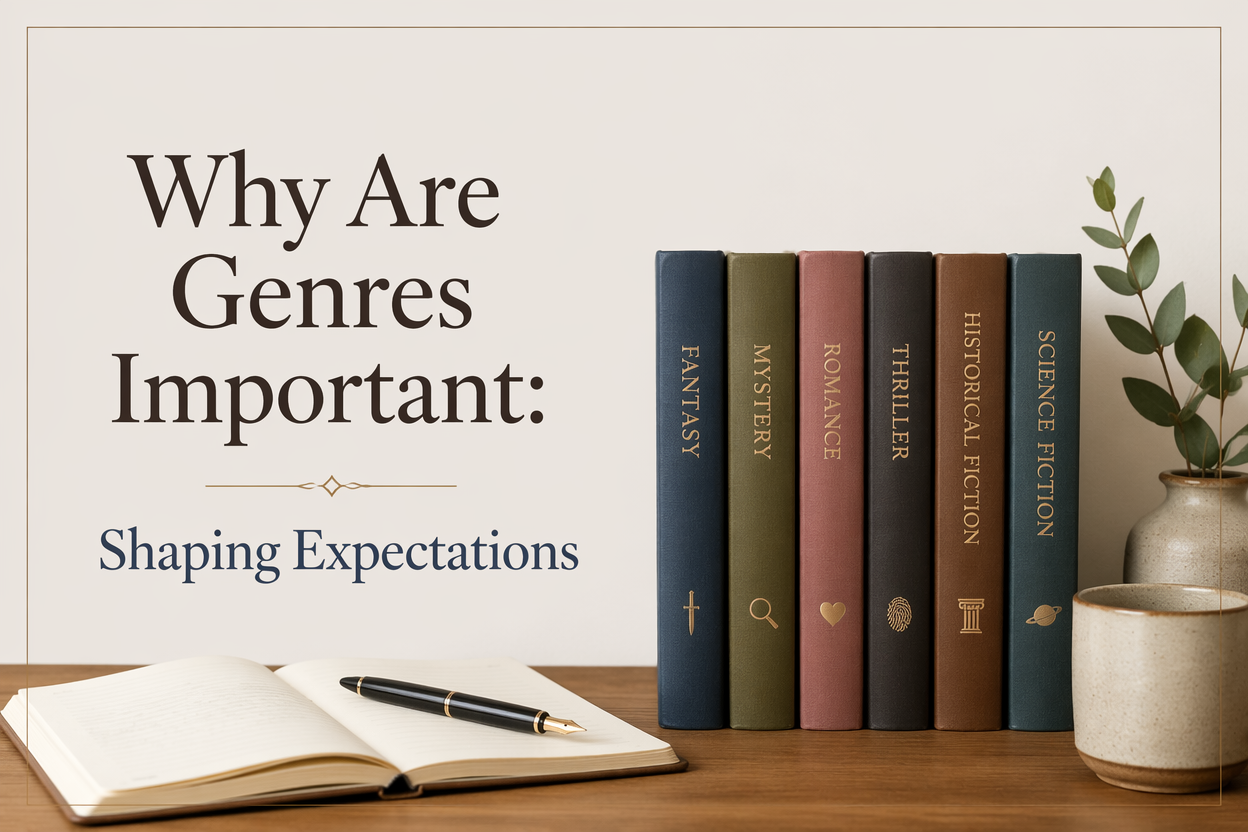
When you ask, “Why are genres important?” the real answer is that genre shapes expectations so hard that it determines your cover, your blurb, your pacing, your tropes, your sales page categories, and how Amazon decides who to show your book to. They are the promise you make to a reader before they ever meet your first sentence, and breaking that promise costs you more than a bad review.
I have watched talented authors bleed momentum because they treated genre like a costume you put on after the draft. Readers do not shop that way. They shop for a specific emotional experience, and genre is the label that tells them, “Yes, this is the kind of ride you came for.”
If you want your book to sell and your series to grow, you need to choose your genre with your reader in mind, then write and package the book so it pays off the expectations you invited. That is the work. It is also the shortcut, because it keeps you from guessing.
Table of Contents
Genre As A Contract With The Reader
A genre label is not a taxonomy exercise. It is a behavioral cue that tells a stranger how to read you, what to hope for, and what to forgive. When you call a book a cozy mystery, the reader expects an amateur sleuth, a puzzle-forward plot, low gore, and an ending that restores order. When you call it horror, they expect dread, threat, and a willingness to go places a cozy will not.
That expectation effect is not just writer lore. In marketing research, expectations strongly shape satisfaction because people judge an experience against the standard they were primed to anticipate. A classic demonstration comes from Stanford and Yale researchers who found that the same wine was rated as tasting better when participants believed it cost more, and their brains showed greater pleasure responses as well. You can read the study in PNAS. Your genre functions the same way as that price cue. It frames the reading experience before page one.
So if your book is marketed as epic fantasy and it reads like a philosophical literary fable with a soft plot, some readers will call it “slow” or “nothing happens,” even if the prose is strong. The complaint is often a mismatch problem, not a craft problem.
Where Authors Break The Contract
The most common break is tonal whiplash. For example, a rom-com cover and blurb primes banter and emotional safety, then the manuscript delivers grim trauma and a bittersweet separation ending. You might have written an honest book, but you sold a different book.
Another break is payoff failure. For example, thriller readers accept a lot of coincidence early as long as the ending clicks with competence and consequence. If you close with “it was all a dream” energy, the reader feels cheated because the genre taught them to expect a solvable chain of cause and effect.
What You Should Do Before You Draft Another Chapter
Write a one-sentence “reader promise” that names the experience, not the plot. For example, “A closed-circle mystery in a small town with a clever amateur sleuth, minimal violence, and a satisfying reveal.” Tape that above your desk. When a scene idea shows up, you can test it against the promise.

Genres As Shopping Aisles In A Crowded Store
Readers do not wander a bookstore or Amazon the way authors browse craft books. They walk straight to the aisle that matches the itch they want scratched. Online, those aisles are categories, also-boughts, newsletter promos, TikTok microtrends, Goodreads shelves, and the “Books like this” rails.
On Amazon, category placement is not cosmetic. It affects browse paths, bestseller lists, and the competitive set you are measured against. Amazon spells this out in its own documentation around categories and browse nodes, even if the system changes over time. If you have not read it recently, start with Amazon KDP guidance on categories and treat it like a storefront map.
This is why a “genre-blend” can be a gift or a trap. A clear primary genre with a secondary flavor is easy to shelve. A book that is half space opera, half cozy mystery, half self-help manifesto is impossible to place, and that placement confusion shows up as low conversion even when your ads are getting clicks.
How This Shows Up In Your Sales Page
If your look-inside starts with a prologue in archaic diction and your cover says contemporary romance, your conversion rate drops because the aisle cue and the product do not match. If your blurb reads like literary back-cover copy and your category is “Military Space Opera,” the same thing happens. Genre is a consistency problem long before it is an originality problem.
A Practical Category Check
Pull up the top 20 books in the exact Amazon category you want. Open five of them. Compare three things: the cover signals, the first 300 words, and the blurb structure. If your book cannot sit beside them without looking like it wandered into the wrong party, you have a packaging issue, a manuscript issue, or both. Fix the mismatch before you spend money on ads.
Genre Expectations Inside The Manuscript
Genre is not just marketing. It is craft. Each genre has a set of reader-facing competencies, and your job is to deliver them with your voice.
For example, romance readers track emotional beats and relationship progression. Mystery readers track clues, fairness, and the logic of revelation. Fantasy readers track world rules and the cost of magic. Thriller readers track the escalation of danger and time pressure. When authors miss, it is often because they are writing their favorite parts and skipping the genre’s required parts.
Tropes As Reader Navigation
Tropes are not clichés by default. They are signposts. For example, a “found family” arc tells the reader to watch for belonging and loyalty. “Enemies to lovers” tells the reader to watch for chemistry under conflict and a credible emotional turn. You can twist a trope, but you cannot ignore the function of the trope and expect the same satisfaction.
I like to treat tropes as containers and originality as what you pour into them. The container helps the reader recognize the shape of the experience, and your specifics make it feel fresh.
Pacing And Scene Selection
Genre also sets your pace budget. For example, a thriller that spends 60 pages on a languid travelogue is not “atmospheric” to the reader who came for pursuit and pressure. A literary family saga that moves like a shotgun chase sequence can feel thin because it never lets the reader sit with consequence.
If you struggle with pacing, I recommend you label each scene by its genre job. You can label them as “clue,” “red herring,” “relationship turning point,” “world rule demonstration,” “setback,” or “promise payoff.” If you cannot name the job, that scene is probably you entertaining yourself, which is fun until you publish it.
Payoffs And Endings
Endings are where genre debt comes due. For example, mystery expects a solution that respects the clues. Romance expects a committed ending or at least a clearly committed now. Epic fantasy can end on a larger-series promise, but each book still needs a satisfying arc inside the volume.
If you want to bend an ending, do it with upfront signaling. You can write what you want. You have to tell the truth about it early.
Genre Signals In Covers, Titles, And Blurbs
Your cover is doing its most important work as a thumbnail. Genre recognition needs to happen in about three seconds, and that is not a poetic number. It is how people scroll. If your cover reads as “general fiction” and you are competing in a specific category like “cozy fantasy” or “hard science fiction,” you are paying a tax in every ad impression.
For a grounded sense of how much readers respond to visual and contextual cues, look at research on the speed at which first impressions form. The exact timing varies by study and task, but the general finding that people form rapid impressions from visual information is well supported in social psychology. A frequently cited paper is “First Impressions: Making Up Your Mind After a 100-ms Exposure to a Face”. Your cover is not a face, but the browsing behavior is similar. Readers decide fast and then rationalize.
At Adazing, I care about this because tools only help if you use them with genre clarity. A cover maker can produce a clean design in minutes, but if you pick typography and imagery that signal the wrong shelf, the design is working against you. The same goes for name generators and word generators. They are excellent for rapid iteration, but your choices still need to match reader expectation for your category.
Cover Cues That Do Real Work
Romance often signals through couples, intimate body language, warm palettes, and bold author branding for series. Thrillers tend to signal through high contrast, motion, danger motifs, then shorter, punchier title typography. Cozy mysteries often rely on illustrated or lighter photographic treatments, inviting color, and clear series branding.
You do not need to copy a bestseller’s cover down to the last detail. You do need to look like you belong in the aisle. When authors refuse this because they want to be “different,” they usually mean they want readers to do extra work. Readers have other options.
Blurbs That Match Genre Reading Habits
A romance blurb typically highlights the two leads, the central conflict that keeps them apart, and the emotional hook. A thriller blurb usually leads with threat, stakes, and a question that implies acceleration. Meanwhile, a fantasy blurb needs to establish the world premise and the main character’s role in the conflict without drowning the reader in lore.
If your blurb reads like a synopsis, you are forcing the reader to process plot rather than desire. I prefer you write a blurb that makes the reader feel: dread, swoon, wonder, righteous anger, or curiosity. Then you back it up with a look-inside that delivers.
Using Genre To Market Without Losing Your Voice
Some authors hear “write to genre” and picture paint-by-numbers storytelling. That fear is understandable. The fix is simple. You anchor to genre expectations, then you differentiate with voice, specificity, and a fresh angle on familiar beats.
Marketing becomes easier when your genre is clear because everything lines up. For example, your comp titles make sense. Your Amazon keywords are easier to choose. Your ads can target authors and books that share an audience. Your newsletter swaps and promo sites know where to place you.
There is also a real business reason to respect genres. Series and read-through tend to perform better when each book reliably delivers the same kind of satisfaction. Written Word Media has repeatedly reported on the importance of series to indie income and reader behavior, and their survey work is a useful gut check when you are planning your catalog. Start with Written Word Media’s Author Survey reports and look at what strong earners have in common.
Picking A Primary Genre When You Blend
If your book truly blends genres, pick the one your ideal reader uses to shop, then let the secondary element show up as flavor in your blurb and cover details. For example, a “fantasy mystery” and a “mystery with light fantasy” are different products in the reader’s head. Decide which audience you want most, because you will lose the other one if you try to speak both dialects equally.
Ad Copy And Audience Targeting
When you write ads, the genre is not a label you tack on at the end. It is the first sentence of the pitch. For example, “A locked-room mystery on a generation ship” tells the right reader to stop scrolling. Meanwhile, “A story of love, loss, and destiny” tells nobody anything and attracts clicks from people who will not buy.
If you build your promo materials using Adazing tools, treat each asset as a genre-signal check. Your cover, your series logo, your character name choices, and even your tagline should all point at the same shelf. Consistency sells. Confusion drains money.
FAQs for Why Are Genres Important: Shaping Expectations
Can I invent my own genre label?
You can, but it rarely helps discovery. Readers search and browse using labels they already know, like “cozy mystery” or “grimdark fantasy.” I recommend you use established genres for categories and metadata, then use your custom phrase as a hook in your blurb or subtitle where it adds flavor without breaking search behavior.
What if my book does not fit neatly into one genre?
Pick the genre that matches the core reading experience, then commit to that audience’s expectations for pacing and payoff. After that, layer in the secondary element in a way that supports the primary promise. If you cannot decide, look at your ending. The ending usually reveals the true genre by showing what you think the story is really about.
Do tropes hurt originality?
Tropes do not hurt originality; it’s vague writing that does. A familiar structure with specific characters, lived-in settings, and clean motivations feels fresh because the reader is not reading the trope; they are reading your execution. If you want to subvert a trope, signal early so the reader knows what kind of experience they bought.
Genre Clarity Pays You Back
Genre is the fastest way to reduce reader uncertainty, and uncertainty is the enemy of the click and the buy. When you align the genre promise, the manuscript delivery, and the packaging signals, you stop fighting your own book. If you want a practical starting point, audit your cover, blurb, opening pages, and Amazon categories against the top books in your target shelf, then revise until a stranger can tell what they are getting in three seconds and feel satisfied after three hundred pages.
