
A writing enhancer is only worth your attention if it gets you to cleaner pages without sanding off your voice. I care less about fancy features and more about whether the tool helps you draft, revise, and publish faster while keeping your choices intact.
I have watched too many authors collect tools the way they collect half-finished drafts, hoping the next one will fix the work. Tools do not fix the work. They can, however, reduce the friction that keeps you from doing the work, and that is where a good writing enhancer earns its spot in your process.
You do not need a robot co-author. You need a dependable workflow that catches the boring mistakes, highlights the sentences that are failing, and frees your brain for story, argument, and emotion. That is the standard I use when I recommend any tool, including the writing tools I build at Adazing.
Table of Contents
What A Writing Enhancer Should Actually Do For You
Your manuscript usually suffers from three problems that feel like one problem. The line-level prose is uneven, the structure is fuzzy in places, and you are too close to the draft to see either clearly. A writing enhancer that matters targets those issues directly, rather than spraying random synonyms over the page.
The best outcome is not “prettier” writing. It is writing that reads the way you intended on the first pass, with fewer unintended speed bumps for the reader. If you write genre fiction, those speed bumps show up as confusion, impatience, and skim-reading. If you write nonfiction, they show up as a loss of trust and a drop-off.
Friction Removal, Not Magic
I want a tool to reduce decision fatigue. If your editor brain wakes up too early, you stall. If it never wakes up, you publish sloppy pages. The right writing enhancer lets you draft with momentum and then revise with precision, without turning every sentence into a committee meeting.
Pick one stage where you consistently slow down. Maybe it is opening paragraphs, transitions, dialogue tags, or trimming repetition. Use your enhancer only for that stage for two weeks. If it does not change your output or your confidence, it is not the right tool for you.
Signal Over Noise
A tool that flags everything trains you to ignore it. I prefer feedback that is specific enough to act on. “Passive voice” is often noise. “Your subject is missing for eleven words, and the reader has to backtrack” is a signal.
Turn off or ignore any report that does not point to a reader-facing problem. Focus on clarity, rhythm, and consistency first. Once those are stable, you can chase style preferences.
Consistency Across A Book, Not A Sentence
Books die by a thousand tiny inconsistencies. Spelling variants, character-name drift, timeline slop, and formatting wobble are small individually and cumulative together. A writing enhancer should help you spot patterns across chapters because readers experience a book as a whole.
Keep a simple “book bible” document for names, spellings, terms, and rules. Run your enhancer, then update the bible when you find a recurring issue. The bible becomes your long-term fix, not the tool’s suggestions.

Where Writing Enhancers Help Most In Real Drafting
The highest ROI is not in rewriting your voice. It is in catching the predictable problems that sneak in when you are drafting at speed, revising late at night, or patching chapters during a deadline sprint. Most of these issues are mechanical, rather than artistic, and you should treat them that way.
Clarity And Reader Orientation
When a scene feels “off,” it is often because the reader cannot quickly answer three questions: where am I, who is here, and what is happening right now. A writing enhancer that highlights vague references, missing subjects, or overloaded sentences can reveal where the reader loses the thread.
Search your draft for “it,” “this,” “that,” and “there” and look at each sentence. If the referent is not obvious, replace it with a concrete noun. This habit does more for readability than most style advice.
Rhythm, Pace, And Sentence Variety
Readers do not consciously count sentence lengths, but they feel the effect. If every sentence lands at roughly the same cadence, your prose gets flat. If your sentences all sprawl, readers get tired. If they are all short, it reads like stage directions.
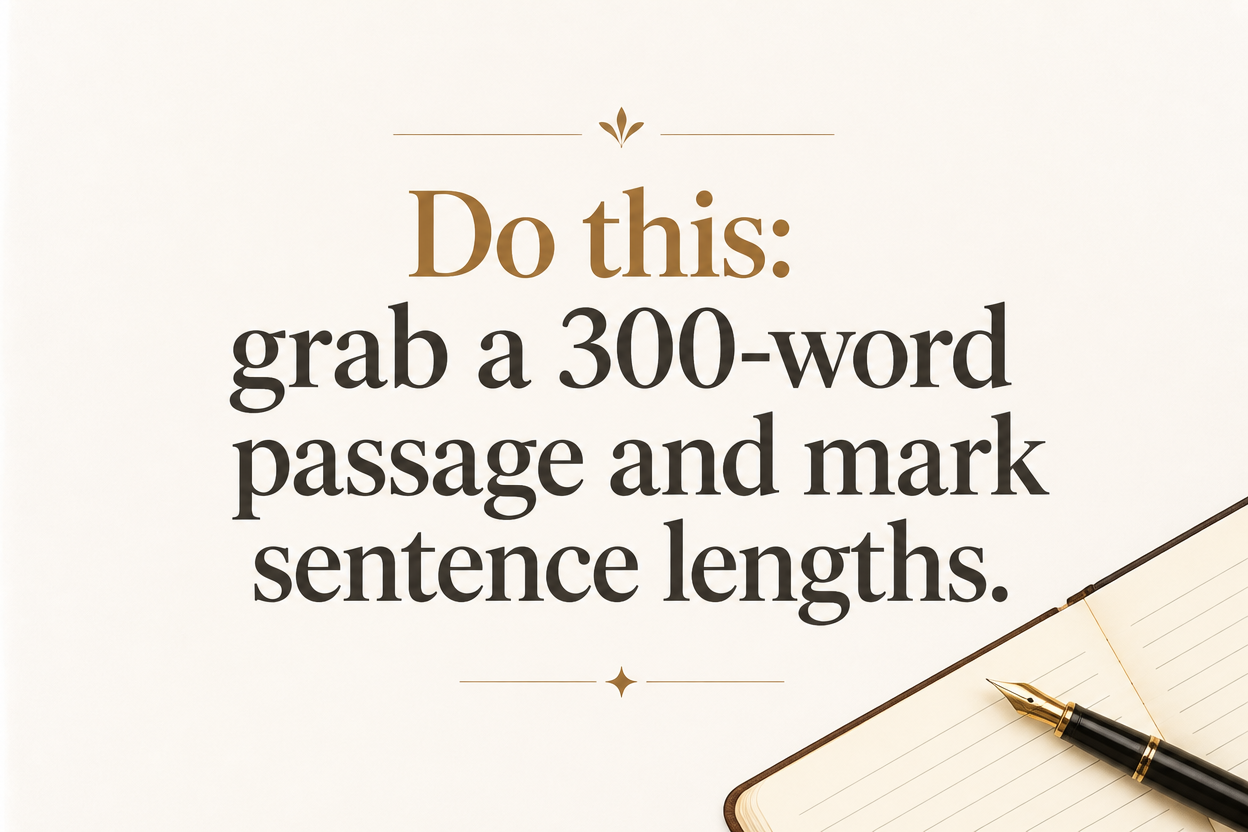
Grab a 300-word passage and mark sentence lengths. If more than half fall within a narrow band, revise one out of every three sentences by either combining for flow or cutting for punch. Your goal is intentional variation.
Repetition You Cannot See Anymore
You have favorite words, favorite sentence shapes, and favorite emotional beats. Every writer does. The problem is that you stop noticing them. A decent enhancer can surface repeated phrases and overused modifiers so you can decide what stays as a signature and what goes as clutter.
Create a “banned list” for each book. Mine often includes pet intensifiers and filler transitions. When the tool flags them, I do not auto-delete. I ask whether the word is doing real work. If it is not, it leaves.
The Trap: When A Writing Enhancer Starts Writing For You
This is where authors get burned. A tool that rewrites too aggressively will produce clean, bland prose that reads as if it came from nowhere. It will also teach you to accept suggestions you did not choose, which is a fast route to a voice you do not recognize.
I am not anti-AI. I am anti-outsourcing taste. Your voice is your competitive advantage, especially as the market gets noisier. If your tool cannot respect that, you should limit it to mechanical help and keep the creative decisions in your hands.
Style Homogenization
Genre readers do not want generic. Romance readers want emotional specificity. Thriller readers want momentum and clean causality. Fantasy readers want controlled density. A writing enhancer trained toward “neutral professional” can sand down those edges.
Choose two pages that represent your voice at its best. Use them as your internal benchmark. If the tool’s rewrite removes your intentional quirks, do not accept it. Use the suggestion as a diagnostic, then revise in your own words.
False Confidence From “Correct” Sentences
A sentence can be grammatically fine and still be wrong for the reader. A tool cannot know your subtext, your character’s agenda, or the pacing you are building toward. It can only guess, and sometimes its guesses sound plausible enough to trick you.
Read any accepted rewrite out loud. If you would not say it that way, your narrator would not either. Put it back and fix the underlying issue yourself.
Over-Revision And Lost Draft Energy
There is a point where revision stops improving a book and starts draining it. You can polish the life out of a chapter by chasing micro-edits too early. Draft energy matters, and readers feel it.
Separate drafting and polishing by calendar, not mood. Draft first, then run your enhancer on a complete chapter or complete section. Avoid sentence-level tinkering mid-scene unless you are genuinely stuck.
A Practical Workflow I Trust With Real Deadlines
If you want a writing enhancer to pay for itself, you need a repeatable process. Tools shine when you give them a job. They disappoint when you ask them to be your editor, your coach, and your taste all at once.
I like a three-pass approach because it matches how readers experience a book. They need to understand it, feel it, and trust it. Each pass serves one of those needs.
Pass One: Draft Clean Enough To Keep Momentum
During drafting, I care about continuity and obvious clarity problems. I do not care about line-perfect prose. If you stop every paragraph to polish, you slow the only part of the process that cannot be faked, which is generating raw material.
Set your tool to light-touch checks. Catch obvious typos, doubled words, and glaring consistency issues. Leave style rewrites for later.
Pass Two: Structural Revision With Targeted Prompts
Structure is where most books win or lose. A writing enhancer can help by prompting you to identify missing setup, weak transitions, and scenes that do not turn. If you write nonfiction, the structural version of this is argument flow, reader objections, and “so what” clarity.
After you finish a chapter, write a one-sentence purpose statement for it. If you cannot, the chapter is probably doing too much or nothing at all. Then use your tool to scan for repetitive beats and slow paragraphs that do not change the situation.
Pass Three: Line Edit With A Voice Checklist
This is where you chase rhythm, precision, and micro-clarity. You can let a tool surface candidates for revision, but you still decide. I keep a short checklist that reflects the voice I want for that book.
Build a five-item voice checklist, then apply it consistently.
Examples: “Verbs over adjectives,” “concrete nouns,” “one image per paragraph max,” “dialogue tags invisible,” or “no vague referents.” Your enhancer becomes a spotlight for the checklist, not a substitute for it.
Choosing A Writing Enhancer That Matches Your Publishing Goals
The right tool depends on what you publish and how you publish it. A rapid-release romance author needs a different setup than a literary novelist who edits for a year. A nonfiction author building a course funnel cares about clarity and authority because the book is a trust object.
I build tools at Adazing because I want authors to have practical software that respects how publishing works in the real world. A writing enhancer belongs in the same toolbox as your cover design, blurb writing, and promotion systems. It is part of the pipeline, not a separate hobby.
For Indie Authors On Amazon KDP
Speed matters, but reputation matters more. One messy book can tank your read-through because readers will not risk book two. Your writing enhancer should help you publish clean text reliably, especially across a series where consistency compounds.
Treat your first 10 percent as sacred. Run your enhancer on the opening chapters more aggressively than the rest, because that is where readers decide whether to keep going.
For Traditionally Published Authors
You have an editor, but you still want to hand in a manuscript that is structurally solid and line-clean enough that your editor can focus on the high-value work. A writing enhancer can reduce the “fixable noise” that slows edits and irritates everyone involved.
Before you submit, run a consistency sweep for names, timelines, and formatting. Those are the things that waste editorial time and create avoidable back-and-forth.
For Nonfiction Authors Building Authority
Your prose does not need to sparkle. It needs to be clear, specific, and credible. The best writing enhancer for you is the one that catches hedging, vague claims, and long sentences that bury the point.
Audit your chapter openings. If the first paragraph does not state what the reader will learn or do, rewrite it. Then use your tool to cut filler words and sharpen nouns and verbs.
FAQs for Writing Enhancer: Elevate Your Words with Ease
Will a writing enhancer ruin my voice?
It can, if you accept rewrites automatically or treat the tool as your taste. I recommend using it as a detector, not a ghostwriter. Let it point to unclear sentences, repetition, and mechanical issues, then revise in your own words so the cadence and attitude still sound like you.
When should I use a writing enhancer in the writing process?
I get the best results after I finish a full chapter, because context matters. During drafting, I keep checks light so I do not stall. During revision, I run deeper passes for clarity, consistency, and repetition. If you use it line by line while drafting, you will slow down and start second-guessing choices that were never problems.
What is the fastest way to see if a writing enhancer is helping?
Track two numbers for two weeks: how many words you draft per hour and how many revision passes a chapter needs before you feel comfortable sharing it with beta readers or an editor. If your drafting speed holds steady and your revision time drops, the tool is doing its job. If your speed drops and your confidence does not rise, the tool is creating work.
A Writing Enhancer Is A Tool, Not A Talent Substitute
Your best pages come from clear intent, strong craft, and enough repetition to get good. A writing enhancer can support that by catching the mistakes you are tired of catching and by highlighting the sentences that are not landing. Pick one job for the tool, measure whether it helps, and keep your voice in the driver’s seat.
