
A good novel earns trust fast, and when you ask what makes a good novel, I think you are really asking how to get a stranger to give you ten hours of their life and feel glad they did. Craft matters, but craft that fails to build reader confidence on page one turns into a slow leak. Your job is to build a story engine that keeps producing curiosity, emotion, and meaning, then present it in a way the market can recognize.
I look at “good” in three layers. First, the reading experience: Does the book keep its promises and pay off its questions? Second, the author’s control: Do choices feel deliberate, even when the prose is simple? Third, the publishing reality: Can the book be positioned, packaged, and recommended without an apology?
Here are the ingredients I see in novels that get finished, recommended, and reread. Every section ends with something you can do in your draft this week, because admiration does not revise chapters.
Table of Contents
Promise, Premise, And Reader Trust
Most manuscripts I edit do not fail because the author lacks talent. They fail because the book does not tell the reader what kind of ride they bought until page fifty, and by then the reader has returned it. Reader trust is a contract. You signal the experience, you deliver the experience, and you pay extra at the end.
Your premise is the cleanest statement of that contract. If you cannot describe your story in one sentence that implies conflict and change, your draft will wander, and your scenes will feel like they are searching for a reason to exist.
A Premise That Forces Choices
A premise works when it forces the protagonist into decisions that cost something.
- “A detective solves a murder” is a job description.
- “A detective must clear her son of murder when the evidence proves he did it” forces a moral and emotional corner.
The second one generates scenes on its own because every step has consequences.
Write your premise as: “When [inciting disruption] happens, [protagonist] must [pursue goal] or else [specific consequence], while [opposition] makes the cost rise.” If you cannot fill that in without vague words, your story is not locked yet.
Genre Signals On Page One
Genre is not a cage. It is a set of expectations that lets a reader relax. For example, romance readers want emotional focus and romantic progression. Thriller readers want danger and momentum. Fantasy readers want a sense of wonder plus understandable rules. Literary readers want depth, voice, and insight, yet they still want narrative traction.
If your opening scene could belong to five different genres, you are asking the reader to do extra labor before they trust you. You can blend genres, but you still need a dominant promise early.
A Question The Reader Keeps Carrying
Curiosity is your fuel. You get it by posing a question with a sharp edge. Who will win the tournament is fine. Who will the hero betray to win the tournament sticks. Give the reader a question that implies a hard choice, then keep it alive with partial answers and escalating stakes.
In the first 1,000 words of your draft, underline the sentence that communicates the story’s dominant promise. If you cannot find it, add it. Then write a one-line “reader question” at the end of each of your first three scenes, and revise until each one creates forward pull.

Characters With Desire, Contradiction, And Change
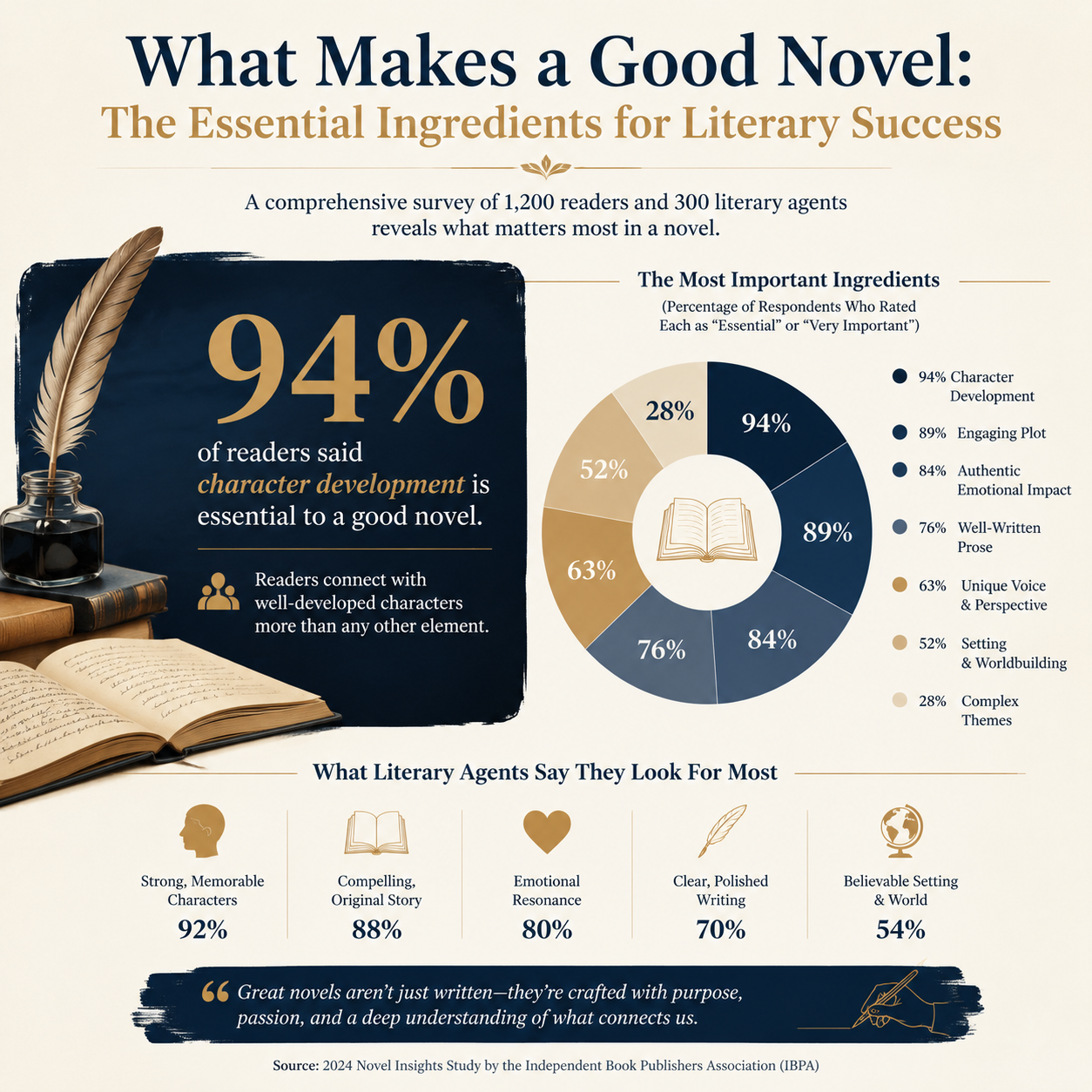
A compelling plot is a delivery system for character pressure. Readers forgive simple sentences and familiar tropes when they feel a living person on the page, someone who wants something badly and keeps tripping over their own inner wiring.
I build characters around three anchors: desire, contradiction, and change. Desire creates motion. Contradiction creates fascination. Change creates meaning.
Desire That Shows Up In Behavior
“She wants love” is a theme, not a scene tool. Translate desire into something measurable. For example, she wants her ex to regret leaving. She wants her sister’s respect. He wants to be seen as competent in front of a mentor. When the desire is specific, you can stage conflict around it.
Give your protagonist an external goal and an internal need. The external goal is what they chase. The internal need is what they avoid admitting, and this avoidance creates mistakes. That tension is where chapters get interesting.
Contradictions That Are Not Random
Contradiction is the fastest way to make a character feel real. A ruthless attorney who rescues stray cats is fine, but it is still a costume change unless it ties to a wound or value. The contradiction has to come from somewhere and influence choices under stress.
One of my favorite techniques is to write a “pressure response.” When your character feels threatened, do they attack, withdraw, perform, negotiate, or numb out? Build scenes that trigger that response, then force them to pay for it.
Change That Costs Something
Character arcs work when change hurts. The protagonist gives up a comforting lie, a relationship, a self-image, a protection strategy. If the change is free, it reads like a motivational quote. A reader wants to watch a human being choose a harder truth.
In your draft, write a one-sentence “lie” your protagonist believes at the start, and a one-sentence “truth” they must live by the end. Then list three scenes where clinging to the lie makes their situation worse, each time in a different way.
Conflict That Escalates And Pays Off
Conflict means something different from constant arguing. It is the gap between what your character wants and what reality allows, and the novel gets good when that gap keeps widening in ways that feel inevitable.
Escalation is a craft choice. If your middle sags, you are often repeating the same type of obstacle with a new coat of paint. Readers feel repetition even when the events look different.
Scene-Level Goal, Pressure, Outcome
I keep scenes honest with a simple check. The character enters with a goal, meets pressure, and leaves with a changed condition. If nothing changes, the scene is a conversation you enjoyed writing, not a story beat.
The change can be external, like losing a job. It can be internal, like realizing a friend lied. The important thing is that the next scene cannot happen the same way without this scene.
Escalation Through Consequences
Escalation works best when consequences stack. One choice creates a problem that limits the next choice. That is how you get the “I have to keep reading” feeling without gimmicks. You are building a chain, not tossing fireworks.
Watch out for “reset buttons.” If your protagonist makes a mess and then a new character arrives to smooth it over, you have traded drama for comfort. Comfort is fine in some genres, but it still needs to feel earned.
Payoffs That Feel Inevitable After They Surprise
Surprise is not randomness. It is a reveal that clicks. The reader should feel like they missed something obvious, and that only happens when you plant fair setup.
If you want a practical framework, I like the idea of “plants and payoffs” as a discipline. Identify what you are setting up, where you plant it, and how you cash it in later. The late screenwriter Blake Snyder popularized this concept in story terms that map well to novels, and it is useful even if you do not follow his beats rigidly. Save the Cat’s overview of setup-and-payoff thinking provides more information about this.
In your draft, pick your five biggest turning points. For each one, write two earlier setups, one obvious and one subtle. Then revise to place those setups in scenes that already matter, so they do not read like you are hiding Easter eggs.
Language And Style That Serve The Story
Great prose is control, not decoration. Your sentences should carry meaning, voice, and pacing, and they should change shape depending on what the scene needs. Shorter can sharpen tension. Longer can deepen reflection. Both can be dull if they are all you do.
The question I ask is simple. Does your language make the reader feel what the character feels at the moment it matters?
Clarity Before Cleverness
Clarity is not “basic.” It is professional. If a reader has to reread a sentence to understand who did what, you have broken the dream. Save complexity for ideas and emotions, not for syntax that hides the action.
A clean technique is to watch your subject-verb distance. When the subject appears, and the verb arrives three clauses later, the reader’s working memory has to hold too much. Tighten it, then add texture back in through specific sensory detail.
Specificity That Creates Authority
Specific nouns and verbs create conviction. “He walked” is neutral. “He limped” implies injury. “He prowled” implies intent. Your reader believes you when you pick the right word without apologizing for it.
If you want a measurable guide for readability, the Hemingway Editor‘s approach is imperfect. However, it can expose patterns you stop seeing in your own work. I like it for spotting long, tangled sentences you wrote while tired.
Voice That Stays Consistent Under Pressure
Voice is not a quirk list. It is what you notice and what you refuse to ignore. It shows up in metaphor choices, in how you frame power, in the emotional distance of the narration, and in what you summarize versus what you stage in scene.
One of the fastest voice tests is to take a tense scene and a quiet scene and see if they sound like the same storyteller. If the quiet scene turns into vague filler, you are relying on plot for energy rather than language and perspective.
Pull three pages from the middle of your draft. Highlight every abstract word, like “fear,” “sadness,” “hope,” “beautiful,” “weird.” Replace half of them with concrete observations your viewpoint character would actually notice, and you will feel the prose snap into focus.
Revision, Feedback, And The Market Reality
A good novel on the page is only half the job for an author who wants readers. The other half is revision discipline and market translation. Your story can be excellent and still be invisible if you package it wrong, describe it wrong, or aim it at the wrong shelf.
I take revision in passes because trying to fix everything at once creates expensive chaos. First I fix story structure and character decisions. Then, I fix scene craft. Then, I fix line-level prose. Only after that do I worry about launch assets like cover, blurb, and categories.
Feedback That Targets The Right Layer
Beta readers are useful when you ask them the right questions. “Did you like it?” gets you vibes. Ask where they wanted to skim, where they felt confused, which character they trusted, and what they thought the book was about by chapter three. Those answers point to craft problems you can actually address.
If you want a practical, widely used framework for reader response, the “MICE quotient” from Orson Scott Card helps diagnose what kind of story questions you opened and whether you closed them.
Packaging And Positioning Without Guesswork
Publishing is pattern recognition. Readers use cover style, title, subtitle if you have one, blurb tone, and your opening page sample to decide whether you belong in their world. Amazon shoppers decide fast, and your thumbnail has to do most of the work before your prose gets a chance.
At Adazing, I have watched authors save weeks by mocking up a cover early, even a rough one, because it forces you to face genre expectations. If your cover looks like literary fiction and your book reads like a high-concept thriller, your marketing has a leak you cannot edit away. Tools like the Adazing Book Cover Maker are useful here, and I treat them as a diagnostic rather than a replacement for good design judgment.
Tools That Support Drafting And Production
When you are drafting, speed matters, but only if it stays honest. I like writing tools that reduce friction and keep you moving through the messy middle. QuickWrite from Adazing can help some authors maintain daily momentum because it keeps the focus on output and organization, and momentum is the one thing you cannot fake late in the process.
On the production side, name generators and word generators are not gimmicks when you use them with intent. They are prompts that help you stop stalling on trivial decisions so you can spend your energy where it pays, like scenes, stakes, and voice.
Run a three-pass revision plan in your draft.
- Pass one: Write a one-page outline of what happens now and mark any chapter that does not change the situation.
- Pass two: Rewrite your weakest three scenes with clear goal, pressure, outcome.
- Pass three: Read your first ten pages as if you are a shopper and ask if the opening matches the cover, blurb, and category you plan to publish in.
FAQs for What Makes a Good Novel: The Essential Ingredients for Literary Success
How do I know if my novel has a strong enough premise?
A strong premise forces conflict without you needing to force it. If you can generate ten scene ideas by asking, “What would a smart person do next, and what would it cost them?” then you are in good shape. If every scene idea depends on coincidence, a new villain showing up, or a character acting out of character to move the plot, your premise probably needs sharper stakes or a tighter constraint.
Do I need to follow a specific structure like three-act or Save the Cat?
You need structure that creates escalation and payoff, and the label matters less than the effect. Three-act, four-act, eight-sequence, and beat sheets can all work as diagnostic tools. I use them to spot missing turns and thin middles, then I revise based on what the story demands rather than forcing every book into the same template.
What is the fastest way to improve my novel without rewriting everything?
Fix the moments where decisions happen. Strengthen your inciting incident so it disrupts the protagonist’s life in a way they cannot ignore. Then sharpen your scene outcomes so each one changes the situation, even slightly. You will feel the whole book tighten because readers track consequences more than they track your outline.
A Standard Worth Chasing
A good novel is not a pile of “good writing” stacked into chapters. It is a controlled experience in which the premise creates pressure, characters make costly choices, conflict escalates through consequences, and language keeps the reader inside the dream.
If you want one benchmark to hold yourself to, pick a favorite book in your genre and study its first 30 pages for promises and signals, then study its last 30 for payoffs. Then revise your draft until your opening makes the same kind of clear offer and your ending pays it with interest.
