
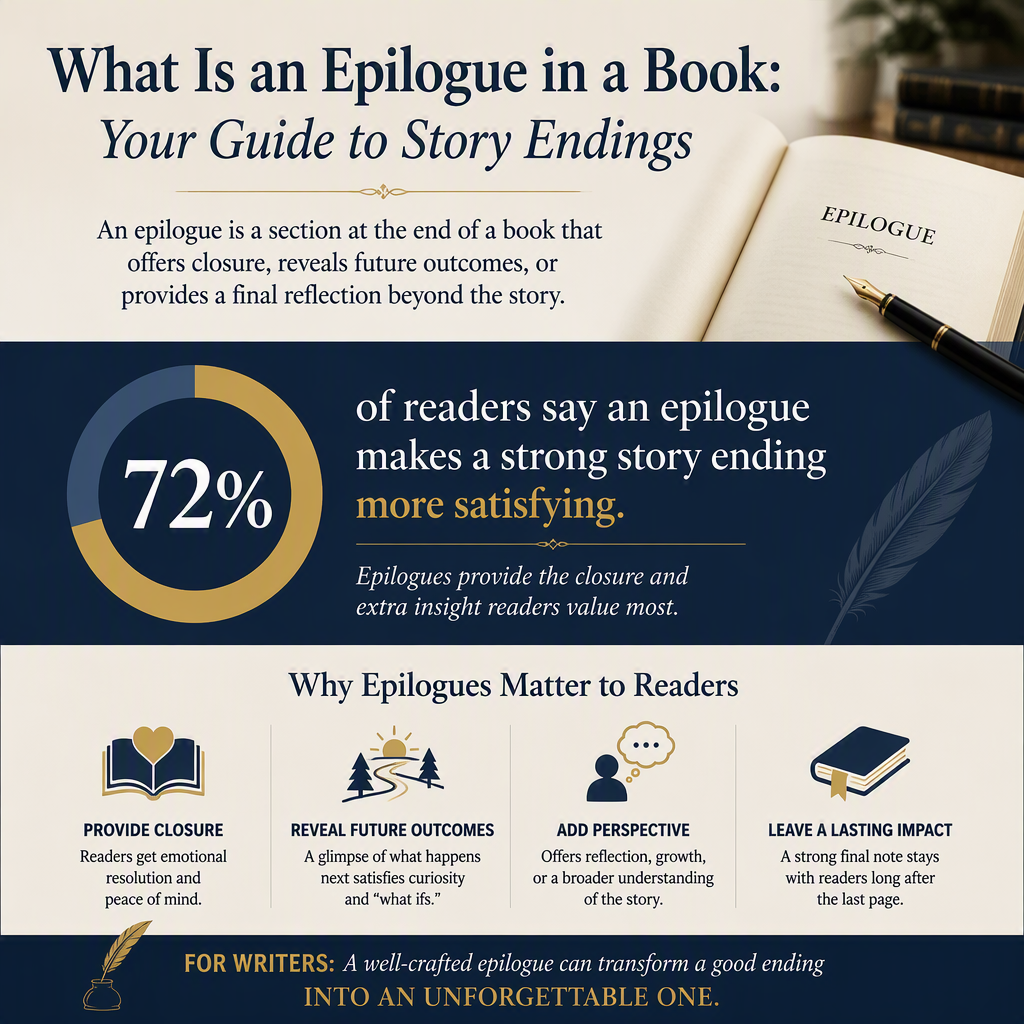
Authors often ask, “What is an epilogue in a book?” when they reach the final chapter and still have one piece of the story to place. An epilogue is a closing section that comes after the main narrative has ended, giving readers a later moment, consequence, reflection, or glimpse of what follows. It works like a final lens on the story. The plot has reached its main resolution, and the epilogue shows what that resolution means for the characters or the larger world.
That extra section can deepen a novel, settle an emotional question, or create a clean bridge into the next book. It can also weaken an ending when it repeats the final chapter, explains feelings the reader already understood, or keeps a finished story alive long after its natural stopping point. I treat an epilogue as a deliberate publishing and craft choice. You need a clear job for it before you write one.
Table of Contents
Epilogue Definition And Function
The word epilogue comes from the Greek epilogos, meaning a concluding speech or added word. In modern fiction, the term describes material placed after the main action and resolution. An epilogue can take place days later, twenty years later, or in a different generation. It can use the same point of view as the novel or shift to another character whose perspective completes the book.
The defining feature is placement and purpose. A final chapter usually belongs to the book’s main dramatic movement. An epilogue sits outside that movement and offers a controlled look at life after the central conflict. For example, a mystery epilogue might show the detective returning to ordinary work after the case. A romance epilogue might show the couple building a life together, and a historical fiction epilogue might connect a fictional character’s fate to a later public event.
I ask one question before I advise an author to keep an epilogue: what information belongs here that the ending itself cannot deliver? A useful answer might involve a time jump, a changed narrator, a long-term consequence, or a final emotional image. “I wanted one more scene” rarely gives the section enough weight.
The Difference Between An Epilogue And A Final Chapter
A final chapter completes the story’s primary dramatic work. It may contain the climactic confrontation, the decisive choice, and the immediate aftermath. An epilogue follows those events and shifts the distance between the reader and the story.
Consider a fantasy novel in which a queen defeats the invading army in chapter thirty-two. Chapter thirty-three might show her signing a treaty and confronting the political cost of victory. An epilogue set fifteen years later could show her daughter inheriting a fragile peace. Chapter thirty-three resolves the novel’s immediate conflict. The epilogue reveals the reach of that resolution.
The Difference Between An Epilogue And An Afterword
An epilogue belongs to the fictional world, even when it uses a reflective voice. An afterword belongs to the author, editor, scholar, or translator and discusses the book from outside the story. You might use an afterword to explain historical research, acknowledge sources, describe a personal connection, or discuss the book’s creation.
Memoir creates a useful complication. For example, a memoir epilogue can describe the author’s life after the period covered in the main narrative. An afterword, on the other hand, can discuss the writing process or the real people behind the book. Label the material honestly so readers understand which voice they are hearing.

Reasons To Write An Epilogue
An epilogue earns its place when it delivers a distinct kind of closure. Closure does not require every detail of a character’s future. Readers usually need an emotional landing, a sense of consequence, or a final image that confirms the book’s central concern. An epilogue gives you room to provide that landing after the main story has already reached its peak.
Long-Term Consequences
A time jump lets you show results that the immediate aftermath cannot contain. Suppose your protagonist exposes corruption at a hospital. The final chapter can show the investigation beginning and the protagonist making a costly public statement. An epilogue several years later can show whether the institution changed, whether the protagonist stayed in medicine, and which consequences endured.
Use the time jump to reveal meaningful change. A list of marriages, promotions, and children reads like a personnel file. A single, specific scene carries more force instead. For example, a former rival might visit the hospital under a new policy and quietly recognize the protagonist’s influence. That moment gives the reader evidence of change without reporting every event in between.
Emotional Closure
Some stories resolve the external problem before the character’s inner life has found its final shape. An epilogue can show a survivor sleeping through the night, a parent returning to a familiar street, or a friend using the knowledge gained during the plot. Small actions work well here because they demonstrate an altered life.
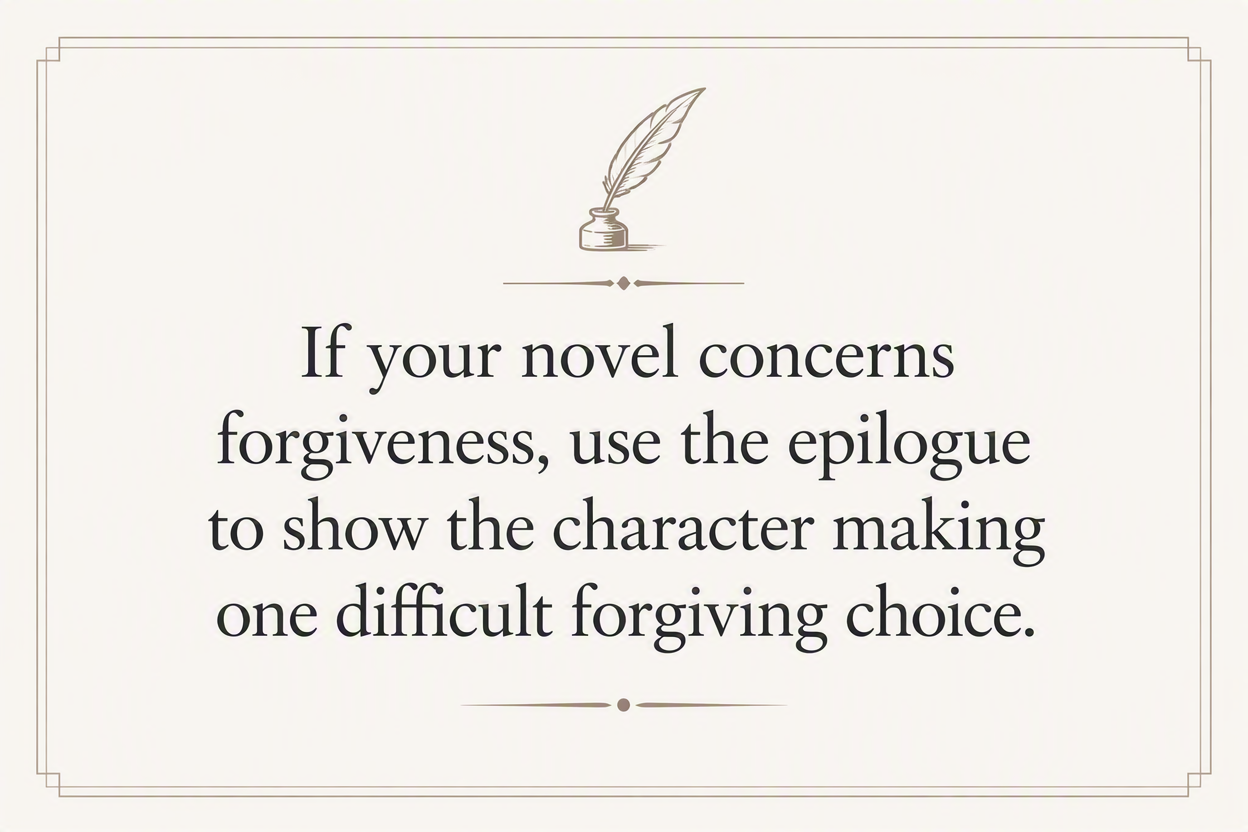
Keep the emotional target narrow. If your novel concerns forgiveness, use the epilogue to show the character making one difficult act of forgiveness. Do not introduce three new conflicts and a fresh cast. The reader came for the consequence of the story they finished.
Series Continuity
In a series, an epilogue can create a bridge to the next installment. The bridge should open a door without dragging the current book’s ending through it. For example, a new threat, an altered alliance, or a message from an unknown sender can set the direction for the next novel.
Readers can tell when a writer has replaced an ending with a sales pitch. Give the current book a satisfying outcome first. Then add one clean thread that makes the next story desirable. I often recommend drafting the epilogue without thinking about book two, then adding only the details that genuinely belong to the current character arc.
When An Epilogue Helps Your Genre
Genre expectations shape how readers receive an epilogue. Romance readers often welcome a future glimpse because the promise of a lasting relationship extends beyond the first kiss or wedding. Mystery readers may appreciate a final case consequence, especially when the book centers on justice. Fantasy and science fiction often use epilogues for political fallout, generational change, or the arrival of a new threat.
Literary fiction, horror, and some forms of suspense require more restraint instead. A distant explanation can reduce the uncertainty that gave the ending its force. For example, a horror novel may need its last disturbing image to remain unresolved. A literary novel may gain more power by ending on a character’s choice rather than reporting the next decade.
Romance And Relationship Arcs
Readers of romance expect the central relationship to receive a satisfying conclusion. An epilogue can show the couple after the immediate courtship arc, perhaps during a family celebration, a move, or a shared professional challenge. The scene should reveal how the relationship functions under ordinary pressure.
Skip the catalog of milestones. One telling interaction usually says more than a paragraph announcing that the couple married, had children, and bought a house. Give the pair a problem tied to their new life and let their response demonstrate why the relationship works.
Mystery And Thriller Endings
A mystery epilogue can show the legal or personal consequences of the solution. For example, the detective might receive a letter from prison, revisit the crime scene after its renovation, or learn that a witness has changed direction. These details extend the meaning of the case.
Protect the reader’s sense of completion. The epilogue should not reveal that the real killer escaped unless that reversal forms the intended ending and the book clearly supports it. A surprise without groundwork feels like a reset button.
Fantasy And Science Fiction Arcs
Speculative fiction gives epilogues room for world-level consequences. For example, a new government may inherit the capital, a magical system may begin to fail, or a colony may receive its first message from a distant civilization. These developments matter when they grow from choices made in the main narrative.
Keep the camera close to a character. Worldbuilding belongs in service of the ending. A single child learning a forbidden spell can suggest a cultural shift with more energy than several pages of historical summary.
Epilogue Structure And Length
An epilogue needs its own scene logic. Give it a setting, a point of view, a desire, and a small turn. The character wants something in the scene, encounters a meaningful detail, and leaves the reader with a changed understanding. The scale can be quiet, though the structure still needs movement.
Length depends on the material. A few paragraphs can deliver a sharp final image. A chapter of several thousand words can support a substantial time jump or a second point of view. I read the epilogue on its own during revision. If it feels like a summary, a deleted chapter, or an advertisement for the sequel, I cut it or rebuild it.
The Opening Of The Epilogue
Signal the shift with a clear time marker or a changed situation. “Seven years later” can work when the time jump matters. A specific image can work even better, such as the repaired bridge where the final battle occurred. Avoid spending the first page explaining what happened between the ending and the epilogue. Start at the moment that carries meaning.
The Middle Of The Epilogue
Let the scene carry information through action. For example, a character opening an old letter can reveal a changed relationship, or a council vote can show political consequences. A child asking an uncomfortable question can expose the cost of a parent’s victory.
Choose details that connect to the book’s central promise. A story about memory might return to a photograph. A story about belonging might place the character at a table where they once had no seat. Repetition gains power when the context has changed.
The Final Line
The last line should close the epilogue’s brief movement and leave the reader with the book’s final emotional note. It need not sound grand. Concrete language usually lands harder than a statement about destiny, healing, or the meaning of life.
Read the final page aloud. Listen for explanation after the image has already done its work. Delete any sentence that tells the reader how to feel about the preceding one.
Revision Tests For Your Epilogue
Revision decides whether an epilogue belongs. I use several tests before I send a manuscript to beta readers or prepare it for publication. Each test asks whether the section adds value rather than length.
The Removal Test
Remove the epilogue and read the final chapter again. Does the novel still resolve its central conflict? If the answer is yes, the epilogue can remain when it adds weight or emotional depth. If the answer is no, the material may belong in the final chapter because the main ending lacks resolution.
The Repetition Test
Underline every sentence that repeats information from the final chapter. A small amount of echo can create resonance. A page of repeated facts usually signals that the epilogue has no separate job. Replace explanation with a new scene or cut the repeated material.
The Reader Promise Test
Check the book’s promise. For example, a romance epilogue should honor the relationship arc. A thriller epilogue should honor the threat and its consequences. A family saga epilogue should connect personal choices to the passage of time. When the section suddenly introduces a different kind of story, readers may feel the book has changed hands.
Ask two trusted beta readers what they believed the epilogue added. Do not prompt them with your intention. Their answers will show whether the scene communicates on the page or only in your head.
During my own revision process, I sometimes draft several possible endings in QuickWrite from Adazing, especially when I am testing different time jumps or points of view. I treat those drafts as raw material. The final choice still depends on character logic, genre promise, and the emotional shape of the manuscript.
FAQs for What Is an Epilogue in a Book: Your Guide to Story Endings
How Long Should An Epilogue Be?
An epilogue should be as long as its distinct purpose requires. A focused scene may need 500 words. A substantial time jump may need several thousand. Length should follow the scene’s dramatic work, and you should cut any passage that only reports information the reader already understands.
Does Every Book Need An Epilogue?
No. Many books end more powerfully with the final chapter. Use an epilogue when you need a meaningful later consequence, a deliberate shift in perspective, or a final piece of emotional closure. A desire to keep spending time with beloved characters does not give the section enough purpose on its own.
Can An Epilogue Set Up A Sequel?
Yes. Give the current book a complete emotional and plot resolution first, then introduce one thread that points toward the next story. A new mystery, warning, or unresolved danger can work. Several pages of sequel exposition will pull attention away from the book the reader just finished.
A Strong Ending With A Clear Purpose
An epilogue works when it changes the reader’s understanding of the story without undoing its resolution. Give the section one job, place it after the main dramatic movement, and build it around a scene rather than a report. Then test the manuscript with the epilogue removed. If the book loses a meaningful consequence or emotional landing, keep the section and sharpen it. If the ending stands stronger without it, trust the ending you already wrote.
