
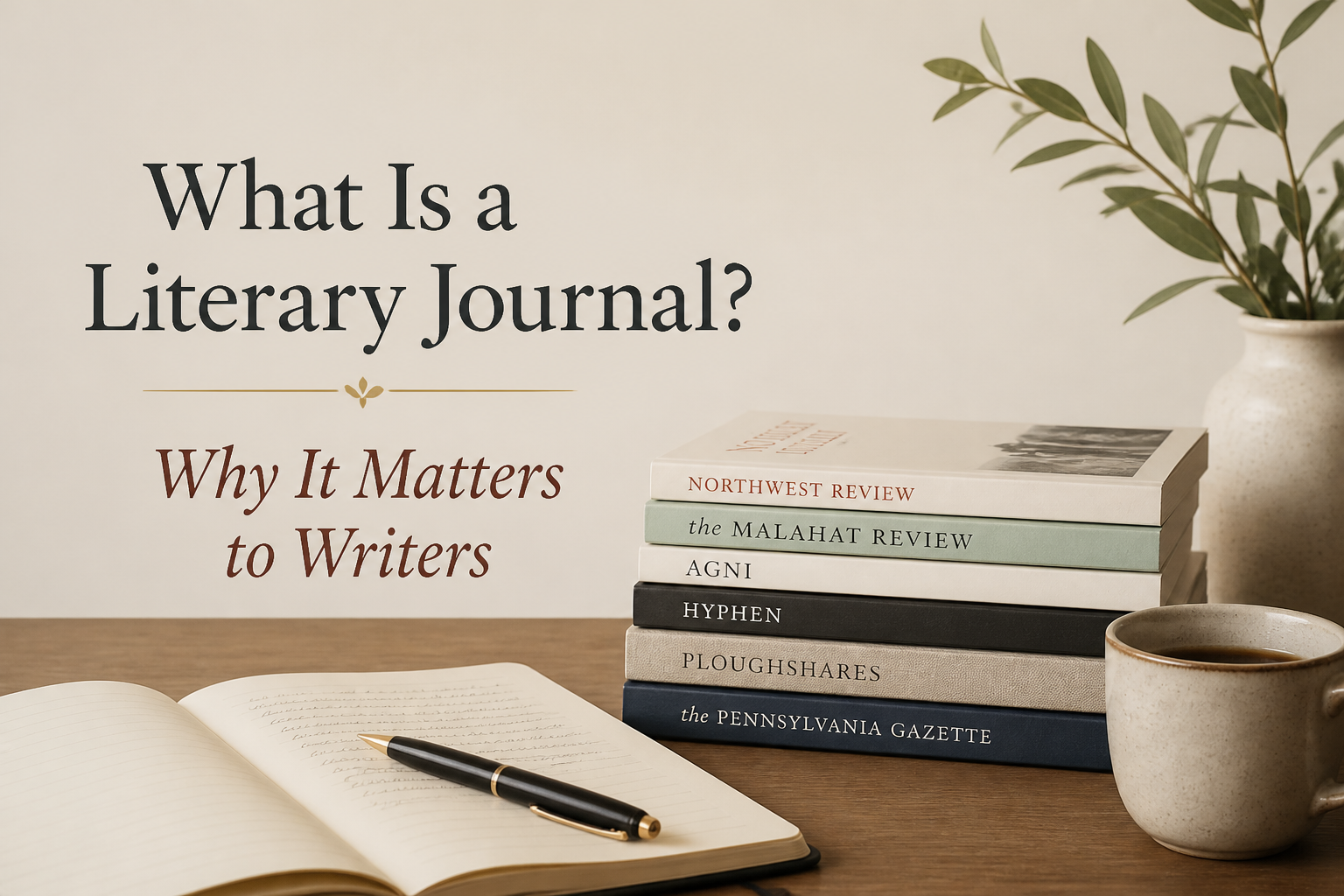
Every writer eventually benefits from understanding “What is a literary journal?” because publication in one can sharpen your craft, build your record, and put your work in front of attentive readers. A literary journal publishes poetry, short fiction, essays, reviews, translations, and other literary forms, usually through a recurring print or digital issue. Its editors select work for artistic quality, fit, and conversation with the issue’s larger interests.
That editorial filter gives a journal a different role from a personal blog, a social media post, or a book marketplace. You submit individual pieces, receive a decision on each, and learn how your work stands alongside writing chosen by editors with a point of view. A journal publication rarely creates instant fame. It can give you something more durable: evidence that your writing has entered a serious literary conversation.
I recommend literary journals to authors at nearly every stage. A novelist can use them to promote a short story or essay ahead of a book launch. Poets can build a publication history one poem at a time. Nonfiction writers can test an argument in a compact form before expanding it into a full manuscript. The value depends on your goals, your genre, and the quality of the journal you target.
Table of Contents
How Literary Journals Work
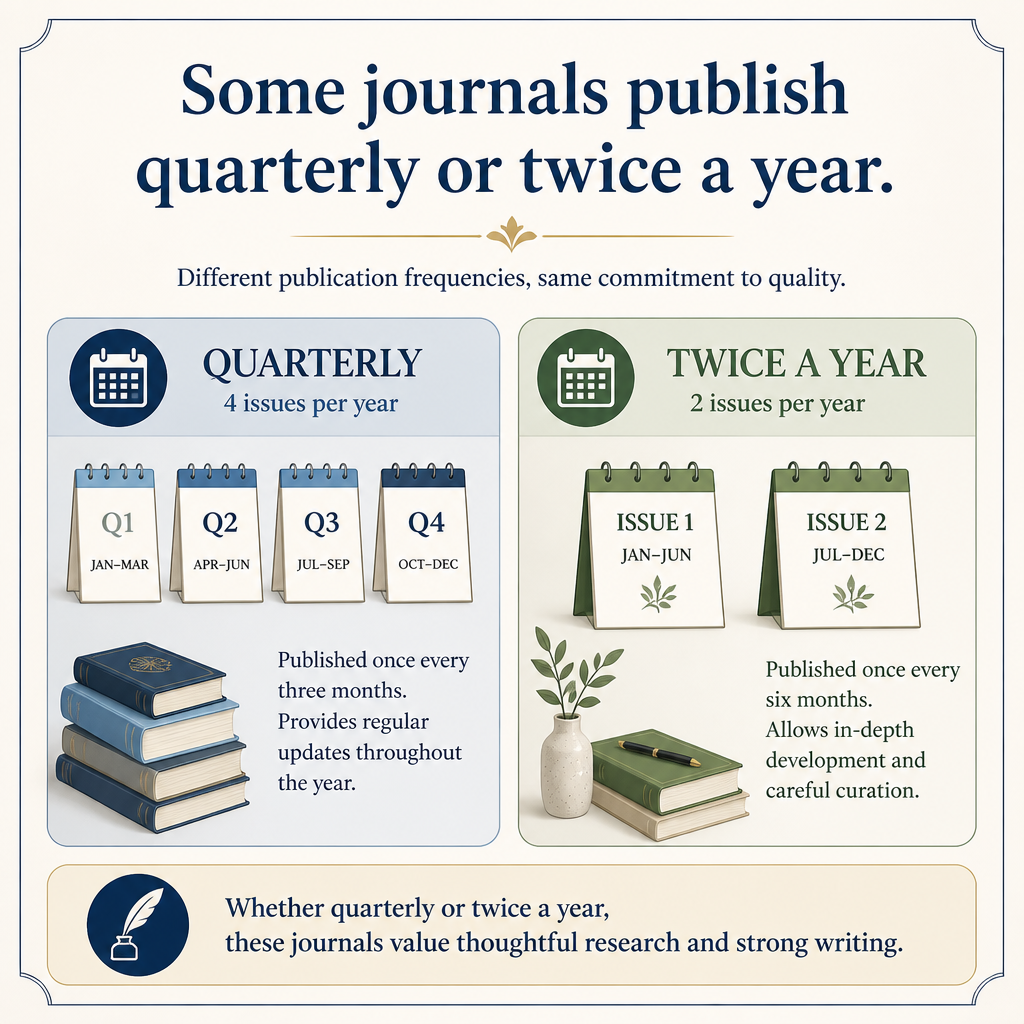
A literary journal is an edited publication devoted primarily to creative or literary writing. Some journals publish quarterly or twice a year. Others release work online weekly and compile it into seasonal or annual issues. A journal may be affiliated with a university, funded by subscriptions and grants, run by volunteers, or operated as an independent small press.
Editors usually announce submission periods, accepted genres, word-count limits, and reading fees. You send a poem, story, essay, or translation through a submission portal such as Submittable or by email. The editors read the work, sometimes with identifying information removed, and respond with an acceptance, a revision request, or a rejection.
Publication terms vary. Some journals acquire first publication rights for a limited period and return rights after publication. Others request nonexclusive rights or ask for permission to archive your work online. Read the agreement before you submit, especially when you plan to include the piece in a future collection or use it as a sample for agents.
Print, Digital, And Hybrid Journals
Print journals give your work a physical home that you can hold, mail to a mentor, or place in a reading portfolio. Digital journals offer speed, broader reach, and links you can share with readers, agents, and editors. Hybrid journals may publish online work throughout the year and release a print issue with selected pieces.
The format matters less than the editorial standards and readership. A handsome print issue with weak editing will do little for your development. A carefully edited online journal with a clear audience may give your writing more useful attention than a prestigious-looking publication nobody reads.
Journals And Literary Magazines
Writers often use “literary journal” and “literary magazine” interchangeably. In practice, the distinction usually comes from tradition, branding, or publishing model rather than a firm rule. A university publication may call itself a journal. An independent publication may choose a magazine, a review, a quarterly, or simply its own title.
Judge the publication by its work, editorial history, submission terms, and audience. The label alone tells you very little. Read several recent pieces before you send anything.

Why Journals Matter To Your Craft
Submitting to journals forces you to see a piece through an editor’s eyes. You have to identify the strongest version of the work, prepare a clean manuscript, write a short cover letter, and follow instructions. Those habits transfer directly to book proposals, agent submissions, anthology calls, and freelance assignments.
Journals also reward compression. A short story has limited space to establish desire, pressure, and consequence. An essay has to develop a thought without wandering through every related idea. Poems create force through image, sound, line, and silence. The tighter form exposes weak sentences because the piece has nowhere to hide.
I often tell authors to submit a piece once they have finished one revision cycle, then return to it after a few weeks. Distance reveals repeated words, vague openings, missing transitions, and endings that explain what the piece has already shown. A rejection can sting. The submission process still gives you a reason to keep revising a work that might otherwise sit in a folder until the file name becomes “final_final_2.”
Editorial Selection As A Mirror
An acceptance tells you that an editor sees a strong fit between your work and the publication. A rejection says much less. The issue may already contain a similar piece, the editors may have limited space, or the work may need another revision. Treat the decision as information about one editorial desk, not a verdict on your ability.
Some journals send personal notes or revision requests. Save those responses. A thoughtful comment about pacing, point of view, or the final paragraph can help you diagnose a larger pattern in your writing. You can also ask trusted workshop readers to respond to the same pages with a specific question, such as “Where did your attention weaken?” General praise rarely gives you material to revise.
Writing For A Living Audience
A journal’s readers arrive for writing, not for a sales pitch. That setting gives you room to make a difficult formal choice, pursue a narrow subject, or write with more ambiguity than a commercial book description can support. You still need a reason for the piece to exist. Literary freedom does not remove the duty to hold a reader’s attention.
Choose a journal that publishes work close to yours in form or ambition. Read its recent issues, identify recurring interests, and study how pieces begin and end. Then revise your submission with that readership in mind without imitating the publication’s house style.
What A Journal Publication Can Do For Your Career
A journal credit can strengthen your author biography, submission packet, and press materials. It gives you a third-party editorial credential attached to a specific piece of writing. For a debut author, several well-chosen credits can show that your work has been read outside your own circle.
The value increases when the publication reaches people who matter to your next project. For example, a poetry journal may connect you with book reviewers and small-press editors. A literary nonfiction venue may introduce your voice to readers interested in the subject of your forthcoming book. Genre journals can help you build a readership that understands the kind of fiction you write.
Publication can also support an author platform. Add the journal link to your website, list the credit in your biography, and share the piece with your newsletter subscribers when the publication permits it. Keep a record of the issue date, editor, rights agreement, and live URL. You will want those details when preparing a media kit or book proposal.
Credits And Book Proposals
Agents and publishers rarely acquire a book because of a single journal credit. The manuscript, concept, and author fit carry greater weight. A publication history can still help, especially when the credits demonstrate a consistent body of work in the same field.
Use specific information in your bio. “Her essays have appeared in River Teeth, Fourth Genre, and a regional newspaper” gives a reader more to assess than “Her work has been widely published.” Name publications your intended audience might recognize, and omit credits that have no connection to the project you are pitching.
Credits And Self-Publishing
Independent authors can build a long-term connection with readers through journal publications. A published short story can introduce your voice before you release a novel. An essay about the research behind your historical fiction can attract readers who care about the period. A poem can give a new subscriber a clear sample of your style.
Use restraint in promotion. A journal credit supports your authority. It does not replace a strong cover, a precise book description, thoughtful categories, or a readable sample. At Adazing, I see authors spend hours collecting credentials and then rush the product page that determines whether a shopper understands the book.
How To Find The Right Journals
Start with publications that already publish the kind of work you write. Poets can search databases and directories through organizations such as the Poetry Foundation and Poets & Writers. Fiction writers can study journals that publish their form, genre, length, and level of experimentation. Venues that cover an essayist’s subject with intellectual seriousness and a compatible tone deserve the same study.
Read at least three recent pieces before submitting. Pay attention to sentence length, narrative distance, subject matter, formal risk, and the ratio of emerging writers to established names. A journal’s archive tells you more than its submission page. You are looking for evidence that your work belongs in the publication’s actual reading experience.
Questions To Ask Before Submitting
- Does the journal publish your form, genre, and approximate word count?
- Do you recognize the editorial taste from recent issues?
- Are submission windows and response times clearly stated?
- Does the publication explain payment, rights, and contributor copies?
- Is the reading fee reasonable for your budget and purpose?
- Can you verify that the journal has a real archive and identifiable editors?
Reading fees deserve careful judgment. Some journals charge to support staff, software, and contest administration. Plenty of respected publications accept free submissions during open periods. Never spend money on a submission simply because the journal uses language about prestige. Set a monthly budget, track every submission, and prioritize publications whose readers overlap with your goals.
Directories And Submission Tools
Directories can help you discover venues. You still need to verify current guidelines on the journal’s own website. Submission platforms can save time by storing cover letters and manuscript details. They can also encourage careless batch submissions. A form filled out in thirty seconds rarely reflects a careful reading of the publication.
Create a spreadsheet with the journal name, editor, genre, deadline, fee, rights terms, manuscript title, and response. Send one polished piece to a small group of well-matched journals. Record the result and revise your list as you learn more about your work.
How To Submit Without Wasting Your Time
Follow the stated format with almost boring precision. Use the requested font, file type, page limit, contact details, and naming convention. Remove your name from the manuscript when the journal uses blind reading. Proofread the file after you upload it because conversion errors can alter spacing, italics, and page breaks.
Your cover letter should be brief. Include the title and form of the piece, a sentence about why you chose the journal, and a short biography relevant to the submission. Avoid explaining the entire meaning of the work. The editors need a clean manuscript, not a defense brief.
Submit work that has finished its current revision. You may still improve it later, especially after an editor offers notes. Sending a draft with obvious typos or a temporary ending wastes an opportunity. I use text-to-speech, a printed proof, and a final read from the last page to the first. Each method catches different errors.
Simultaneous Submissions And Rights
Many journals permit simultaneous submissions, meaning you can send the same piece to multiple publications. Tell each editor when the work is accepted elsewhere, then withdraw it through the journal’s stated process. A failure to withdraw can create an awkward rights problem and damage your reputation with editors.
Keep a rights log for every published piece. Before you reprint the work in a collection, check whether the journal requires acknowledgment, retains archival rights, or limits the timing of republication. Save the acceptance letter and contract in the same folder.
Rejection And Revision
Rejection is part of the process. Its frequency varies by journal and genre. Do not send the same piece everywhere without learning from the pattern. After several form rejections, reread the opening, title, and final page. Ask whether the piece resembles the journal’s recent work in the ways that matter.
When a journal accepts your work, respond promptly and professionally. Ask focused questions about edits, rights, payment, and publication timing. Editors remember writers who meet deadlines, return clean revisions, and communicate like adults.
FAQs for What is a Literary Journal? Why It Matters to Writers
Do Literary Journals Pay Writers?
Some literary journals pay contributors, some offer copies or subscriptions, and many offer no payment. Payment depends on funding, format, circulation, and editorial policy. Read the contributor terms before submitting, then decide whether the credit, audience, and editorial opportunity justify your time.
Can A Novel Excerpt Appear In A Literary Journal?
Yes. The excerpt still needs to work as a complete reading experience. Choose a chapter with its own tension, context, and emotional movement. Check the journal’s guidelines, since some publications accept standalone excerpts. Others prefer short stories or essays unconnected to an unpublished book.
How Many Journals Should A Writer Submit To?
Submit according to your available time and budget. I prefer a small, tracked list of strong matches over a large batch of careless submissions. Start with five to ten journals, study the responses, revise the piece when the pattern supports revision, and continue sending it for as long as the work still fits your goals.
Use Journals To Build The Writer You Are Becoming
A literary journal gives your work an editorial home, a focused readership, and a place to practice the professional habits publishing demands. Its greatest value may arrive before the credit appears in your biography. The act of choosing, revising, submitting, tracking, and responding teaches you to treat your writing as work with a life beyond your hard drive.
Choose three journals that genuinely fit your piece. Read their recent issues, confirm their rights terms, prepare the manuscript to their specifications, and record each submission. Then return to the draft and write the next piece. A publication history grows through that steady cycle, one serious submission at a time.
