
Before a character can carry a story, you need to know “What is a fatal flaw?” because a protagonist without an internal weakness usually produces scenes without pressure. The flaw gives your character a pattern of behavior that creates trouble, damages relationships, and forces hard choices. It turns plot events into personal consequences.
A fatal flaw means more than a quirky habit or a tragic backstory pasted into a character sheet. It is a destructive belief, fear, desire, or habit that keeps the character from responding wisely when the story demands change. Your character may be brave, generous, and highly competent. The flaw still matters because it governs the decision that costs them the thing they want.
I use fatal flaws to connect character development to plot structure. Once you know what your protagonist believes, what that belief protects, and how it harms other people, you can design scenes that test the character with increasing force. The result feels earned because the character’s choices create the trouble.
Table of Contents
The Definition And Dramatic Function
A fatal flaw is a recurring character weakness that drives harmful choices and creates the conditions for loss, transformation, or both. The word fatal describes its dramatic power rather than a mandatory death sentence. For example, in a tragedy, the flaw may lead to death or ruin. In a romance, it may delay intimacy. A detective’s flaw can push him to dismiss the one piece of evidence that matters.
Aristotle connected tragic downfall with hamartia, a mistake or error in judgment that contributes to a protagonist’s suffering. His discussion in Poetics remains useful because it treats a character’s error as part of what the story does. A fatal flaw matters when it changes what the character does.
Hamartia And The Character Error
Writers sometimes treat hamartia as a synonym for a permanent moral defect. The dramatic idea has more range. A character can make a disastrous choice because of pride, fear, ignorance, misplaced loyalty, or an understandable desire pushed too far.
For example, consider a detective who trusts evidence only when it fits a carefully built theory. That flaw might begin as intellectual discipline. Under pressure, it becomes arrogance. The detective ignores a witness, protects a reputation, and allows the murderer more time. Each choice grows from the same internal pattern.
Write your protagonist’s flaw as a sentence that links belief to behavior. “Mara believes needing help makes her weak, so she hides a medical crisis from her crew” gives you scenes to write. A label like “Mara has trust issues” gives you nothing to dramatize.
Flaw, Wound, And Symptom
The wound explains where the pattern began. The flaw is the pattern in the present. On the page, the reader sees only the symptom.
For example, a prince who watched his father surrender a kingdom may carry a wound of humiliation. His flaw could be a hunger for control. The symptom appears when he rejects a useful alliance, rewrites military plans without consulting anyone, and punishes an honest adviser. The backstory adds meaning. His present-tense choices create the plot.
Keep those three layers separate in your notes. Give the wound one sentence, the current belief one sentence, and three visible behaviors. You will have material for scenes rather than a biography your reader never sees.

Desire, Fear, And The Flaw’s Engine
A fatal flaw works because it protects something your character wants. The proud character is defending a fragile identity, the suspicious one is bracing against expected betrayal, and the perfectionist is holding off the belief that mistakes make her unlovable. The character rarely experiences the flaw as a problem at first. They experience it as survival.
Your protagonist needs a desire strong enough to keep the story moving. The flaw should interfere with that desire in a repeatable way. For example, a journalist may want to expose corruption and still refuse to admit when a source has manipulated her. A widower wanting companionship can treat every new relationship as a threat to his loyalty to his late wife.
The Public Goal And Private Need
Give the character an external goal that readers can track and an internal need that the character resists. The external goal might be winning a court case, escaping a colony, publishing a debut novel, or saving a sibling. The internal need might involve trust, humility, forgiveness, or honest self-knowledge.
The flaw creates the gap between those two lines. For example, a novelist who craves publication and revises every chapter forever has a concrete external problem. Her private need may be learning that finished work can withstand criticism. Her flaw turns revision into a shield against judgment.
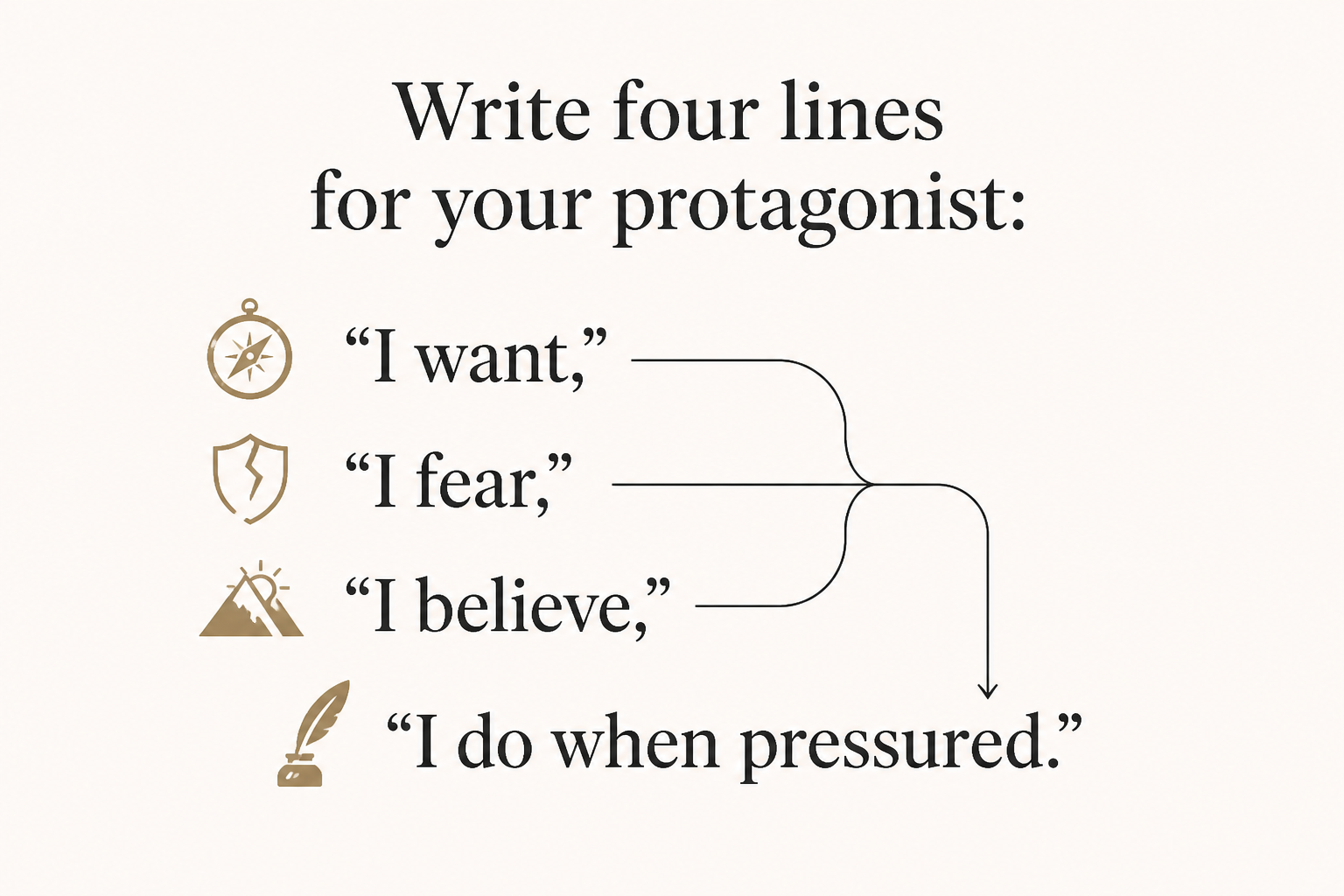
Write four lines for your protagonist: “I want,” “I fear,” “I believe,” and “I do when pressured.” Then connect the fourth line to the first three. Those answers will give you a usable character arc faster than a long questionnaire about favorite foods.
The Protective Logic Of Bad Choices
Readers accept terrible decisions when the emotional logic is clear. Your character need not be correct. The reader needs to understand why the choice seems reasonable from inside that character’s history.
For example, a firefighter who refuses to leave a collapsing building may seem reckless. Give him a belief that every abandoned victim proves he has become the coward who failed his brother. His flaw has a protective logic: he would rather risk everyone than face the old shame. The decision remains harmful. It also carries psychological weight.
Test the flaw against three pressures: public embarrassment, private grief, and immediate danger. A shallow trait disappears when the scene becomes serious. The real one grows louder, because the character reaches for the familiar defense.
Choices, Consequences, And Escalation
Readers discover a fatal flaw through choices rather than through a paragraph explaining the character’s psychology. You can mention a painful past once. The story earns the flaw through behavior that repeats under changing circumstances.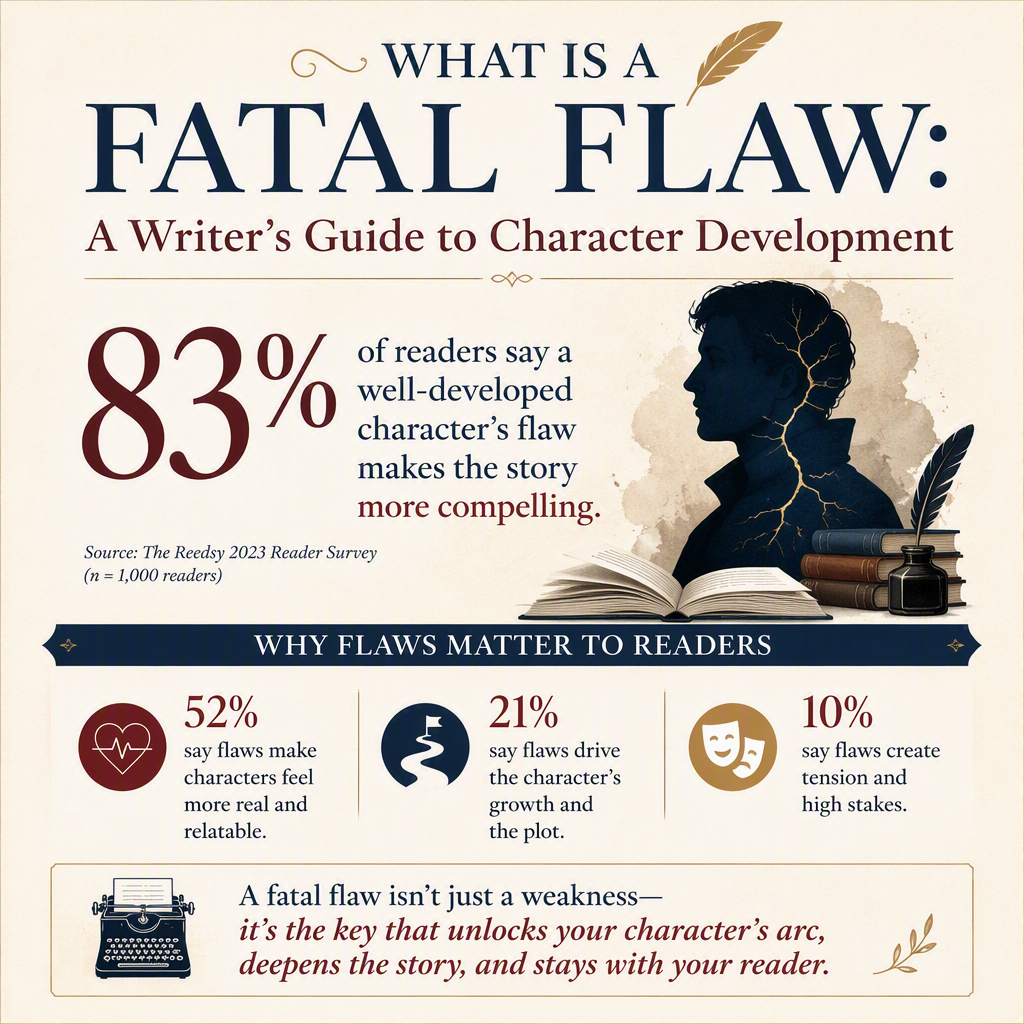
I build the pattern in stages. An early choice causes a manageable problem, and the next one complicates the goal. By the third, the cost reaches another person. By the final act, the protagonist must either repeat the pattern at its highest price or choose a different response.
Scene-Level Evidence
Suppose your protagonist fears dependence. In an early scene, she refuses a ride and arrives late to an interview. In the middle, she conceals an injury and loses access to a witness. Near the climax, she dismisses an offer of help during a rescue. The flaw remains recognizable even though the circumstances change.
For every major scene, ask what the character wants, what the flaw tells them to do, and what the decision costs. Record the answer in your scene outline. A scene that contains only external obstacles may move the plot forward and leave the character untouched.
The Escalation Ladder
Escalation requires more than repeating the same mistake with louder explosions. Increase the cost, narrow the available choices, and bring the consequence closer to the relationship the character values most.
For example, a jealous musician might first accuse a bandmate of stealing a melody. Later, he sabotages the band’s recording session. Near the end, he destroys the song that could have saved his family because he cannot share credit. The final act works because the flaw has moved from irritation to irreversible loss.
Create a five-rung ladder for the flaw. List the first visible symptom, the first serious consequence, the betrayal it causes, the sacrifice it demands, and the final choice. If the final choice arrives before the reader has watched the pattern develop, add earlier scenes with smaller consequences.
Genre, Arc, And The Meaning Of Fatal
The same flaw produces different stories across genres. For example, a fantasy hero’s need for control may lead to tyranny. In contrast, a romance protagonist’s fear of abandonment may produce false accusations and emotional withdrawal. A cozy mystery sleuth who needs to be liked may never confront her suspect.
Genre sets the kind of consequence readers expect. It also influences the kind of change that feels satisfying. A redemptive arc usually requires the character to practice a new behavior before the climax. A tragic arc may show the character recognizing the flaw and still choosing it.
Tragic And Redemptive Arcs
In a tragic arc, the character’s insight arrives too late or fails to overcome the desire that feeds the flaw. For example, Macbeth understands the cost of ambition only after his choices have emptied his life. The dramatic force comes from watching him continue to act through the same hunger.
A redemptive arc asks the character to pay a meaningful price for change. A guarded mentor may admit fear, trust an apprentice, and forfeit his standing as a result. The new behavior needs a cost because painless growth reads like authorial permission.
Choose the arc before you revise the ending. Then check every major turning point against it. A character who forgives herself in chapter four should not return to the same self-punishing behavior in chapter twenty without a fresh pressure that explains the reversal.
Genre Expectations And Reader Payoff
Romance readers generally expect emotional openness to support the couple’s final union. Mystery readers expect the detective’s personal weakness to complicate the investigation. Horror readers often expect denial, guilt, or obsession to open the door to danger.
You can break a genre expectation. The ending then needs to replace the promised payoff with something equally clear. For example, a romance may end in separation if the book delivers a complete emotional transformation and a deliberate reason for the relationship’s end. A mystery can let the killer live when the protagonist’s moral choice provides the final resolution.
Read three successful comp titles with your character arc in mind. Mark the flaw’s first appearance, the midpoint consequence, and the final change or collapse. You are reading for the promise your genre makes about personal change, rather than for a pattern to copy.
Revision Methods For A Convincing Flaw
Many manuscripts have a strong premise and a protagonist whose flaw exists only in the author’s notes. Revision brings the flaw into the action. I start by searching for decisions, because adjectives such as “stubborn” and “insecure” cannot carry a character arc by themselves.
The Flaw Audit
List every scene in which the protagonist makes a meaningful decision. Beside each scene, write the belief behind the decision and the consequence that follows. Circle the scenes that contain neither. You may need to add pressure, alter the choice, or cut the scene.
Next, track how other characters respond. A flaw gains force when it damages trust, changes an alliance, or creates work for someone else. If everyone absorbs the protagonist’s behavior without reaction, the manuscript is protecting the character from the very consequences that would make the arc matter.
Read the dialogue aloud and mark every excuse, deflection, accusation, and abrupt swerve away from the topic. Those verbal moves often reveal the flaw more clearly than private monologue. A character who says, “I had no choice,” after creating three bad options has given you useful evidence.
Tools For Testing Character Logic
Use a simple spreadsheet for a long novel, or a page of handwritten notes for a shorter one. Track scene number, goal, flaw-driven choice, consequence, and changed relationship. The pattern should grow across the book. If every entry has the same emotional weight, the escalation needs work.
When a character’s motive remains blurry, I use a writing tool such as Adazing’s QuickWrite to generate several pressure scenarios. I treat those suggestions as raw material, then select the situation that exposes the character’s established belief. A fantasy name generator can do similar work when a character’s name refuses to come to mind. Your manuscript still needs your judgment about psychology, genre, and consequence.
Run a final test on the climax. Remove the flaw from the protagonist’s decision and see whether the ending changes. If the climax works the same way, the flaw has been decorative. Rewrite the final choice until the character’s internal pattern creates the moment the plot has been waiting for.
FAQs for What is a Fatal Flaw: A Writer’s Guide to Character Development
Does Every Protagonist Need A Fatal Flaw?
Every strong protagonist needs an internal pressure that complicates the goal. You can frame that pressure as a fatal flaw, a limiting belief, or a destructive pattern. The label matters less than giving the character a repeatable behavior that creates consequences and demands change.
Can A Fatal Flaw Be A Positive Trait?
Yes. Courage can become recklessness, loyalty can become possessiveness, and discipline can become rigidity. The trait does damage when the character applies it beyond the situation it was built for. Show the useful side first so the later damage carries emotional credibility.
How Do I Avoid Making A Flawed Character Unlikable?
Give the character understandable motives, moments of generosity, and genuine awareness of other people’s pain. You don’t need to excuse harmful behavior. Let readers see the human need beneath it, then make the character face the cost of the choices that need produces.
Make The Flaw Drive The Ending
A fatal flaw earns its place when it shapes the plot from the first meaningful choice through the final decision. Give your protagonist a belief that once protected them, a desire that keeps them moving, and a pattern that harms the people or goal they value. Then build scenes that make the familiar response increasingly expensive.
Start your revision with the climax and work backward. Identify the choice only this protagonist could make, name the flaw behind it, and plant earlier evidence that prepares the reader for that moment. Character development becomes visible when your reader can say, “I understand why they did it,” even as they hope the character finally chooses differently.
