
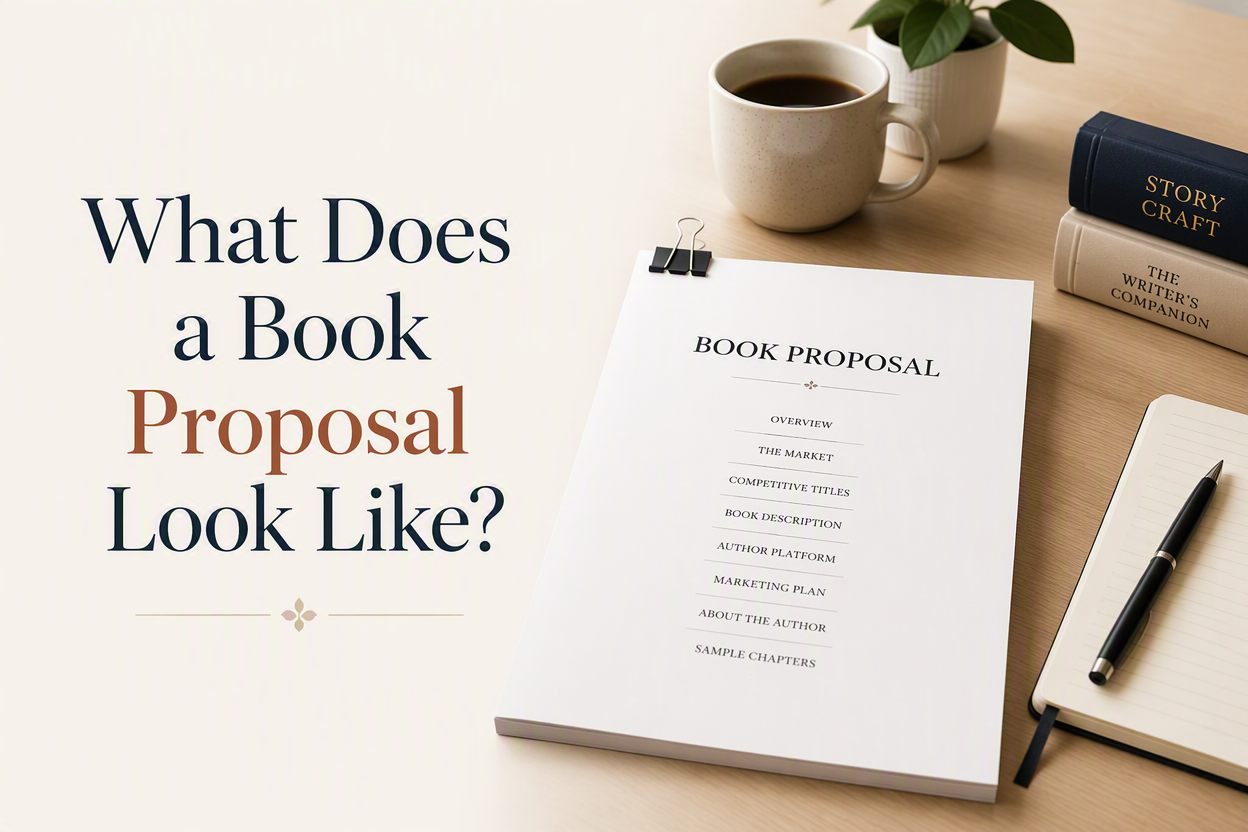
Before querying an agent, you need a document that sells the book before anyone reads the manuscript. The answer to “What does a book proposal look like?” starts with function: a proposal hands an agent or editor enough evidence to weigh the idea, the audience, the market, and your ability to deliver the project.
The format depends on your category. With nonfiction, a proposal can sell a book before you finish writing it. In contrast, a completed novel usually travels with a query letter, synopsis, and sample pages. Memoir sits between those paths because agents often want a finished manuscript alongside a proposal-style presentation.
I see writers treat a proposal as a detailed table of contents with a few enthusiastic pages attached. That approach leaves out the commercial argument. Your proposal needs to explain what the book does, who will buy it, how it compares with existing books, and why you have the authority or experience to write it.
Table of Contents
The Purpose Of A Book Proposal
A book proposal is a sales document for a publishing professional. It offers an agent the material needed to decide whether the book merits representation. That same document then anchors the pitch to editors. You are selling a publishable opportunity, not merely reporting that you have an idea.
That distinction changes every section. A strong proposal answers practical questions about readership, positioning, competition, delivery, and promotion. It also shows the reader that you understand the difference between a personal passion and a book that can find paying readers.
A nonfiction project often rests more on the proposal than on the unfinished manuscript. An agent may request several sample chapters and a detailed plan for the remaining chapters. Your voice on the page, your command of the subject, and your ability to complete the book to the proposed standard should come through.
With a novel, a proposal rarely replaces the manuscript. Fiction agents generally need to assess the entire story, since the ending, pacing, character arc, and structure determine whether the book works. Your query and synopsis still perform a related sales function. The package follows different conventions.
Write the proposal for a busy professional who has read hundreds of pitches. Put the strongest commercial information near the front. Then revise every section until a reader can explain your book to another person after one pass.

The Core Sections Of A Proposal
Most proposals contain a recognizable group of sections. Agents and publishers may still request different formats, so follow the submission guidelines for the person or imprint you are approaching. A beautifully designed document cannot rescue a proposal that ignores the requested materials.
The Overview And Book Promise
Open with a concise overview that states the book’s subject, promise, audience, and distinguishing idea. Give the reader a reason to care now. For example, a book about home fermentation needs a sharper premise than “a guide to making fermented foods.” You might build the pitch on five-minute preparation methods for apartment kitchens, with recipes that use ordinary grocery-store ingredients.
Describe the reader’s problem and the result your book provides. For example, a leadership book might help new managers run difficult one-on-one meetings during their first ninety days. Someone writing history might explain how a specific shipping route changed labor, immigration, and regional politics. Concrete promises give the proposal shape.
Keep this section focused. Two to four pages often provide enough room for the pitch, depending on the agent’s guidelines. If the overview needs ten pages to explain the premise, the book’s central argument probably needs more work.
The Author Platform And Credentials
Your biography should explain why you can write this book and how you can help readers discover it. Include relevant professional experience, publications, speaking engagements, teaching, media appearances, newsletter reach, podcast appearances, or an active community connected to the subject.
Platform means access to likely readers. A large social following can help. On the other hand, follower counts alone rarely persuade a serious publishing professional. Explain what those people do. Do they open your newsletter, attend your workshops, buy your previous books, or discuss your subject in an active online group?
Fiction authors should focus on relevant writing history, previous publication, awards, readership, and professional experience. You do not need to invent authority. If your credentials are modest, describe the specific relationship you have with the subject and show the quality of your sample pages.
The Audience And Market Position
Name the primary reader with enough precision to guide marketing. “Anyone interested in wellness” gives an editor no useful information. “Women in their thirties who want strength training plans that fit three weekly sessions and limited gym equipment” gives the project a reachable audience.
Discuss the size and behavior of that audience through grounded evidence. For example, you might point to active trade associations, conferences, magazines, podcasts, newsletters, bookstores, or online communities. A proposal gains strength when the audience already gathers somewhere you can name.
Describe how the book fits the market. Categories and search terms matter for an independent author publishing through Amazon KDP. Comparable titles help an agent understand the shelf or store placement you have in mind. Your proposal should communicate the same positioning a future cover, description, and advertising campaign will use.
The Chapter Plan And Sample Pages
The chapter plan proves that your premise can sustain a full-length book. It should do more than repeat chapter titles. Give each chapter a paragraph or two that explains the material, the reader’s progress, and the contribution that chapter makes to the whole project.
For example, a proposed book called The First Garden Year might open with an outline of spring planting, summer maintenance, autumn harvest, and winter planning. That version stays weak. The stronger one shows the decisions, mistakes, and practical outcomes in each season. It might explain how a beginner chooses three reliable crops, recovers from a failed tomato crop, and plans a winter bed without buying unnecessary equipment.
Use the outline to demonstrate sequence. Readers need to know why chapter four follows chapter three and how the argument or process develops. I also look for repetition at this stage. When two chapters teach the same lesson, combine them or give each one a distinct job.
Your sample chapters should represent the finished book. Choose pages that show your strongest voice and deliver on the promise in the overview. For a practical book, include a chapter with useful instruction and a clear structure. Memoir pages should reveal narrative control and emotional depth. Avoid submitting an introduction followed by a chapter that takes too long to begin.
Check the requested word count before sending anything. Agents often specify sample pages, chapters, or word count. Keep the formatting plain and readable, with a standard font, page numbers, and clear section headings. Fancy typography tells the reader where you spent your time. Clean writing tells the reader why the project deserves attention.
The Competition And Sales Argument
Similar titles prove that readers already buy books on your subject. Choose recent books with a genuine connection to your project, then explain the relationship in a few sentences. Identify the audience, subject, tone, format, and sales position each title shares with your book.
A useful comparison works like this: Book A reaches beginner gardeners through short projects and simple language. My book serves the same reader with a full twelve-month plan for small urban spaces, including monthly checklists and crop substitutions. Book B offers advanced soil science, so my project provides a more accessible entry point.
Do not claim that your book has no competition. An empty competitive field usually means readers have no clear reason to buy the project. Name related books that prove demand, along with a specific gap your book fills.
Include a marketing plan that matches your actual resources. For example, an author with a weekly newsletter can offer a downloadable checklist, run a reader survey, and invite subscribers to an advance review group. Teaching experience opens the door to workshops, library talks, or conference sessions. A plan built around national television appearances has little value if you have no way to reach those producers.
Self-publishing authors can use the same thinking. Before you design a cover or write an Amazon description, define the book’s category, audience promise, comparable titles, and promotion calendar. Adazing’s writing and book marketing tools can help you generate working copy and promotional ideas. Your proposal still needs your judgment about readers and market fit.
The Revision And Submission Process
Finish the proposal before you send it to agents. Read the document as a stranger who knows nothing about your project. Can that reader identify the audience, understand the promise, and see a credible path to publication within five minutes?
Ask two different readers to review it. Give one reader the overview and audience sections, then ask that person to describe the book in one sentence. Hand the chapter plan and sample pages to another reader, then ask where the energy drops or the logic becomes unclear. Any confusion they report points toward revision.
Research each agent before submitting. Check the agency website, recent interviews, manuscript wish lists, and submission instructions. An agent who represents narrative nonfiction may have no interest in a technical workbook, even when both projects concern the same subject. Personalize the query with a genuine reason for the match and keep the proposal itself focused on the book.
Track submissions in a simple spreadsheet. Record the agent, date, requested materials, response, and any personalized feedback. Rejections can reflect taste, list capacity, timing, or positioning. Repeated remarks across the responses tell you something. If several agents praise the subject and question the audience, revise the audience and market sections before sending another batch.
Give the document a final line edit. Remove unsupported claims about bestseller potential, replace broad praise with evidence, and check every number. A proposal creates expectations. Your manuscript, platform, and marketing plan need to support what the proposal promises.
FAQs on “What Does A Book Proposal Look Like?”
How Long Should A Book Proposal Be?
Length depends on the agent and the project. Many nonfiction proposals land somewhere between twenty and fifty pages, including sample chapters. A shorter proposal with a sharp overview and persuasive evidence will outperform a padded document. Follow the requested format whenever an agent provides one.
Do Fiction Writers Need A Book Proposal?
Most fiction writers need a query letter, synopsis, author biography, and completed manuscript. Some agents request a proposal for commercial fiction, celebrity projects, illustrated books, or nonfiction with a strong narrative element. Read each agent’s guidelines before deciding what to send.
Can I Use A Proposal For Self-Publishing?
Yes. A proposal hands you a private test of the book’s commercial logic before you spend money on editing, cover design, formatting, or advertising. You can use its audience description, comparable titles, chapter plan, and marketing ideas to build a publishing plan for your own release.
Build The Proposal Around A Reader
A book proposal works when every section points toward the same reader and promise. The overview attracts attention, the chapter plan proves the concept can fill a book, the sample pages demonstrate execution, and the market sections explain how readers will find it.
Write the first draft for clarity. Revise it for evidence. Then ask whether an agent can see a real book, a reachable audience, and a writer prepared to deliver the pages. That standard will serve your proposal far better than extra decoration or inflated claims.
