
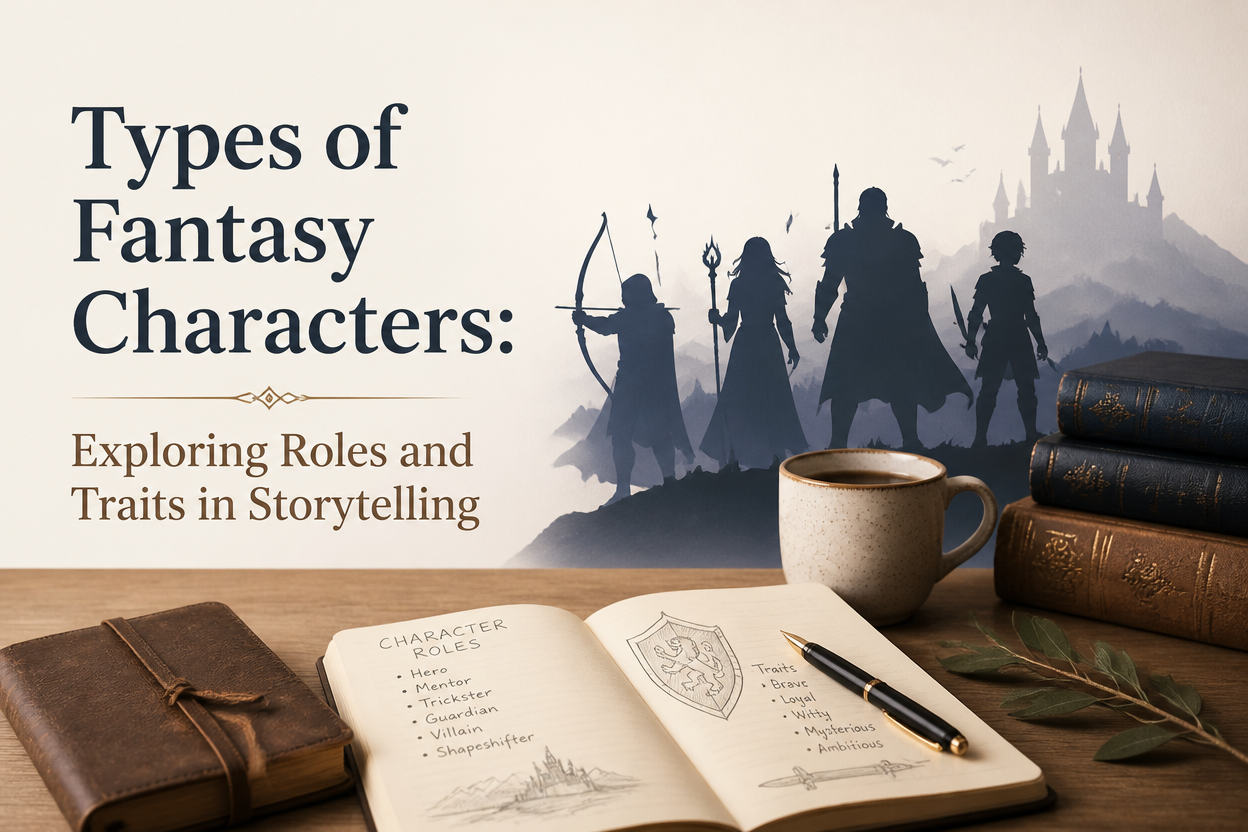
Types of fantasy characters give you a working map for building conflict, desire, and reader loyalty. A character’s job in the story shapes every scene, from the choices they make under pressure to the promises your cover and blurb make to fantasy readers. I recommend designing characters by function first, then adding the traits, history, and contradictions that make them feel alive.
Fantasy rewards invention, yet invention alone rarely carries a novel. A beautifully imagined sorcerer can still feel empty if the character has no personal cost attached to their magic. A chosen heir can feel familiar if their status never forces a difficult decision. Your task is to give each character a role that creates pressure and a private reason to resist that role.
Think of character types as tools, not cages. You can combine the reluctant hero with a political heir, give the mentor a hidden debt, or let the villain sincerely believe that cruelty will save thousands of lives. Those combinations create stories with movement. I use the categories below to test whether every major character has a clear dramatic purpose and enough inner friction to surprise the reader.
Table of Contents
Character Function Before Character Flavor
Start by asking what each character makes possible in the plot. Consider the mentor, whose role is to hand down knowledge. Rivals expose weakness, and allies bring skill, emotional pressure, or ambitions pulling in a different direction. Place an antagonist between the protagonist and what they want, and the story demands a costly choice. Once you understand the function, you can build a personality that expresses it through behavior rather than exposition.
Protagonists With Personal Stakes
Your protagonist needs a want concrete enough to sum up in a single sentence. For example, one hero might want to reclaim a family sword taken by raiders. Another could be desperate to shield a younger brother from conscription, and a knight from a disgraced order might need to prove it deserves restoration. The larger fantasy conflict gives the story scale. It is the personal want, however, that gives the reader a reason to care about the next chapter.
Give the protagonist a belief that the plot will pressure. Take a healer who believes every life deserves saving, then pit that healer against an enemy who uses hostages as shields. In a court drama, a prince who trusts obedience to keep people safe discovers that the same obedience protects a corrupt council. The strongest arc comes from a belief that once helped the character survive and later limits their choices.
Supporting Characters With Pressure
A supporting character earns space through the pressure they add. Ask what changes when this person enters a scene. Do they reveal information, challenge a plan, threaten a relationship, or expose a moral cost? If the answer is vague, the character may belong in the background or may need a stronger goal.
Give important supporting characters an agenda that continues beyond the protagonist. Picture a scout guiding the hero across the haunted pass because she needs access to the city beyond it. Your royal advisor might back the rebellion for a colder reason, since he wants the throne vacant for his own family. Private goals like these keep a character from becoming a delivery system for advice.
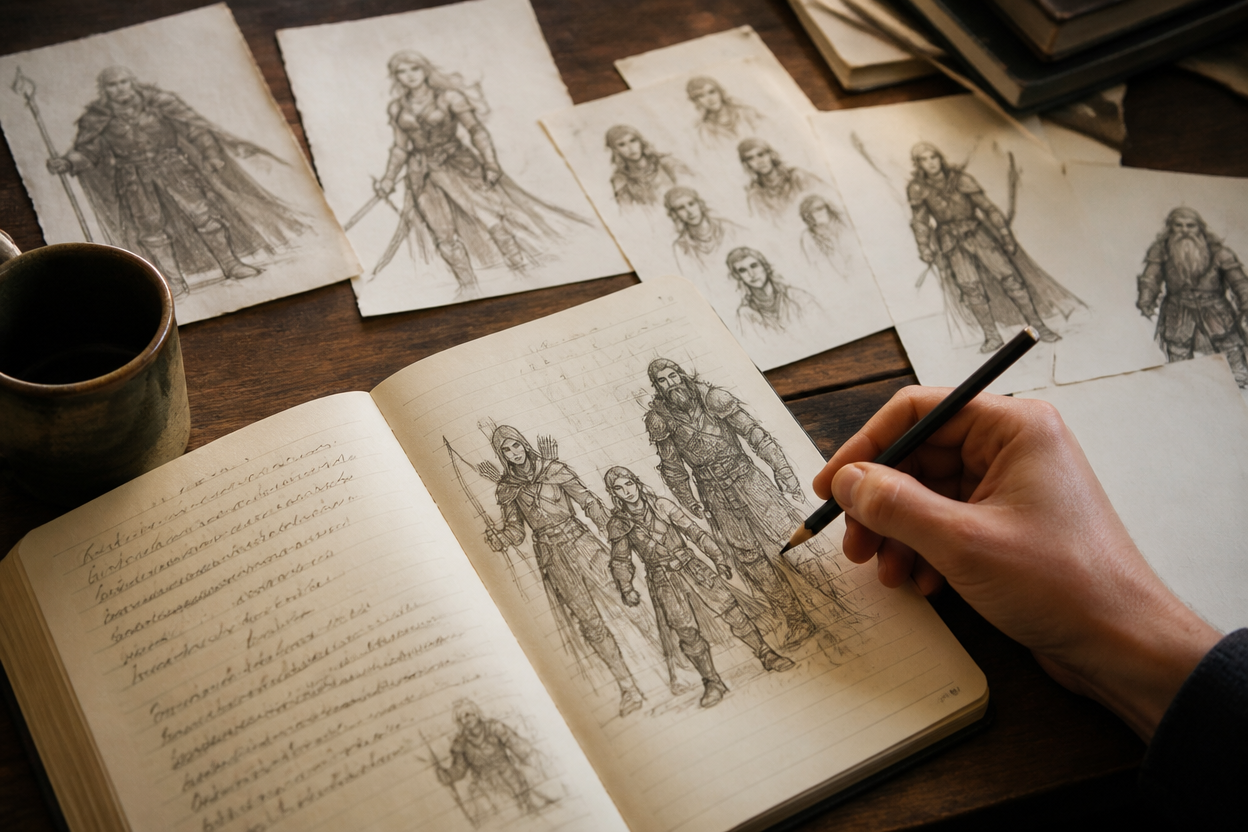
Classic Fantasy Archetypes With Fresh Motives
Archetypes help readers recognize a character’s role at a glance. They also carry expectations that you can use, satisfy, or disrupt. Once a familiar shape draws the reader in, a specific motive gives them a reason to keep reading.
The Chosen One And The Reluctant Hero
The chosen one carries an external claim to importance, such as a prophecy, bloodline, mark, or inherited weapon. That claim creates immediate plot access. It can also weaken tension if destiny solves every meaningful problem. Give the character a choice that prophecy cannot answer.
A reluctant hero works through resistance. They may refuse the call because they understand its cost, distrust the people delivering it, or have already failed someone who depended on them. Their reluctance needs a concrete source. Vague fear fades from the page. In contrast, a memory of a village burned after the hero followed orders stays with the reader.
The Mentor, Trickster, And Companion
The mentor gives the protagonist knowledge, training, or a new frame for understanding the conflict. Rather than making the mentor a perfect encyclopedia, give them a blind spot, an old compromise, or a lesson they learned too late. Their eventual absence carries more weight once the reader has seen where their wisdom runs out.
The trickster creates instability through wit, deception, or rule-breaking. Their scenes should alter the balance of power. Consider a thief who steals the royal seal, an act with a real dramatic function. Jokes cracked during every tense exchange amount to a mannerism. Build the function first so the mannerism has something to stand on.
The companion provides emotional and practical resistance. They might question the protagonist’s plan, call out self-deception, or demand attention to people harmed by the quest. Let loyalty turn expensive for the companion at some point, since their decision can reshape the story more than another battle could.
Fantasy Heroes Shaped By Cost
Heroism becomes convincing when it costs the character something they genuinely value. The cost can involve safety, reputation, family, freedom, faith, or the right to see themselves as a good person. Saving everyone without losing anything amounts to finishing a task. Once a character has to choose which value to sacrifice, they have entered a story.
Warriors, Mages, And Healers
The warrior’s strength creates obvious action, so you need a deeper consequence attached to violence. For example, a veteran may protect others because combat is the only skill that has ever earned them respect. Give a young fighter grief they cannot face, and glory becomes an escape from the quiet life that would force a reckoning. In both cases, the fighting style becomes an expression of character.
The mage often carries power that changes the rules of a scene. Attach a limit that produces decisions rather than mere inconvenience. Magic could require a memory, shorten the caster’s life, attract a predatory spirit, or work only with another person’s consent. The cost should interfere with the character’s desire, or it will read like decorative lore.
The healer offers a strong route into moral conflict. Consider how healing one person may consume the medicine three others need. Mercy can also run so deep that a healer keeps an enemy alive and puts the whole group at risk. Their skill turns dramatic once compassion and survival pull in different directions.
Antiheroes With A Code
An antihero needs a boundary. Consider an outlaw who steals only from the wealthy and refuses to kill children. Another might guard nothing beyond their own district or keep every promise made to the dead. The boundary lets readers understand the character even when their methods remain harsh. Remove the boundary without replacing it, and the antihero becomes a collection of grim gestures.
Give the antihero a choice that tests the code in private. Public declarations are easy to write. In contrast, a quiet decision, such as returning money that could buy a sibling’s freedom, reveals whether the code has substance. I look for that scene during revision because it often tells me more than a page of backstory.
Villains, Rivals, And Moral Pressure
Your antagonist needs a goal worth pursuing even without the protagonist. For example, a tyrant who wants power has a starting point. Let that same tyrant believe centralized power can prevent another civil war, and the character gains a worldview. The fuller version gives you arguments, policies, and choices that challenge the hero beyond physical danger.
Villains With Coherent Beliefs
Build the antagonist’s logic before you build their cruelty. What event taught them that mercy fails? Who benefited from their old values? What evidence do they use to defend their current plan? Approving of the villain’s reasoning is optional. Understanding how the villain approves of it is the real work.
Keep the villain’s methods connected to the belief. Consider a ruler who fears disorder and responds by banning travel, censoring songs, and punishing unscheduled gatherings. In a darker case, a necromancer convinced that death creates equality may raise the rich and poor alike, treating the practice as justice. Specific behavior makes ideology visible.
Rivals With Shared Ground
A rival becomes memorable when they share a value with the protagonist. Both may want to end a war, protect the same child, or restore an abused institution. Their disagreement comes down to tactics, timing, or which lives they are willing to sacrifice.
Let the rival succeed sometimes. Losing every contest only confirms the hero’s superiority. Once a rival exposes a flaw in the hero’s plan, the hero has to adjust, and the rival earns credibility. You can also let the rival make one generous choice that complicates the reader’s judgment without erasing their harm.
Character Design For A Working Fantasy Ensemble
An ensemble needs separation. Readers should identify characters by decisions, speech patterns, values, and relationships before you attach names to dialogue. I recommend writing a one-page character sheet for each major figure with five items: public goal, private fear, false belief, useful skill, and line they refuse to cross.
Distinct Voices And Relationships
Voice comes from what a character notices and what they refuse to say. For example, a soldier counts exits the moment they enter a room. In a palace, a court poet hears the insults hidden inside compliments. Raise a child in a temple, and even ordinary weather starts to read as an omen. Build dialogue from those habits, then read scenes aloud to catch voices that have started blending.
Relationships create another layer of distinction. Your protagonist can be patient with a younger sibling, suspicious of a mentor, and flirtatious with a rival. Those changes reveal character through behavior. Calling someone brave, loyal, and sarcastic in a profile offers only labels. Fiction begins in the scene where they lie to protect one person and betray another.
Revision Tests For Character Types
Check every major scene for character agency. Ask who wants something, who resists, and who pays for the final decision. If a character enters only to explain history, rewrite the scene so that the information arrives through a disagreement, demand, or threat.
Track each character’s change across the draft. The change can be acceptance, rejection, corruption, grief, forgiveness, or a sharper understanding of the same belief. Some transformations end in loss, and the story only requires a sequence of choices that leaves the character altered.
Use a name generator during early drafting when a placeholder keeps you at a distance from the character. Adazing offers word tools and name generators that can help you test cultural texture and sound. Research each name’s history before you commit, and check how well it fits your setting. Your final choice needs to serve the character, the genre, and the reader’s ability to remember the cast.
FAQs for Types of Fantasy Characters: Exploring Roles and Traits in Storytelling
How Many Fantasy Character Types Should A Novel Include?
Use as many types as your plot can support with distinct goals and meaningful relationships. For example, a focused quest may need one protagonist, one antagonist, a companion, and a mentor. In contrast, an epic series can support several factions and rival claimants. Count active agendas rather than names. If three characters perform the same dramatic job, combine them or give each one a different source of pressure.
How Do I Avoid Familiar Fantasy Archetypes?
Give the archetype its own history, an unusual motive, and a decision with a personal cost. Consider a prophecy dictating every step of the protagonist’s journey, a shape most readers know well. Let the hero set out to destroy it because it once got their family hunted, and the same device starts to feel like theirs alone. Familiar shapes become original through consequence and choice.
Should Every Fantasy Character Have A Detailed Backstory?
Every major character needs a past that affects present behavior. You do not need to show every year of it. Choose the event, relationship, or belief that explains a current decision, then reveal it through conflict. Backstory earns space when it changes what the character does in the scene.
Build Characters Who Force The Story Forward
The strongest fantasy characters carry a role the reader can recognize and a motive the reader cannot reduce to a label. Design each person around desire, pressure, belief, and cost. Then test the cast scene by scene until every important entrance changes the available choices.
Your character list should help you draft with confidence. Still, the manuscript remains the real test. When you need momentum, the tools at Adazing can help with early names, word choices, and writing prompts. The final authority belongs to the choices your characters make when every available option hurts.
