
Fiction, poetry, memoir, drama, and other types of creative writing each make different demands. Writers who understand those demands gain more control over every project they begin. Form determines how a reader receives your ideas, how much room you have for invention, and which craft problems deserve your attention first. For example, a short story demands compression. In contrast, a novel gives you room for layered change. Turn to memoir, and the task becomes shaping lived experience into a meaningful narrative.
I have seen capable authors stall because they treat creative writing as one large category with one set of rules. They draft a personal essay like a novel chapter, build a screenplay around interior thoughts, or force a poem to explain itself until the language loses its charge. Writing improves once you understand the form you have chosen and the promises it makes to a reader.
In the sections below, you’ll find the major forms of creative writing, the craft skills each one rewards, and a practical way to choose your next project. Staying inside one form forever isn’t the goal. What matters is enough clarity to know what you are practicing each time you sit down to write.
Table of Contents
Fiction Forms And Their Craft Demands
Fiction invents people, situations, or worlds and persuades the reader to care about what happens to them. The writer controls point of view, plot, character desire, setting, pacing, and language. Those tools appear in every kind of fiction. What changes from one form to the next is how much space each tool receives.
Short Stories And Flash Fiction
A short story usually centers on one decisive change, revelation, conflict, or emotional movement. You can write a complete story in 2,000 words or 10,000 words, depending on the publication and genre. Flash fiction compresses the same work further, sometimes into fewer than 1,000 words.
The mistake I see most often is treating a short story as a novel summary. You cannot introduce six major characters, explain three decades of history, and give every subplot a satisfying ending in 4,000 words. Choose one pressure point and let the surrounding details imply the larger life.
For practice, write a story in which a character must make one decision before midnight. Give the character a specific want, place one credible obstacle in the way, and cut every scene that does not increase the pressure around the decision.
Novels And Novellas
A novel gives you room for multiple turning points, subplots, relationships, and reversals. Between a short story and a full-length novel sits the novella, which carries more development than the shorter form without demanding the architecture of an 80,000-word manuscript.
Long fiction depends on escalation. If a character faces the same problem in chapter one and chapter twenty, the story has only marked time. Each major section should alter the character’s options, deepen the cost of failure, or expose information that changes the reader’s understanding of the conflict.
Before drafting, write a one-page story map with four elements: the protagonist’s desire, the force resisting that desire, the decision that turns the plot, and the final consequence. The map can change later. What you need now is a working pressure system before you generate hundreds of pages.
Genre Fiction And Literary Fiction
Genre labels help readers understand the experience they are buying. For example, a mystery promises a question and a satisfying investigation. Romance readers expect a central relationship and an emotionally credible resolution. Pick up a fantasy novel, and you might anticipate a particular kind of world, magic, danger, or moral conflict. Literary fiction often places more weight on language, interior change, social observation, or ambiguity.
These categories overlap constantly. Take a literary mystery, which still needs a compelling puzzle at its center. Even the most ambitious fantasy novel needs characters with urgent desires. I recommend studying the books in your target category, learning what their readers expect, and meeting those expectations before you experiment with them.

Creative Nonfiction And Personal Truth
Creative nonfiction uses the tools of fiction to shape true events, ideas, and experiences. Memoir, personal essays, literary journalism, travel writing, biography, and narrative history all fall under this form. The facts remain accountable to reality. Within those limits, the writer decides on arrangement, scene selection, voice, and emphasis.
Memoir And Autobiographical Writing
Memoir focuses on a meaningful portion of a life and leaves the birth-to-present record to autobiography. Consider a memoir about grief, which might cover a single year. One about leaving a religion can stretch across decades. Your subject supplies the material. The central question is what gives the book its shape.
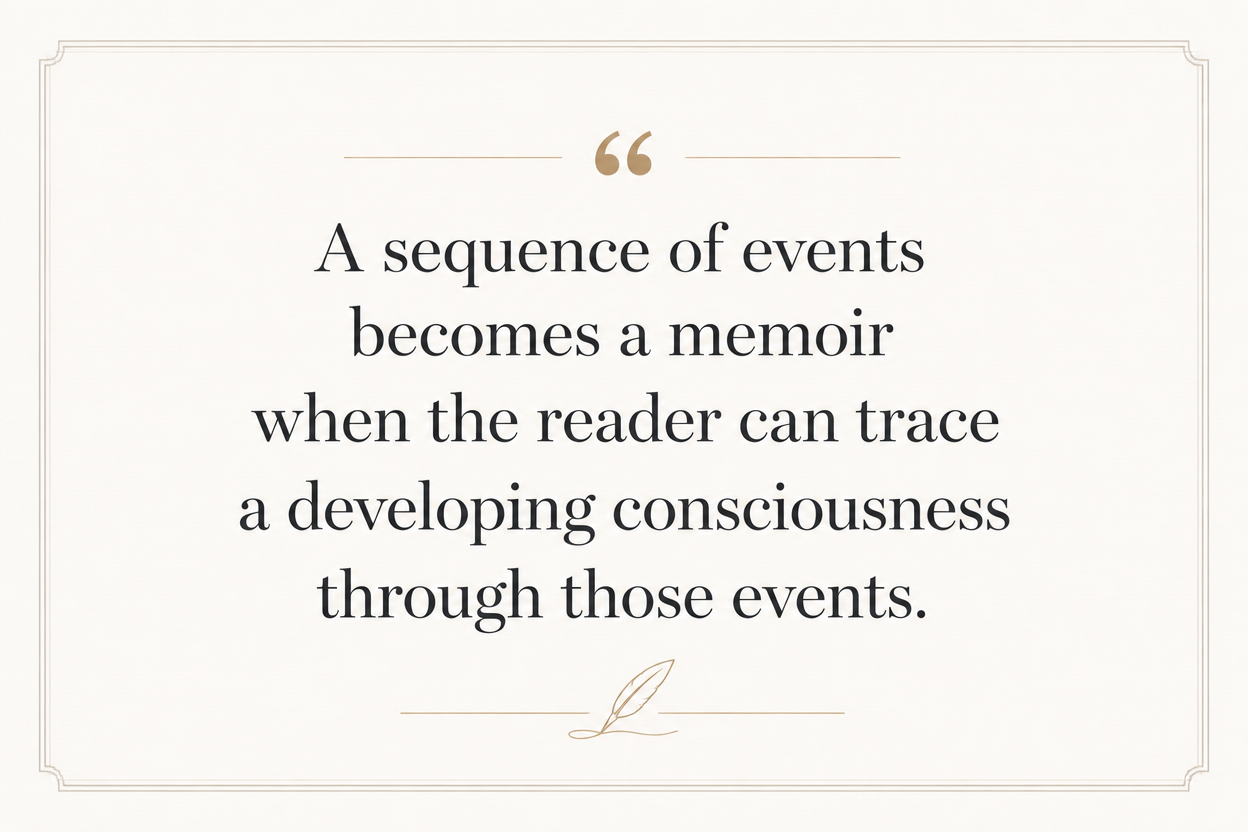
Ask what changed in your understanding. A sequence of events becomes a memoir when the reader can trace a developing consciousness through those events. Your childhood home, difficult diagnosis, failed business, or family conflict matters because it reveals a way of seeing that changes under pressure.
Draft one scene from memory. Afterward, mark every detail you know, every detail you infer, and every detail you invented for convenience. Research the first two categories where necessary, and revise or remove the third. Readers can accept limited memory. What breaks their trust is invention presented as fact.
Personal Essays
A personal essay usually begins with a particular experience and moves toward a broader question. That question might concern friendship, work, illness, parenthood, class, faith, or a family’s strange rules. Personal essays succeed when the reflection grows out of the scene itself. Once it floats above the scene as an abstract lesson, the essay loses its grip.
Use concrete evidence. For example, a receipt from a closed restaurant, a voicemail you never answered, or the exact phrase your doctor used can carry more force than a paragraph about how difficult everything felt. Specific objects let the reader enter the experience without requiring you to explain every emotion.
Literary Journalism And Narrative History
Literary journalism and narrative history combine reporting or research with scene, character, context, and pacing. You still need accurate sources, fair representation, and clear boundaries between documented fact and interpretation. A polished narrative cannot excuse a false quotation or a distorted timeline.
Keep a source log as you draft. Record where each important detail came from, especially dates, quotations, statistics, and claims about another person’s motives. This habit saves hours during revision and protects your credibility when the manuscript reaches editors, agents, or readers.
Poetry, Drama, And Performance Writing
Poetry, drama, and performance writing place unusual pressure on sound, image, voice, and physical delivery. These forms can carry a story. A novel, by comparison, leans far more heavily on plot and chronology. They ask you to pay attention to the sentence as an object the reader hears and feels.
Poetry And Spoken Word
Poetry can work through image, rhythm, compression, pattern, surprise, argument, or silence. A poem has no obligation to explain its meaning in ordinary prose. Precise language and enough internal movement to reward rereading carry the real weight.
Read your poem aloud. Your ear will catch repeated sounds, weak verbs, accidental rhymes, and lines that break the rhythm without purpose. I often revise a poem by replacing an abstract noun with a physical detail. For example, “loneliness” tells the reader what to feel. In contrast, an untouched second cup on a kitchen table gives the feeling a place to live.
Spoken-word writing adds the body and the room to the craft problem. A line that looks elegant on the page can vanish once spoken aloud. Mark breaths, stress words, and changes in pace. Record yourself reading the piece. On playback, revise the lines that sound muddy or overpacked.
Playwriting And Screenwriting
Drama depends on action that can be performed. In screenwriting, everything has to reach the audience as an image or sound a camera can capture. A character’s private regret belongs on the page only when the audience can encounter it through behavior, dialogue, an object, or a visible choice.
Dialogue carries more weight in scripts than in most prose. Give each character a distinct goal in the scene. When direct statements would flatten the tension, let the conversation pursue those goals indirectly. People rarely announce the full truth when it matters most.
Write a five-page scene with two characters who want incompatible things. Restrict yourself to what an audience could see or hear. You will learn where you rely on explanation and where the scene already contains dramatic movement.
Hybrid Forms And Experimental Practice
Many strong books resist a single category. Hybrid writing can combine memoir with research, poetry with visual art, essays with photographs, or fiction with documentary materials. The form should arise from the subject’s demands. For example, a fragmented structure can suit fractured memory. Drop lists, letters, transcripts, or photographs into the text, and they supply evidence that ordinary exposition cannot.
Personal Essays With Research
A researched personal essay can move from a private experience into history, science, policy, or cultural criticism. Research gives the personal material context. In return, your experience offers the research a human point of entry.
Keep the proportions under control. Picture a draft that opens with your father’s stroke. After six pages of medical history, that draft can lose its center entirely. Return to the lived question that made you research the subject. Every outside fact should sharpen that question, complicate it, or change what you thought you knew.
Epistolary And Fragmentary Writing
Letters, emails, journal entries, text messages, transcripts, and lists can create intimacy or concealment. The format also gives you a built-in voice. Consider a character whose work emails sound nothing like her private journal. The gap between those documents reveals who she is.
Fragments need a pattern. Readers will accept missing transitions when each piece adds pressure, contrast, or information. Arrange ten fragments on a table and identify the emotional or chronological movement between them. Rearrange anything that repeats the same point without deepening it.
Interactive And Digital Writing
Interactive fiction, serial fiction, newsletters, and multimedia essays change how readers relate to the text. Writers can offer choices, release episodes, or combine written passages with audio and visual material. These forms invite participation. That participation brings its own technical and editorial demands.
Choose the platform before you build the structure. For example, a story designed for Wattpad needs different chapter lengths, openings, and reader prompts from a serialized email or a printed book. Draft a sample section, publish or test it with a small group, and study where readers stop, respond, or ask for clarification.
Choosing A Form For Your Next Project
The right form usually becomes clearer when you examine the material’s natural pressure. Take a single charged incident, which often wants a short story. A decade of personal change leans toward memoir. When a character’s voice dominates, poetry or drama can serve it best. Follow a research question that keeps opening into other questions, and you might end up with a book of essays.
I recommend answering five questions before you commit to a draft:
- Which parts of the material should the reader experience directly?
- How much time does the material require for change to feel credible?
- Does the subject depend on invented characters, documented facts, or both?
- Where will tension come from when the reader reaches the middle?
- What form gives the language its strongest sound and shape?
Next, test the material in more than one form. Turn it into a 1,000-word short story, a 700-word personal essay, and a one-page screenplay scene. The version that creates the clearest pressure will tell you more than a month of abstract planning.
Use tools when they remove friction from this experiment. Adazing offers writing tools like QuickWrite, along with name and word generators that can help you test character voices, settings, or working titles. Generators give me raw material and surprise. The final artistic decisions still come from reading, revision, and judgment.
FAQs about the Types Of Creative Writing
What Are The Main Types Of Creative Writing?
Most writers recognize six main types: fiction, creative nonfiction, poetry, drama, screenwriting, and hybrid or experimental writing. Each type contains smaller forms. For example, fiction covers novels, novellas, short stories, and flash fiction. Memoir, personal essays, literary journalism, and narrative history all sit under creative nonfiction.
Which Creative Writing Form Should A New Writer Try First?
Start with the form that matches the material you already have. Consider the short story, which gives you a contained project and teaches scene, character, conflict, and revision. If you have a specific experience connected to a larger question, a personal essay might fit better. Write a complete sample before deciding whether the form suits you.
Can One Book Use Several Types Of Creative Writing?
Yes. Many books combine essays, poems, letters, photographs, research, or fictional scenes. The forms need a clear relationship to one another, and each section should earn its place. Let the structure itself teach the reader the rules. Stay consistent enough that the changes feel intentional.
Use Form As A Craft Decision
Creative writing becomes easier to manage when you stop treating form as a label and start treating it as a set of decisions. Form determines what the reader sees, hears, expects, and remembers. It also tells you what belongs in the draft and what can stay in your notes.
Choose one form, write a small complete piece, and study the problems it exposes. Revise for the promises that form makes. Your imagination will have more room once the structure gives it somewhere to work.
