
Most advice about writing literary fiction treats readers like a mysterious elite. In practice, readers leave literary novels for the same reasons they leave any novel: the opening feels shapeless, the character stays distant, or the sentences call attention to themselves without paying off.
Literary fiction can be challenging, but it cannot be indifferent to the reader. If you want to attract readers, you need a clear story engine, a human center, and prose that earns its intensity by carrying meaning, not by performing “literary.”
I’m going to walk you through what actually moves literary fiction off the workshop table and into a reader’s hands, plus what to do on the publishing side so your book reaches the people who already want what you write.
Table of Contents
Reader Magnetism Starts With A Story Engine
A literary novel still needs propulsion. The difference is that the engine usually runs on interior pressure and social consequence rather than plot spectacle. When the engine is weak, writers compensate with atmosphere, and atmosphere alone rarely carries 300 pages.
If you want more readers to finish your book and recommend it, build an engine that can be described in one sentence without reducing the work. “A widow tries to sell the family home and discovers what her marriage cost her” is an engine. “A meditation on grief” is not an engine. The second might be true, but it will not help you draft scenes with force.
Desire, Cost, Clock
I look for three pieces before I trust a manuscript to hold a reader.
Desire: What does your protagonist want in concrete terms, even if the deeper want is spiritual or psychological? Readers track visible wants. They can infer the invisible ones.
Cost: What will it cost them to get it, and what will it cost them to fail? Literary stakes often live in reputation, family bonds, identity, faith, class, or self-respect. Treat those stakes like they matter as much as a heist.
Clock: What forces movement? A visit ends on Sunday. A mother’s diagnosis changes the calendar. A pregnancy creates a countdown. A small clock can drive enormous interior change.
On your next revision pass, write one line for each: desire, cost, clock. If you cannot, you are probably asking the language to do the job that the structure should be doing.
Scene Pressure Instead Of Scene Description
Many literary drafts describe scenes instead of pressurizing them. Conflict is the moment a character has to choose, conceal, confess, refuse, or lie in a way that changes the relationship map.
Here is a diagnostic I use: in each scene, can you point to the sentence where the social air changes? The line where a joke lands wrong, a compliment becomes a weapon, or a silence becomes a decision. If that line is missing, the scene may be pretty and still feel inert.
Pick five scenes at random and underline the exact turn. If you cannot find it, revise the scene around a sharper choice.
Open With A Promise That The Book Intends To Keep
Openings in literary fiction often aim for texture. Texture is good, but the promise is better. The opening needs to tell the reader what sort of attention to bring.
You can promise through a situation (a marriage is breaking), a voice (a mind you want to inhabit), or a question (what happened to the missing brother). You do not need car chases. You do need a felt reason to continue.
If your first three pages contain only setting, backstory, and a general mood, you are relying on the reader’s patience. Patience is not a strategy.

Character Intimacy Beats “Complexity”
The authors say they want complex characters. Readers want intimate access. Complexity without intimacy reads as distance, and distance is what makes people put the book down and claim they are “not in the right mood.”
Intimacy does not mean likability. It means the reader understands how the character’s mind moves, what they avoid, what they justify, and what they cannot admit without breaking.
Specific Shame Creates Immediate Depth
Shame is a reliable shortcut to depth because it forces contradiction. People with nothing to hide are hard to write and often boring to read.
Give your protagonist a specific shame that shows up in behavior. They correct people because they grew up being corrected. They rehearse conversations because they were humiliated once and never recovered. They love their child and resent them. That is human, and readers recognize it.
Write a one-paragraph “private file” for your protagonist that never appears in the book. Include what they would never tell their closest friend and what they secretly believe they deserve. Then revise one early scene so that shame shows up as an action, not a thought.
Secondary Characters With Independent Wants
Literary fiction lives and dies on relationships. If secondary characters only exist to echo the theme, they feel like furniture.
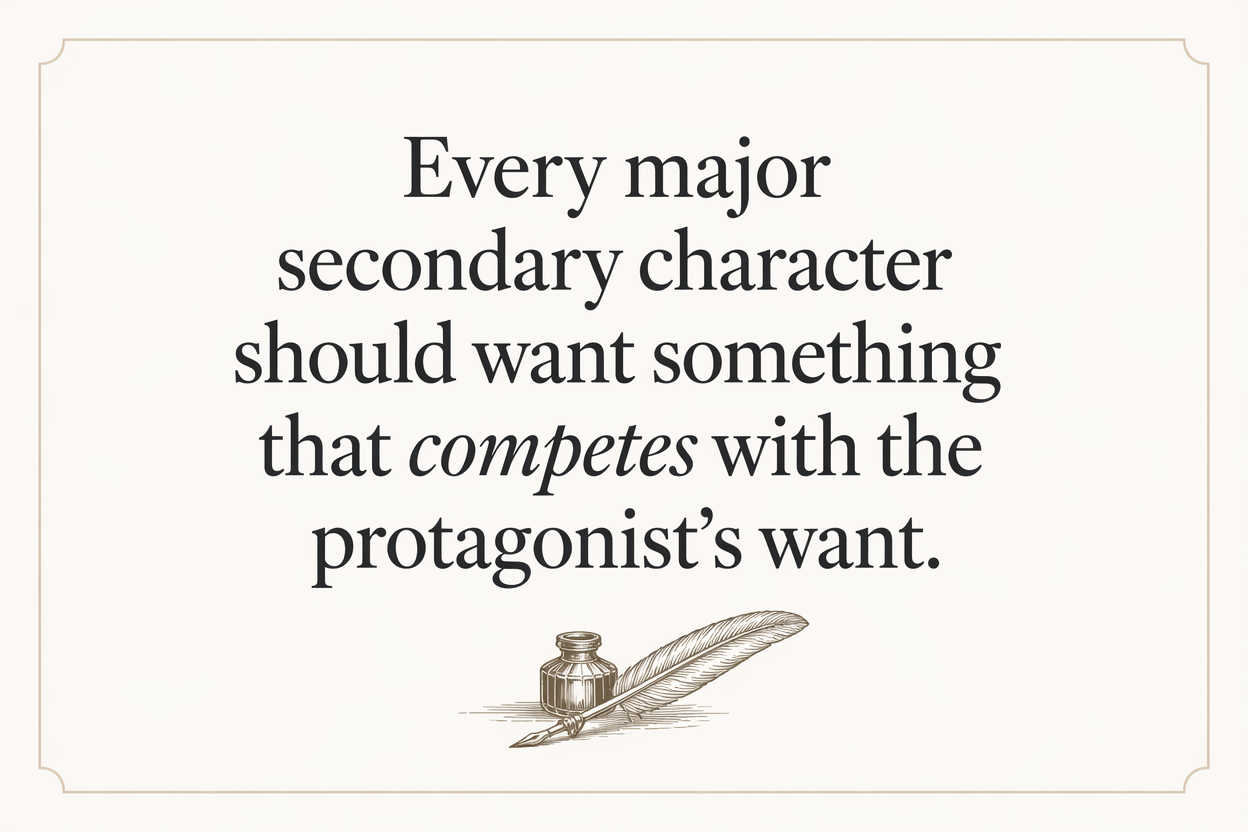
Every major secondary character should want something that competes with the protagonist’s want. It can be love, control, status, peace, distance, forgiveness, money, or a story they can live with. The point is that their desire generates friction without you forcing drama.
When I line-edit, I flag scenes where the secondary character agrees too easily or asks leading questions that exist to pull out the protagonist’s monologue. Give them their own agenda, and they will stop acting like a therapist in dialogue form.
Interior Voice With Limits
Deep interiority is a draw for literary readers, but it comes with a danger. If the narrative voice can explain everything at any time, you erase tension.
Let the character misunderstand themselves. Let them reach for the wrong explanation first. Let them describe the world in a way that reveals bias. This choice keeps the mind on the page while preserving mystery.
Pick a pivotal moment and write the interior narration twice, once as the character would tell it today, and once as they will understand it ten years later. Use the version that carries the most heat while still staying honest to the character’s current blind spots.
Prose That Earns Attention Instead Of Demanding It
Literary readers notice sentences, but that does not mean you should decorate them. Prose attracts readers when it creates precision, surprise, and emotional truth. It repels readers when it becomes a fog machine.
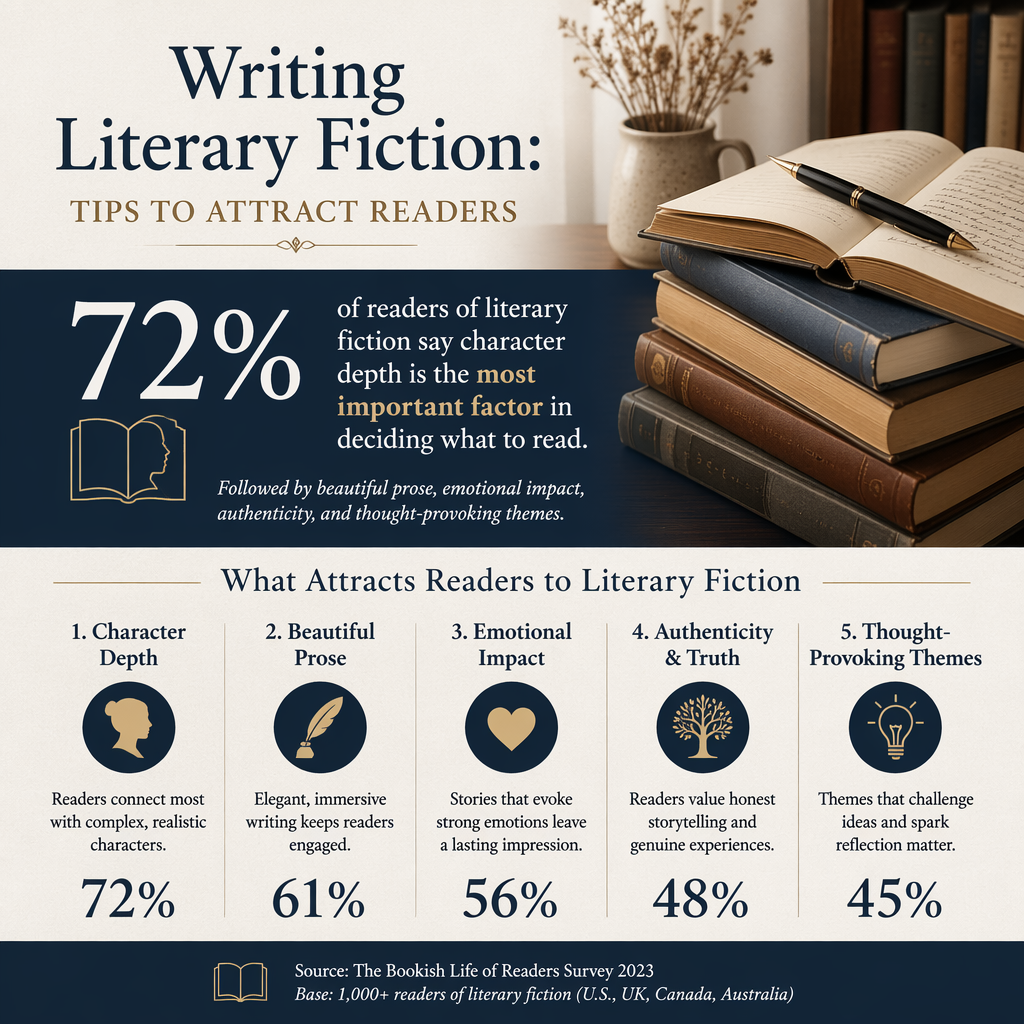
I like a simple standard. Every stylistic flourish has to buy you something. It should sharpen perception, deepen character, or compress meaning. If it only sounds impressive, it is stealing attention from the story.
Concrete Images With Emotional Charge
Abstract language is where manuscripts go to hide. “Alienation,” “longing,” and “the weight of the past” can be real, but they do not land until they have a physical anchor.
Anchor feelings in objects, habits, and sensory detail that belong to that character. A father who irons his shirts at midnight. A sister who keeps returning to the same drawer even though nothing is inside. A landlord who counts cash slowly while maintaining eye contact. These are not random “good details.” They imply a worldview.
When revising, highlight every abstract noun in one chapter. Replace a third of them with an image, an action, or a specific memory. You will feel the prose tighten.
Sentence Variety With Control
Readers experience your style as rhythm. If every sentence has the same length and structure, your voice flattens. If every sentence tries to be a masterpiece, your voice turns exhausting.
Mix long sentences that carry thought with short sentences that land a conclusion, but keep the grammar clear. Literary does not mean confusing. When you force readers to re-read for basic sense, you are spending their attention on decoding instead of feeling.
If you want a craft reference with real teeth, I often point writers to George Orwell’s “Politics and the English Language” because it is ruthless about flabby phrasing. You do not need to write like Orwell. You do need his intolerance for vagueness.
Selective Distance For Maximum Impact
Distance is a tool, not a default. Close narration builds intimacy. Stepping back can create irony, social critique, or breath. The problem is when the distance stays static for the whole book.
Try tightening distance in scenes where the protagonist risks exposure, and loosening it in scenes where the wider social system matters. This shift gives the reader emotional immersion and thematic perspective without long lectures.
On a practical level, take one chapter and mark where you are inside the character’s sensations, where you are inside their thoughts, and where you are outside them, describing. If you only have one mode, experiment with one deliberate shift.
Theme As A Byproduct Of Choices
The theme is why readers remember a literary novel. It is also what writers overhandle. When the theme becomes the point of the scene, characters start speaking in thesis statements, and readers start feeling managed.
The theme should emerge from repeated choices under pressure. A character keeps buying safety at the cost of honesty. A family keeps choosing silence over repair. A community keeps rewarding cruelty when it wears a polite suit. Those patterns create a theme without you announcing it.
Motifs That Evolve, Not Repeat
Motifs are useful, but repeating an image without changing its meaning is just repetition. The motif has to evolve as the character evolves.
If you use water, mirrors, birds, houses, or any of the common symbols, the reader will accept it if each return does new work. The first appearance can be established. The second can complicate. The third can invert. If every appearance says the same thing, readers feel the author’s hand.
When revising, list your three most repeated images or situations. Write one line about what each repetition means. If the meaning does not shift, revise one recurrence to change the reader’s understanding.
Subtext That Operates In The Negative Space
Subtext is where literary fiction earns its reputation. The simplest way to write it is to let the characters talk around what matters, because that is what people do when the stakes are emotional.
A useful technique is the “third topic.” Two characters argue about dishes, but the real fight is about respect and abandonment. The third topic is the hidden one. You should know it. The characters should avoid naming it. The reader should feel it anyway.
Pick one dialogue scene and write a private note above it: “This scene is actually about ____.” Then remove one line where someone states the truth too cleanly, and replace it with a dodge, a joke, or a precise observation that stings.
Endings That Close The Question You Opened
Ambiguity is valid. Vagueness is not. A literary ending can refuse tidy closure and still deliver a resolved meaning.
Go back to your opening promise. If you began with a question about identity, the ending should show the character’s final relationship to that identity. If you began with a breach, the ending should show what the breach cost and what remains possible.
I recommend writing your ending in one declarative sentence that states what changed. Then check if the final pages dramatize that change or merely hint at it.
Attracting Literary Readers In The Marketplace
Even a brilliant manuscript will not find its people if you package it like a different book. Literary readers buy with taste and trust. They look for signals that you understand what they already love.
This is the part many literary writers resist. You are not selling out by describing your book clearly. You are being readable.
Comp Titles And Shelf Placement
Comp titles are not a homework assignment for agents only. They are how you teach retailers, reviewers, and readers where to place you in their mental bookstore.
Pick two or three comps from the last ten years that match your reading experience. One can match voice, one can match subject, one can match structure. Do not pick a towering classic as your main comp. It signals inexperience, and it does not help algorithms.
If you self-publish, you can use comps to choose Amazon categories, keywords, and even ad targeting. If you are querying, comps show you understand your market without pretending you invented literature.
Cover And Description Signals
A cover for literary fiction still has to pass the thumbnail test. If the title disappears at postage-stamp size, you are losing readers before they sample a sentence.
Readers also use genre signals. A minimal cover can work, but it must look intentional, not cheap. The same is true for typography. Poor type kills trust.
When I am building or evaluating covers, I often quickly mock up multiple directions. Tools at Adazing, like the Book Cover Maker, help you iterate without waiting weeks between designer rounds, which is useful when you need to test what looks at home next to your comps.
Your book description should behave like a strong jacket copy. It introduces the character, establishes the pressure, and raises a question. It does not explain the theme or summarize the plot. If you want a gut-check, read your description and ask if it makes a stranger curious about what happens next. Curiosity sells more books than “beautifully written.”
Review Strategy And Reader Trust
Literary readers trust other readers, critics, and curated spaces more than they trust ads. That does not mean ads never work. It means you should build trust channels alongside any paid traffic.
Start with ARC readers who actually read literary fiction, not just friends who want to support you. You can find them through your newsletter, Goodreads groups, and literary-focused communities. Ask for honest reviews, not praise, and give them time. A rushed ARC team produces thin reviews that do not persuade anyone.
Pew Research reports that a majority of Americans read at least one book in the past year, with format preferences spread across print, ebooks, and audiobooks. The details shift year to year, but the useful takeaway for you is format variety. If you only release one format, you are rejecting some readers on day one. You can see the current breakdown in Pew Research Center’s reporting on audiobooks and reading formats.
If you do run ads, keep expectations grounded. Literary fiction often converts better on careful targeting and strong copy than on broad interest targeting. Your best ad is usually a clean comp-based hook plus a first-page sample that delivers voice immediately.
On the production side, tighten your drafting process so you can spend time where it matters. When I am moving fast on a revision and I need momentum, I use a focused writing tool like Adazing’s QuickWrite to keep sessions honest. The tool does not create voice for you, but it does reduce the friction between intention and pages, which is where many books stall.
FAQs for Writing Literary Fiction: Tips to Attract Readers
Do literary fiction readers care about plot?
They care about consequences. That often looks like a plot, but it can be quieter. If your scenes do not force decisions that change relationships, status, self-understanding, or the future, readers experience the book as wandering even if the sentences are strong.
How literary can my prose be before it turns readers off?
Your prose can be as distinctive as you can make it, as long as clarity holds. I would rather you write one startlingly precise image than five decorative sentences that blur meaning. If a reader has to re-read for basic sense, you are taxing the attention you need for emotion.
What is the fastest way to improve my opening pages?
Give the reader a human problem on page one and pair it with a voice that feels specific. Then cut any backstory that exists only to explain. You can earn context later, after the reader cares about the person living inside the context.
The Standard Your Draft Has To Meet
Literary fiction attracts readers when it marries ambition to readability. Give your protagonist a want, a cost, and a clock. Write scenes that turn. Craft prose that earns attention with precision, and then package the book so the right readers recognize it at a glance.
If you do those things, you are not lowering your art. You are giving it a fighting chance to be read.
