
Readers decide whether to trust a story protagonist long before they grasp the full plot. Your central character drives the pressure in each scene, makes the choices matter, and turns consequences into something the reader feels. If the protagonist seems passive, interchangeable, or disconnected from the main problem, even polished prose struggles to hold attention.
Holding that attention depends on investment, so I treat the protagonist as the reader’s main stake in the book. Likability, nobility, and an extraordinary past are all optional. What matters is a character who wants something specific, faces a force that resists that desire, and makes choices that alter the story. That chain gives your novel movement.
Revision gets much easier once you stop judging how impressive your protagonist seems and start measuring how much meaningful trouble the character creates. The protagonists who generate it make decisions under pressure, pay for them, and change enough for the reader to feel the cost of the journey.
Table of Contents
The Protagonist’s Job In The Story
Your protagonist carries the reader through the narrative by giving events a personal stake. A meteor strike, family secret, murder investigation, or failed business matters because it threatens something this particular character values. Plot supplies the events, and the protagonist turns them into consequences.
That link between choice and consequence goes back more than two thousand years. Aristotle’s Poetics ties dramatic action to character choice, defining plot as the arrangement of incidents and placing action at the heart of tragedy. Modern genres use different structures. The underlying craft principle still holds across those forms. Readers follow what a character does under pressure, then judge what those decisions mean.
Desire Creates Direction
Give your protagonist a concrete want early. Vague desires like “find happiness” leave you with little material for scenes. Sharpen that aim into “win custody before the hearing,” “sell the failing restaurant within thirty days,” or “recover the stolen field notebook before the expedition leaves,” and you have choices you can dramatize.
That desire should operate at two levels. On the surface, the external want gives the plot a visible target. Beneath it, the internal need exposes the wound, fear, belief, or blind spot that makes the target difficult to reach. For example, a detective may want to solve a disappearance and need to stop treating each relationship as evidence. Give a young wizard the same split, and the push for admission to an elite school might hinge on whether belonging is worth surrendering a moral boundary.
To test that split before drafting, write both levels in one sentence that follows the pattern “My protagonist wants X, and their belief in Y keeps them from doing Z.” Filling it in will reveal whether your character has a dramatic problem or merely a biography.
Agency Turns Events Into Story
Agency means your protagonist’s choices shape what happens next. That standard still leaves room for failure. Along the way, the character can lose, misjudge, hesitate, or give in to fear. Passive characters can work in some literary and observational novels. In those books, the passivity itself has to create tension. If other characters solve the problems and the protagonist merely reacts, readers have little reason to believe the ending belongs to that character.
To check where your draft stands, review your first three chapters and mark each major event as chosen, caused, or endured. Strong openings often mix all three. Picture a character who chooses to investigate, causes a public scandal through a lie, and endures the consequences of an enemy’s retaliation. If the endured label covers each major event, revise the protagonist’s decisions before revising the prose.

Desire And Opposition
A protagonist becomes vivid when desire meets resistance. That resistance should hit hardest wherever the protagonist’s strategy is easiest to break. For example, a rich villain who blocks a poor hero creates external pressure. Turn the obstacle inward, and a hero who cannot ask for help faces internal pressure instead. The strongest stories often connect the two.
Connecting them gets easier once you think beyond a single antagonist. Opposition can come from a person, institution, natural force, social rule, deadline, family obligation, or damaging belief. In a romance, the obstacle may be a custody agreement and the protagonist’s fear of dependence. A science fiction crew might face a failing life-support system alongside the captain’s refusal to admit uncertainty. Whatever its source, each force should make the protagonist choose between competing values.
Build A Pressure System
To capture those competing values, create a short pressure map before you outline, listing the protagonist’s desire, the force resisting it, the consequence of delay, and the cost of success. That final cost often produces the most interesting material. Consider how winning a lawsuit might expose the protagonist’s family. In another case, finding a missing child could require betraying the only ally who can help.
Those costs carry the most weight when the protagonist’s own decisions drive them up, leaving authorial announcements out of it. Readers do not need to hear that the situation has become desperate. Let them watch the protagonist spend the money reserved for rent, burn a bridge with a trusted friend, or choose a public confession over a private escape. Each of those decisions gives the pressure a shape readers can feel.
Give The Antagonist A Coherent Case
Your antagonist should pursue a goal that makes sense from their own position. Cruelty for its own sake rarely sustains a full novel. Give the rival a belief that the protagonist’s success will destroy a community, and each confrontation becomes a fresh challenge to the hero’s assumptions.
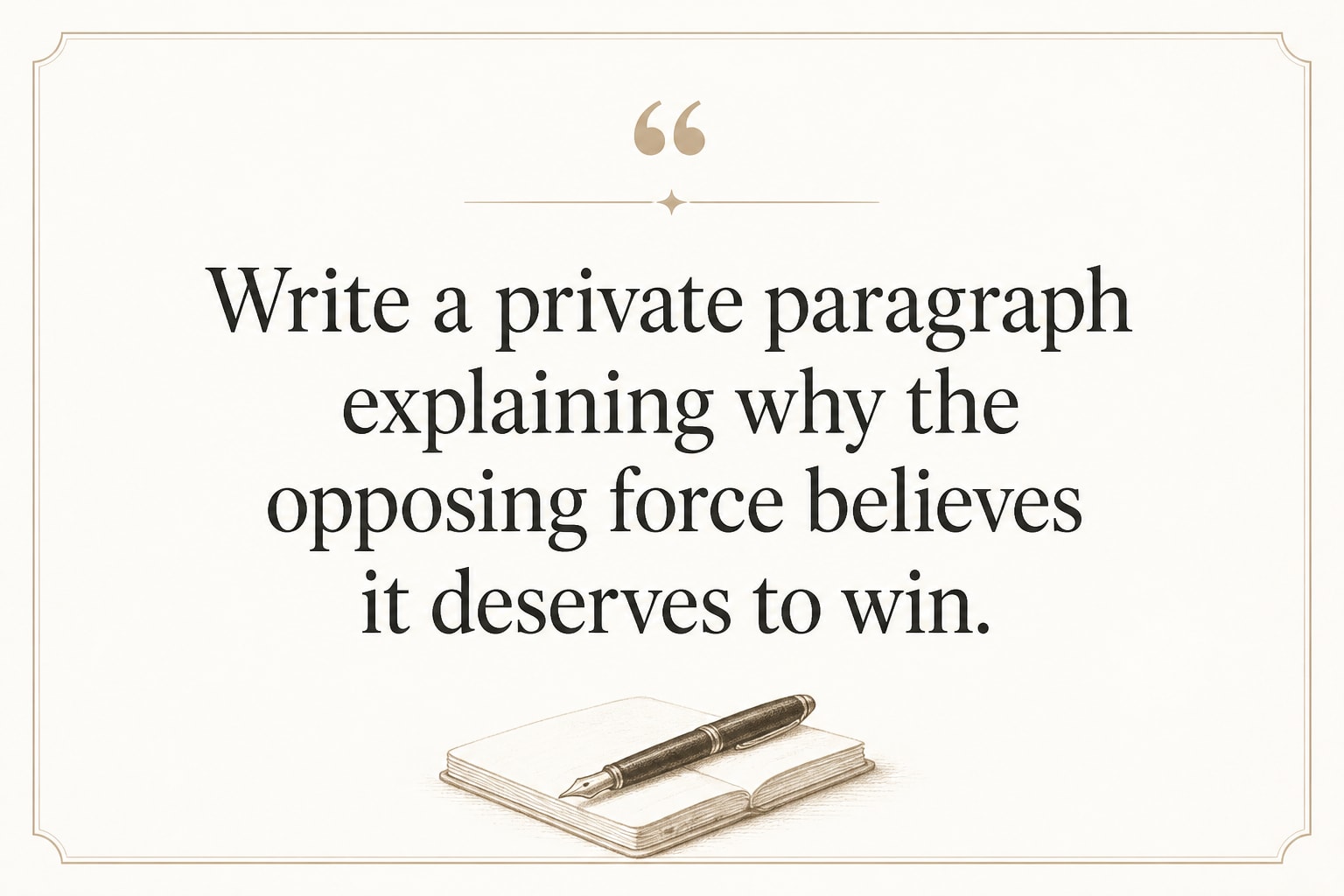
To ground that belief, write a private paragraph explaining why the opposing force thinks it deserves to win. That paragraph can stay out of the manuscript. Its job is to give the antagonist’s actions a logic stronger than convenience. Once the character’s reasoning feels legible, readers will accept extreme behavior.
With that logic in place, measure each confrontation by what the protagonist learns, loses, or decides. Arguments that repeat identical emotional stakes blur into noise. Let the encounters narrow the available choices until the protagonist faces a decision that reveals character.
The Character Arc And Its Cost
A character arc records a change in understanding, behavior, or identity, and that change needs a price. Consider a protagonist who learns to trust after one convenient conversation. That character has skipped the difficult middle where trust creates risk. Courage that costs nothing fares no better. It hands the hero a slogan and calls it an arc.
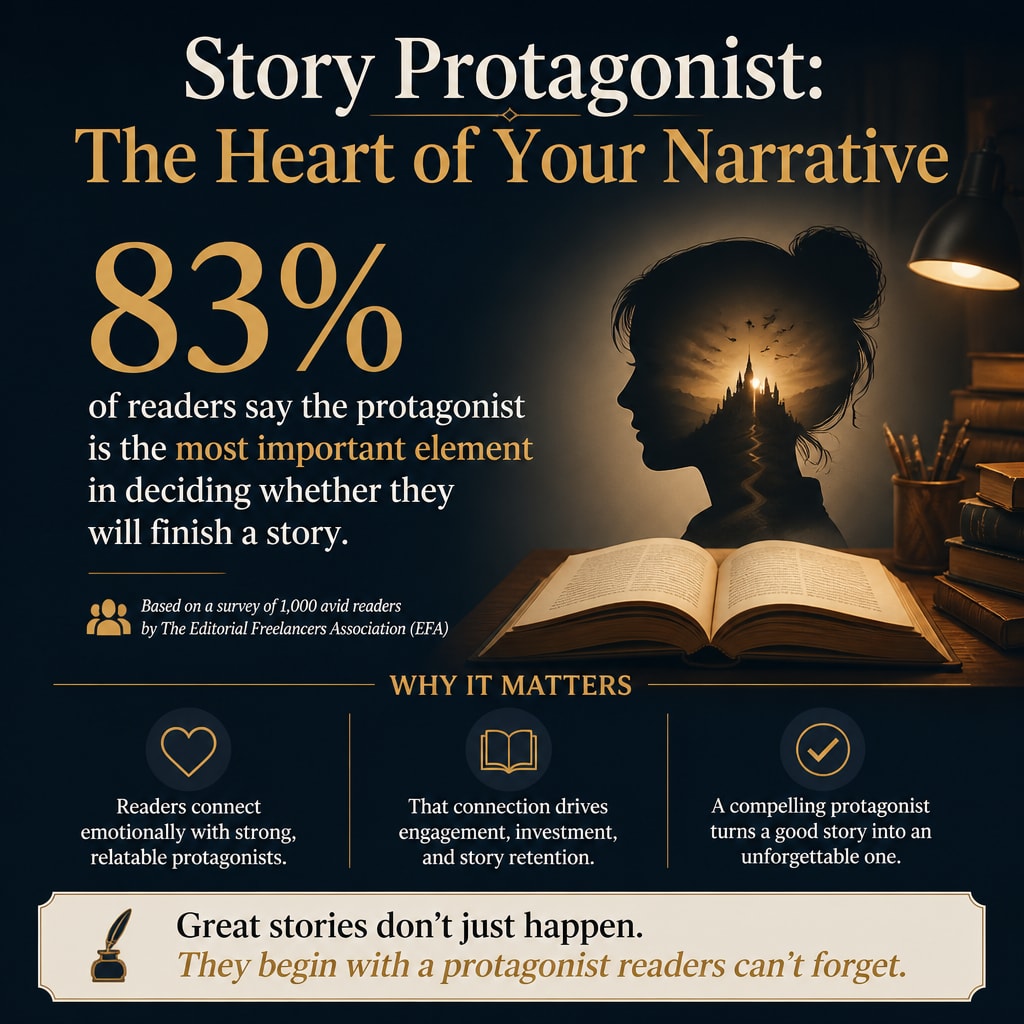
To build an arc with a real price, start by naming the belief that governs your protagonist at the outset. It might sound like “dependence makes you weak,” “power protects the innocent,” or “love always ends in abandonment.” Then design events that make that conviction harder to maintain. The protagonist should have real reasons for holding it. Let the story test those reasons with hard evidence, and spare the reader any lectures.
Choose The Lie And The Truth
Many commercial novels shape their plots around a false belief and a harder truth. Often, the lie protected the protagonist during childhood, and the truth now demands a new action that terrifies them. That pairing works across genres because it connects plot decisions to emotional meaning.
For example, a disgraced journalist believes any source will betray her sooner or later. That fear leads her to publish alone and refuse collaboration. The investigation leaves her dependent on a source whose safety hinges on her restraint. Her arc reaches its decisive point when she must choose between the headline that restores her career and the silence that protects another person.
That choice should emerge from earlier scenes. To make it feel earned, plant small versions of the final conflict in the opening chapters by letting the protagonist dismiss help, misread loyalty, or put reputation ahead of compassion. The arc satisfies readers when the ending resolves the tension the draft has been building all along.
Spend The Emotional Currency
Each major gain should create a loss, complication, or new responsibility. Picture a protagonist who gets the promotion and inherits a corrupt department. Another might find her sister only to learn her sibling wants nothing to do with her. Let a hero save the town, and he may become the person everyone blames for tearing down the old order.
None of this requires misery in each scene. The trade-off can stay intimate. Telling the truth at last may win a character self-respect and cost a comfortable friendship. Accepting love can strip away the ability to hide behind independence. Change feels believable when the old life still holds something worth missing.
To confirm the old life matters enough, draft a five-line arc summary covering the starting belief, first contradiction, midpoint choice, lowest-cost realization, and final behavior. If the final behavior could occur without the earlier pain, your arc needs more pressure.
Protagonist Work At Scene Level
A strong character arc can still disappear inside weak scenes. At the scene level, your protagonist needs an immediate objective, a reason the objective matters now, and a decision that changes the following scene. That three-part structure keeps the character active even during exposition or quiet emotional passages.
To see it at work, consider a scene in which a struggling novelist visits her editor to ask for a contract extension. On the surface, she wants the extension. Privately, she hopes to avoid admitting that the manuscript has failed. Tension builds when the editor offers help that would require her to reveal the real problem.
Track Choices And Consequences
To catch moments like that across your draft, write one sentence for each scene that covers four points, naming what the protagonist wants, what blocks that want, what choice the protagonist makes, and what changes because of it. You can apply this test to a thriller chase, a family dinner, or a chapter built around a memory.
Scenes that fail the test often contain information without movement. You may love the research behind a courtroom procedure or the history of a fictional kingdom. Readers still need to see the protagonist pursue something within that material. The fix is to tie the information to a decision. For example, a lawyer who discovers a procedural loophole might risk contempt by using it. When a prince uncovers an old treaty, he may have to decide whether to expose his father’s betrayal.
Use Specific Behavioral Evidence
Character description gains force through behavior. Take a protagonist who claims to value honesty. She may return an overpayment and confess a minor error, then still hide a major fact. Those contradictions create room for interpretation, inviting readers to judge the character’s pattern of choices.
During revision, highlight each sentence that labels the protagonist’s emotion or personality, then look for a nearby action that could carry the same information. Let “Mara felt guilty” become Mara deleting the angry message, driving back to the store, and placing the stolen wallet on the counter. That sequence gives the emotion a body.
Good dialogue is another form of behavior, exposing strategy as much as information. In conversation, people persuade, evade, threaten, flatter, test, and protect themselves. Give your protagonist a want in each exchange. Without a social objective, a character will often sound like an author delivering background.
Revision And Reader Investment
Revision reveals whether your protagonist actually controls the story. To find out, I read the manuscript’s turning points without polishing sentences, checking at each one whether the protagonist made a choice and whether that choice followed from the character’s desire, fear, or belief.
Reader investment also depends on access. You can write in first person, close third person, multiple points of view, or a more distant style. Each option controls how much information your audience receives. Whichever one you pick, the approach needs a reliable emotional connection. A distant narrator can create fascination through withheld judgment. Move the narrator closer, and biased interpretation builds intimacy.
Studies of reader immersion back up this craft instinct. Green and Brock’s 2000 study of narrative transportation in the Journal of Personality and Social Psychology found that immersion in a narrative was associated with persuasive effects, especially when readers became absorbed in the story world. For your novel, the finding suggests giving readers a character whose immediate problem holds their attention within the scene.
Run A Protagonist Audit
Print your outline or chapter list and note five things for each chapter:
- What the protagonist wants
- What new information arrives
- What choice follows
- What the protagonist loses or risks
- Why the next chapter needs to happen
Once that list is complete, circle chapters where the protagonist has no meaningful choice. Each of those chapters has three possible fixes. You can add a decision, combine the chapter with a scene that contains one, or cut the material. Beautiful prose cannot compensate for a character who spends the middle of the book waiting for the plot to return.
With the middle repaired, turn to the opening page. Your protagonist doesn’t need to explain their entire history there. Give readers an immediate desire, a problem that interrupts it, and one revealing behavior. Watching a character hide a rejection letter before answering the phone tells readers more than a paragraph describing ambition.
Align The Package With The Protagonist
Your book’s cover, title, blurb, and sample pages should promise the same kind of protagonist experience. For example, a cozy mystery cover that suggests a violent psychological thriller attracts the wrong reader and weakens read-through. Blurbs can mislead too. A romance blurb built around career success hides why readers should care about a novel whose emotional engine is reconciliation.
To catch those mismatches, I compare the protagonist’s central desire with the promise on the product page whenever I review book packaging. A strong blurb names the character, the goal, the pressure, and the consequence of failure, and the cover signals genre and emotional temperature at thumbnail size. Adazing’s writing tools can help you generate character names or pressure-test premise language. Your own judgment still decides what belongs in the book.
Before spending money on ads, hand the first three chapters to three early readers. Once they reach the end, ask them to describe the protagonist’s desire. If their answers point to different stories, revise the opening or sharpen the character’s objective. Readers will not commit to a journey they struggle to identify.
FAQs for Story Protagonist: The Heart of Your Narrative
What makes a protagonist compelling?
A compelling protagonist pursues a specific goal, meets resistance, and makes choices with real consequences. This character also carries an inner contradiction. Virtue is optional. The character may be selfish, frightened, unpleasant, or morally compromised. Readers need a reason to follow each decision and a reason to wonder about its cost.
Does a protagonist need to be likable?
Likability is optional. The protagonist only needs to make sense within the story’s moral and emotional logic. Readers will follow a ruthless politician, an unreliable thief, or a grieving parent if the desire feels real and the consequences matter. A boundary, a vulnerability, or a value can build a connection with the character. That detail lets readers care even when the difficult traits remain.
How do I fix a passive protagonist?
Start with a short-term objective, and make any delay costly. Next, revise the following three scenes so the protagonist makes a clear choice in each one. These choices can fail or cause new problems. Agency grows from decisions that change the story. Telling readers that the character has grown stronger accomplishes very little.
Put Your Protagonist In Charge Of The Story
Under pressure, each hard decision pulls your protagonist deeper into the narrative’s core. Define the desire, and expose the belief that complicates it. Build opposition that challenges the character’s values, and make each major turn costly. Afterward, audit your scenes and your book packaging. The reader should find the same promise on the first page and in the product description.
A perfect protagonist is unnecessary. Your story needs a character whose decisions lead to consequences that nobody else could have caused. Hand that character a problem worth pursuing, a reason to resist change, and one final choice that proves the journey mattered.
