
Writing a book for the first time template is useful because it reduces decision fatigue, which kills most first drafts. Your problem is usually not talent or ideas. Your problem is that every page asks you to invent the process while you are trying to invent the story.
I am going to give you a template you can actually follow, plus the spots where you should customize it for your genre, your schedule, and your publishing plans. If you treat this as a checklist you copy and paste into your writing tool, you will finish faster and revise smarter, because you will know what you are building on purpose.
Table of Contents
Template First, Inspiration Second
The first book you write teaches you a painful lesson: motivation is unreliable, while a small, repeatable process is dependable. A template gives you a default answer to the recurring questions that stall new authors, like “What do I write today?” and “Is this chapter doing anything?”
I also want you to see the trade-off clearly. A template can turn into a cage if you treat it like law. Your job is to use structure to create momentum, then break structure when the reader wins.
The Minimum Viable Plan For A First Book
If you only do one planning pass, do this one. Write a one-page “book promise” document. It is not marketing copy. It is a private contract with yourself that keeps you from wandering into side quests.
- Genre and shelf: Name the genre and two comparable books. If you cannot name comps, you do not yet know the reading experience you are trying to deliver.
- Reader promise: One sentence that says what the reader gets. “A locked-room mystery where every suspect is family” or “A step-by-step meal prep plan for people who hate cooking.”
- Protagonist or central problem: Who wants what, and what blocks them. For nonfiction, what pain do you solve and what result do you deliver?
- Ending target: A single sentence describing the final change. This prevents endless middles.
If you want a tool to hold this cleanly, I like writing this in a distraction-free doc and pinning it above my draft. Tools like Adazing QuickWrite work well for this because you can keep your promise statement visible while you draft, which stops you from “writing into the fog” for fifty pages.
Time Budget That Matches Reality
New writers commonly set a heroic daily word count, miss it, and then decide they are “not disciplined.” The issue is that the schedule was imaginary. Pick one of these, based on your life:
- 20 minutes a day: Aim for 300 to 500 words. That is enough to finish a draft in a few months if you show up.
- Three sessions a week: Aim for 800 to 1,200 words per session. This fits many working adults.
- Weekend blocks: Aim for one longer session and one shorter session. Drafting hates long gaps, so add a 10-minute “re-entry” note midweek.
The practical move is to put your writing sessions on your calendar as appointments. A first book rarely fails because of craft. It fails because of scheduling.
A Drafting Rule That Saves Your First Book
Do not revise as you draft. You can fix a bad page later. You cannot fix an empty page. If you need a safety valve, allow yourself a 10-minute “triage” pass at the start of a session to remind yourself where you were, then draft forward.
Writers who cannot stop tinkering often benefit from drafting in a tool that hides layout temptations. I built my own routines around plain drafting modes for a reason. When your first book is fragile, you protect it from your inner line editor.

The First-Time Book Blueprint You Can Copy And Paste
Here is the core template. This is not an outline for every story. This is a production plan that provides what you are creating, in what order, with clear deliverables. Copy it into your project and fill in the brackets.
Project Setup
- Working title: [Title that describes the book to you]
- Format: [Novel, novella, nonfiction guide, memoir]
- Target length: [60k, 80k, 45k, etc.]
- Reader promise: [One sentence]
- Two comps: [Comp 1], [Comp 2]
- Draft deadline: [Date]
High-Level Structure
Fiction: I recommend you plan for turning points. You do not need a 40-page outline. You need a spine.
- Opening disturbance: [What knocks the story off balance in the first 10 percent]
- Commitment point: [What locks the protagonist into the main problem]
- Midpoint shift: [What changes the strategy or raises the stakes]
- Darkest moment: [What seems to ruin the chance of success]
- Climax choice: [What the protagonist does that ends the central conflict]
- Resolution change: [How the protagonist or world is different]
Nonfiction: Your structure is a reader journey, not a list of what you know. Start with the outcome, then build the steps in the order the reader can actually follow.
- Problem definition: [What the reader struggles with and why]
- Outcome promise: [What changes for the reader]
- Method overview: [Your approach in a paragraph]
- Step sequence: [Step 1], [Step 2], [Step 3], etc.
- Common failure points: [Where readers quit and how to prevent it]
- Maintenance: [How to keep results]
Chapter Template
Every chapter should do at least one job exceptionally well and avoid doing five jobs poorly. Use this as your default chapter plan.
- Chapter goal: [What changes by the end]
- Scene or section question: [What the reader wants answered]
- Conflict or friction: [What pushes back]
- Payoff: [What the reader learns, feels, or sees happen]
- Hook forward: [What pulls them into the next chapter]
For fiction, “conflict” can be internal, interpersonal, or situational. For nonfiction, “friction” is often a misunderstanding, a constraint, or a misconception that you correct with an example the reader can apply.
Drafting Workflow
- Session start note: Write 3 sentences about what just happened and what happens next.
- Draft forward: Hit your word target without fixing yesterday.
- End note: Leave yourself the next line or next decision so tomorrow starts easily.
This is boring on purpose. Boring is how books get finished.
Your First Draft Only Needs To Be Coherent, Not Beautiful
The mistake I see most with first books is confusing drafting with publishing. Drafting is where you discover the book. Publishing is where you present it. If you demand publishable prose from page one, you slow yourself down and teach your brain that writing equals pain.
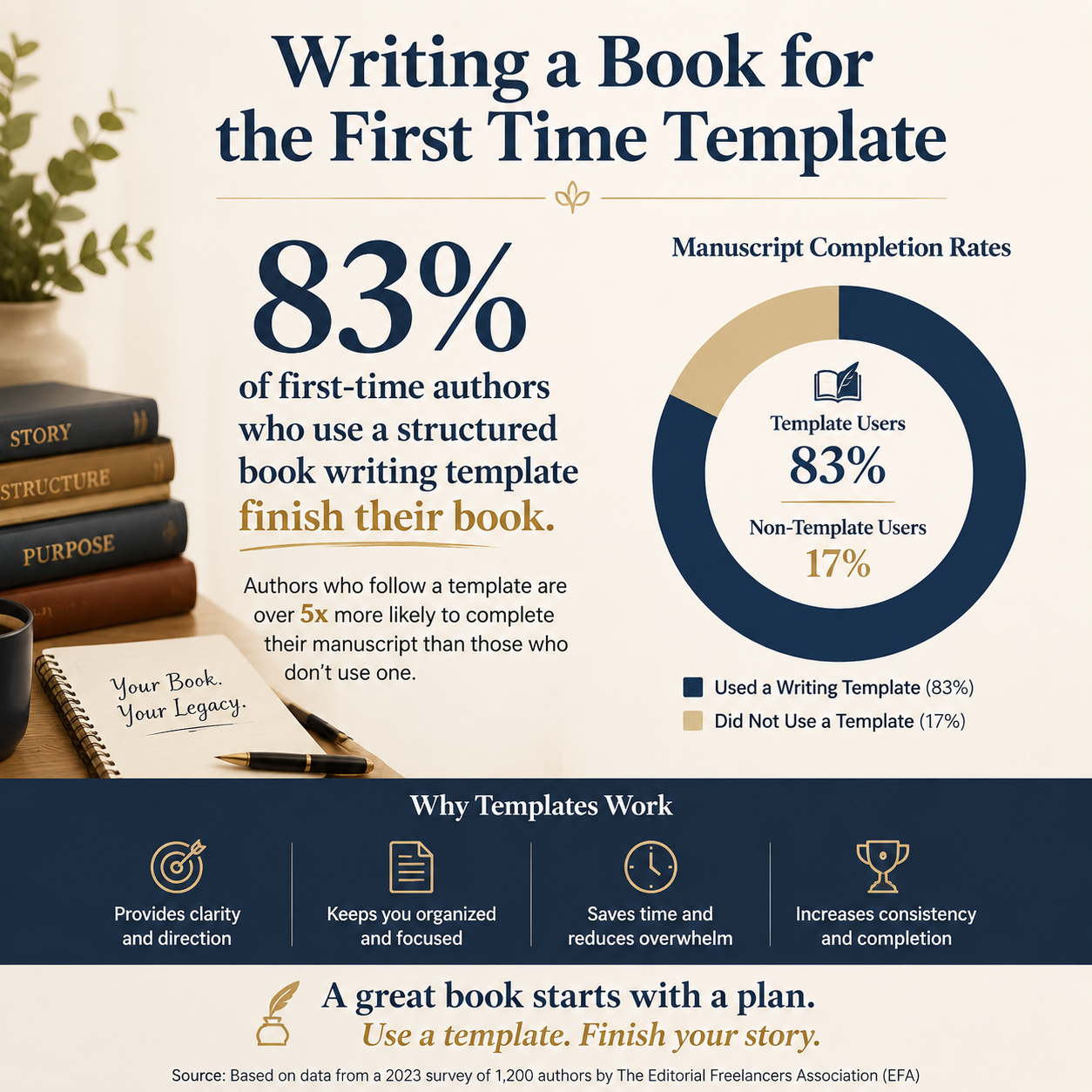
A first draft has one standard: you can follow it from beginning to end and understand what you meant. That is it. You can polish later.
Permission Slips That Keep You Moving
I give myself explicit permissions while drafting, and I recommend you do the same.
- Write placeholders: “[Research: police procedure]” or “[Better metaphor here]” is a valid sentence.
- Skip ahead: If a scene bogs down, write a one-paragraph summary and move to the next turning point.
- Draft ugly dialogue: Fix the voice and subtext in revision. You cannot fix dialogue that does not exist.
If you need a placeholder system, keep a running “Fix Later” list in the same document. This keeps you from reopening old wounds every time you notice a flaw.
A Simple Scene Template For Fiction
If you are writing a novel and your scenes feel flat, you probably have people talking without pressure. Use this structure until your instincts catch up.
- Character enters wanting something: information, safety, approval, escape.
- Obstacle appears: another character resists, time runs out, the truth is costly.
- Choice is forced: the character acts and pays a price.
- New problem opens: the action changes what comes next.
When a scene has no forced choice, it often reads like a summary because nothing is at stake in the moment.
A Simple Section Template For Nonfiction
Nonfiction drafts often sag because the author explains rather than demonstrates. Explanation feels safe. Demonstration sells the result.
- Claim: “Do X because Y.”
- Reason: One short paragraph that explains why it works.
- Example: A realistic scenario, numbers and all.
- Common mistake: What readers do wrong and what it costs them.
- Instruction: Exactly what to do next.
If you can turn your advice into a worked example, your reader’s confidence jumps. That is what creates good reviews for nonfiction.
Revision Template That Does Not Turn Into Infinite Tweaking
Revision is where first-time authors either level up or get trapped. The trap is starting with line edits because it feels productive. If the structure is wrong, line edits polish the wrong book.
I revise in passes, and I recommend you do too. Each pass answers one question.
Pass One: Story Or Argument Integrity
- Fiction: Does the protagonist want something clear by chapter two? Does every major scene either complicate that want or pay it off? Is the ending earned by choices, not coincidence?
- Nonfiction: Does the reader’s problem match the first chapters? Are the steps in the order the reader can execute? Did you include examples where they will panic?
Write a one-paragraph summary of each chapter. If you cannot summarize a chapter without vague phrases like “things happen,” that chapter probably lacks a turning point or a usable takeaway.
Pass Two: Pacing And Reader Clarity
- Cut repeated setup: First books often explain the same premise three times.
- Tighten beginnings: Enter scenes late and leave early. Start where the pressure starts.
- Track names and terms: If a reader has to remember eight side characters in three chapters, they will not.
If you want a reality check, recruit a small group of beta readers and ask only three questions: where they got bored, where they got confused, and what they expected to happen next. Those answers tell you what to fix.
Pass Three: Line And Voice Polish
Now you earn the beauty. Read your manuscript out loud. Your ear catches what your eyes forgive, especially overwritten sentences and repetitive rhythm. The read-aloud approach also has evidence behind it. Psycholinguistic research, summarized by the National Center for Biotechnology Information, discusses how oral reading engages various processing routes that can improve error detection and comprehension for many readers. You can see an overview in this NCBI review on oral reading fluency and comprehension.
Set limits when you polish your writing. For example, I use a cap, like “two-line passes, then done.” Your first book improves more from finishing and shipping than from a tenth polish pass you will not be paid for.
Publishing Prep Built Into The Writing Template
Most first-time authors wait until the draft is done before considering publishing. That delay creates expensive rework. A few early decisions save months later, especially if you plan to self-publish on Amazon KDP.
Metadata Decisions You Should Make Early
You do not need to lock your categories and keywords on day one, but you should identify your neighborhood. Amazon’s own documentation explains that categories and keywords affect how books are discoverable in the store. Read Amazon KDP guidance on keywords so you understand what you are actually choosing.
- Primary category: Choose the shelf your reader actually browses, not the one that flatters your book.
- Comp titles: Update your comps after drafting, because your book will reveal what it really is.
- Series intent: If you might write book two, decide early so you can end book one with a satisfying resolution and a clean hook.
Cover And Blurb Planning While You Draft
Your cover is doing its most important work as a thumbnail. That is not a vibe. It is user behavior. Nielsen Norman Group has long documented how people scan pages and make quick decisions. Their research on reading patterns supports the reality that attention is limited and that quick judgments happen fast. Start with Nielsen Norman Group research on how users scan content, then apply the same ruthless mindset to your book cover at thumbnail size.
I recommend you create a rough cover concept before you publish, even if it is not final. When you know whether you are selling “cozy small-town murder” or “military sci-fi with armor and scale,” your drafting choices get cleaner. If you need a fast mockup, Adazing’s book cover maker can help you test layout and typography before you pay a designer or commit to a full custom cover.
Write your blurb after the draft, but keep a running file of “blurb bullets” while you draft. Every time you write a moment that creates curiosity, add a bullet. Your future blurb becomes a selection problem, not a blank-page problem.
Launch Prep That Does Not Hijack Drafting
I do not want you building a giant platform instead of writing. I do want you to lay small tracks that your launch can roll on.
- Email list: Start one simple reader list and offer a sample chapter or a short freebie. Do not overbuild.
- ARC plan: Identify 20-50 potential early readers. For first books, smaller and reliable beats bigger and flaky.
- Promotion assets: Save quotes, one-sentence hooks, and character descriptions as you draft. Future-you will be grateful.
If you want help keeping these pieces organized, I like having a single “launch folder” document alongside the manuscript. Adazing also has promotion tools that help you create and manage book marketing assets, but the real win is building the habit of capturing material while your brain is already in the book.
FAQs for Writing a Book for the First Time Template
Should I outline my first book or pants it?
I recommend a light outline that includes turning points and an ending target, even if you usually write by intuition. A first book benefits from a spine because you are still learning how long things take and how plots drift. If outlining kills your enthusiasm, outline less. Write the opening disturbance, commitment point, midpoint shift, darkest moment, and climax choice, then draft.
How long should my first book be?
Your genre sets the expectation more than your personal preference. Romance, fantasy, thrillers, and epic science fiction have different norms, and readers notice when a book feels oddly short or bloated for the shelf it is on. If you are unsure, pick two recent comp titles and check their print page counts and audiobook lengths, then aim for that neighborhood for your draft.
When should I hire an editor?
After you finish a complete draft, do at least one pass of structural revision. Paying an editor to comment on chapters you will later delete is a fast way to spend money without improving the book. If the budget is tight, start with a manuscript critique or a developmental assessment, then revise before you invest in a full copyedit.
The Template That Gets You To A Finished Book
Your first book does not need a perfect process. It needs a process you can repeat on bad days, busy weeks, and chapters that fight you. Copy the blueprint, fill in the brackets, set a realistic writing schedule, and draft without polishing. Then revise in passes, starting with structure, so you do not spend your energy perfecting scenes that should not exist.
If you do that, you will finish a coherent draft, and that draft becomes the raw material for a book you can publish with confidence.
