
Most writers who ask “what is novel writing” are really asking why their draft feels alive in their head and flat on the page. Novel writing is the craft of engineering an emotional experience across tens of thousands of words, using character desire, escalating pressure, and scene-level cause and effect so a reader keeps turning pages.
If you treat a novel like a long short story, you get a book that wanders, repeats itself, or runs out of tension halfway through. If you treat it like a system of promises and payoffs, you get structure without stiffness and voice without chaos.
Think of novel writing as building a machine that produces feeling. Your job is not to show the reader everything you invented. Your job is to choose the sequence of moments that forces the reader to care, worry, hope, and then finally exhale.
Table of Contents
Novel Writing As A Reader Experience Engine
A novel is an agreement between you and a stranger. You promise a particular kind of ride, and the reader gives you hours of attention. The fastest way to break that agreement is to write what interests you on Tuesday rather than what the story has earned by chapter five.
When I edit manuscripts, I look for whether each chapter changes the reader’s understanding of the situation. If your scenes are mostly information, the book feels slow even when the prose is pretty. If your scenes are mostly motion, the book feels noisy and forgettable. A good novel keeps information and motion in the same container by attaching facts to consequences.
Promise, Progress, Payoff
Every novel makes a set of promises early, sometimes on page one. Genre does a lot of this work for you. For example, a romance promises an emotional arc toward commitment, a thriller promises danger and urgency, epic fantasy promises scope and a coherent logic in magic, and literary fiction promises a particular lens on human behavior.
Progress is the part writers often under-build. Progress means the situation cannot return to what it was. A new clue changes the suspects, a confession changes a relationship, and a new cost makes the goal harder to justify. Your plot doesn’t need explosions, but it does need irreversible movement.
Payoff is where trust is earned. It is not only the ending. Payoff happens every time you answer a question you raised, or you twist it into a better question. If you keep raising questions and dodging answers, you train the reader to stop investing.
Scene Causality Over Vibes
Novel writing gets easier when you stop asking, “What happens next?” and start asking, “What happens because of what just happened?” This question forces causality. Causality is what separates a sequence of events from a story.
Here is a quick diagnostic I use. At the end of each scene, write one sentence that starts with “Because of this, now…” If you cannot finish the sentence, the scene probably did not turn the story.
Reader Attention As A Finite Budget
Your reader has a limited attention budget. You spend it with long descriptions, backstory, extra subplots, and viewpoint changes. You earn it back with tension, clarity, and emotional specificity.
When you feel tempted to add another chapter of setup, ask what the reader is supposed to want right now. If the answer is vague, the issue isn’t a scene problem, but a desire problem.

Character Desire And Stakes That Actually Escalate
Characters drive novels because desire creates direction. A protagonist who wants something specific gives you a natural spine for scenes, complications, and choices. In contrast, one who only reacts gives you episodic drama that feels the same chapter after chapter.
Stakes aren’t the same as danger. Stakes are the cost of failure, and the reason the character can’t simply walk away. Those costs can be external, relational, moral, or identity-based. The best novels stack them, and then force a choice that makes at least one cost unavoidable.
Want Versus Need Without The Therapy Talk
You can use the classic want-and-need dynamic without turning your novel into a self-help worksheet. The want is what the character can name, while the need is what the story proves. In a detective story, the want might be to solve the case, and the need might be to stop using control as a substitute for grief.
I recommend you write a single sentence that defines your protagonist’s desire as an action rather than a feeling. “She wants to win custody of her daughter” beats “She wants to feel safe.” You can still write the safety longing, but action gives you plot.
Escalation That Changes The Problem
Raising stakes does not mean turning the volume knob up each chapter. Escalation works best when it changes the nature of the problem. For example, a villain who threatens the hero is one problem. A villain who frames the hero is a different problem. A villain who forces the hero to betray a friend is a deeper problem.
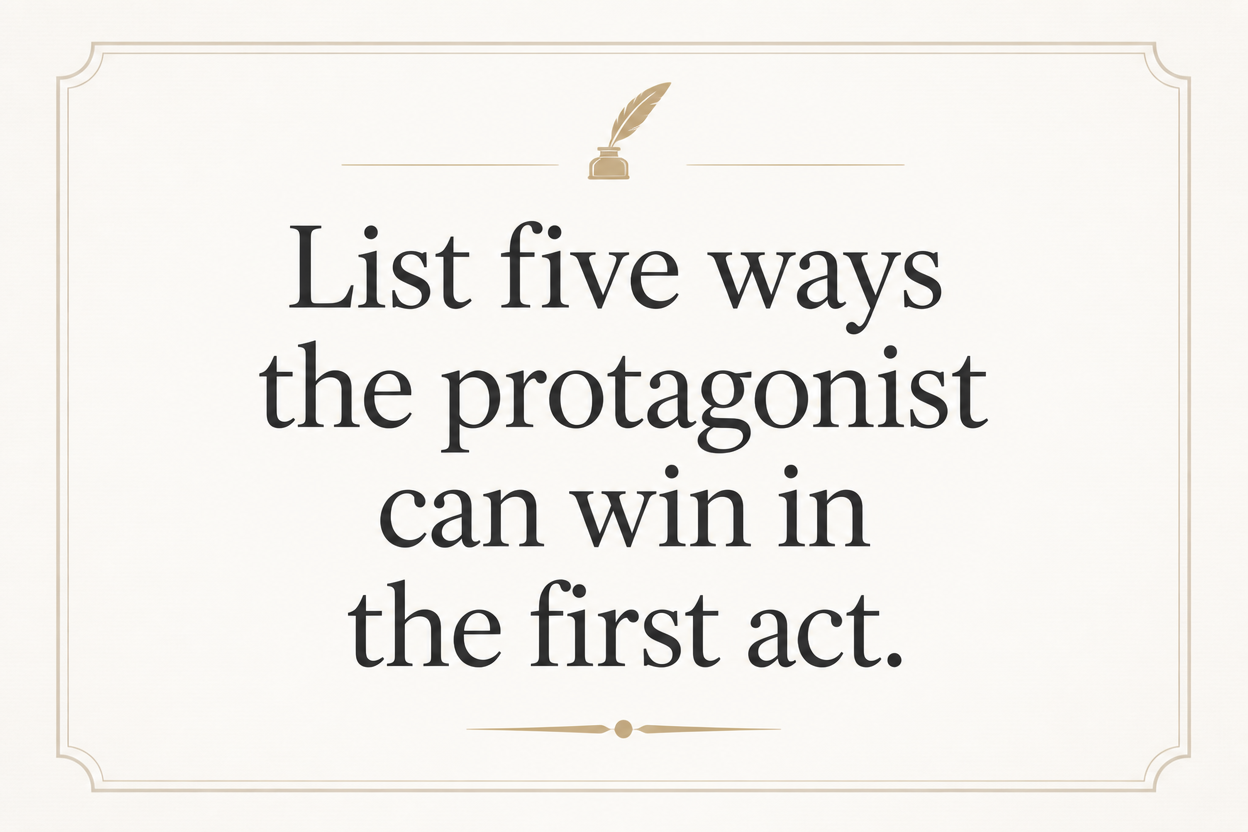
Here is a practical method. List five ways the protagonist can win in the first act. Then, one by one, remove them through consequences. Cut off resources, ruin alliances, or make a public mistake that can’t be taken back. When the easy exits disappear, the story starts to feel inevitable.
Choices With Teeth
The turning points that readers remember are choices under pressure. If your protagonist gets pushed from event to event, you can still have a plot, yet you rarely get a satisfying arc. A choice means the character could have done something else, and your story shows why that other path mattered.
If your draft feels flat, look for places where the character “has to” do something. Replace two of those with “chooses to” and build the cost into the scene.
Structure That Supports Your Voice
Structure is not a prison. It is a way to control reader expectation so your surprises land. Even experimental novels still manage expectation. They do it with pattern, language, and motif rather than a familiar plot spine.
I use structure as a set of questions. What is the story problem? When does the protagonist commit to solving it? When do they discover the real obstacle? What do they sacrifice to win or survive? If you can answer those cleanly, you can write in almost any style and still keep the reader oriented.
The Three Plot Questions I Check First
I start with three questions because they expose most draft-level issues without a spreadsheet.
First, what changes because of the inciting incident? A true inciting incident knocks the story off its resting state. If nothing changes, you have an opening event rather than an inciting incident.
Second, when does the protagonist stop testing and start committing? Readers forgive confusion early, yet they do not forgive drift. The commitment point is where the story declares what kind of book it is.
Third, what is the midpoint reversal or deepening? A midpoint does not need fireworks. It needs a shift in understanding that makes the second half feel as if the story grew up.
Scenes And Sequels As A Working Unit
If you have read about scenes and sequels, you already know the labels. I care more about the function. A scene applies pressure through goal, conflict, and outcome. A follow-up section processes consequences, forces a decision, and aims the next goal.
Writers often skip the decision part because it feels slow. Then the next scene starts unearned, and the book feels random. Give your protagonist space to choose. It can be half a page. It can be a single paragraph. The point is to show agency.
Pacing As Information Control
Pacing is not speed. It is how you release information relative to danger and desire. A fast chapter can feel slow if it repeats what the reader already knows. In contrast, a quiet chapter can feel electric if it changes the meaning of what came before.
I recommend a simple pass through your manuscript where you highlight every new piece of story information. If you see long stretches with no new information, you either need a revelation, a reversal, or a cut.
Drafting And Revising Like A Professional
Novel writing is rewriting, and pretending otherwise is how writers get stuck in draft one purgatory. Drafting is where you discover the story. Revision is where you make the reader feel what you felt during discovery. Those are different jobs, and they require different standards.
The mistake I see most is line-editing a shaky story. Beautiful sentences can’t rescue a missing causality, weak desire, or a plot that resets every chapter. Build the skeleton first, then polish.
Draft One Priorities
In your first draft, protect momentum. I want you to know your protagonist’s desire, your opposing force, and the ending you are aiming toward, even if it changes later. Write scenes that collide desire with resistance. Leave placeholders for research and worldbuilding details. The draft is a container for decisions.
If you struggle to keep output steady, tools can help, and I built and recommend them for a reason. Adazing’s QuickWrite is useful when you need a distraction-light drafting space and a clear daily target. It does not write the book for you. It keeps you writing long enough for the story to show up.
Revision Passes That Fix The Right Layer
I revise in layers because it saves time and emotional energy.
First pass is structure. I look for missing turns, sagging middle, repeated beats, and scenes that do not change anything.
Second pass is character logic. I check whether choices are motivated, whether relationships evolve on the page, and whether voice stays consistent.
Third pass is prose. That is where I tighten sentences, cut filler, and sharpen imagery.
If you edit prose before structure, you risk falling in love with passages you later need to delete. Every writer does this once. It is an expensive way to learn.
Feedback That Does Not Wreck Your Book
Beta readers and critique partners are useful when you ask the right questions. Do not ask, “Did you like it?” Ask where they felt bored, where they felt confused, and which character they cared about most. Those answers point to craft problems you can fix.
I also recommend separating taste from function. If three readers say chapter seven drags, something drags even if they disagree on why. Fix the dragging, but keep your voice.
Publishing Reality And Why Craft Choices Affect Sales
Novel writing and book marketing aren’t enemies. They’re linked through reader expectation. Your craft choices teach a reader what kind of experience your book delivers. Your cover, title, blurb, and category choices promise that experience to a shopper. When the promise and the delivery match, you get better reviews, better read-through, and stronger word of mouth.
Pew Research reports that about three-in-ten adults now read e-books, up from 17% in 2011, and audiobooks have shown similar growth over the same period. Print, however, remains the format most Americans reach for. The takeaway for you stays stable: your story has to work across attention contexts, whether someone is on a Kindle before bed or listening on Audible while driving. Pew tracks this in its 2026 update on how Americans read books.
Genre Signaling On Purpose
Your novel doesn’t exist in a vacuum. On Amazon KDP, your cover thumbnail, title, subtitle, and blurb get read next to other books in your category. For example, a romance cover that looks like a business book will pull in the wrong clicks, and a grimdark fantasy blurb that reads like cozy adventure will pull in the wrong readers.
This part is craft. Promise is a narrative device, and your packaging is the first narrative beat. Adazing’s cover tools and templates are useful when you need to test genre cues fast. I still recommend studying the top 100 in your category first, then building something that clearly belongs and still feels like you.
Read-Through And Series Thinking
If you write series fiction, the most profitable sale is often book two, because the marketing cost of acquiring the reader was paid on book one. This is why cliffhangers, open questions, and strong character attachment matter. It is also why an ending that resolves the main problem while leaving room for the next problem tends to outperform a tidy wrap that closes every door.
Amazon discusses series linking and its effect on discovery in its KDP series help documentation. The platform mechanics change sometimes, but series visibility remains a real advantage when you execute it well.
Launch Support Without Losing Your Mind
A novel can be beautifully written and still fail to find readers. Discovery is an active job. A small ARC team, a clean metadata setup, and a plan to earn reviews the right way are all part of being a working author. If you write faster than you market, your backlist carries you. If you market faster than you write, you burn out, and the ads get expensive.
When you are ready, Adazing offers promotional tools for the repetitive parts of launch and backlist visibility. The tools help you execute. They do not replace the work of writing a book that hits its promise.
FAQs for What Is Novel Writing: Unlocking the Secrets to Crafting Your Story
How long does a novel need to be?
Length depends on genre and reader expectation. Many adult fantasy readers tolerate longer books, while category romance and cozy mystery often sit in tighter ranges. I recommend you check the word counts of the top books in your exact Amazon subcategory, then aim to reach a figure close to that for your first release in that niche.
Do I need an outline to write a novel?
You need a plan that matches your brain, not a specific method. Some writers draft clean with a scene list. Others discover the story by writing and then outline in revision. If you keep stalling, create a lightweight outline that names your protagonist’s goal, your opposing force, and five major turns, then draft toward them.
What is the difference between plot and story?
Plot is the sequence of events and reversals. Story is what those events mean emotionally. A chase is plot. A chase in which the hero realizes their mentor has been lying for years becomes story. When your book feels thin, you usually have plot without meaning or meaning without causality.
A Clean Definition You Can Write Toward
Novel writing is the practiced skill of creating a long-form emotional journey that feels inevitable, surprising, and satisfying. If you want your next draft to level up, start with desire, build scenes that create consequences, and revise in layers so you fix structure before you polish prose. Your reader will feel the difference by chapter two, and that feeling is what keeps them with you to the end.
