
Every author who asks “What is Gothic literature?” eventually confronts the same craft problem: atmosphere alone cannot carry a story. A ruined abbey, a locked room, and a family secret may attract a reader. However, the novel holds attention through fear, desire, guilt, and the pressure of the past on the present. Gothic fiction turns those forces into plot.
For a writer, the genre offers a powerful way to make inner conflict visible. A character haunted by betrayal may live in a haunted house, a family hiding financial corruption may inhabit a decaying estate, and a woman denied control over her own life may find every door in the story locked by someone else.
I use Gothic techniques whenever a manuscript needs stronger tension, sharper symbolism, or a more threatening relationship between character and setting. You can write Gothic fiction in a castle, a suburban rental, an isolated research station, or a celebrity mansion. While the architecture changes, the pressure stays.
Table of Contents
Gothic Literature And Its Historical Roots
Gothic literature emerged as a distinct mode in the eighteenth century, with Horace Walpole’s The Castle of Otranto, published in 1764, widely recognized as the first Gothic novel. Encyclopaedia Britannica’s history of the Gothic novel describes how the form combined medieval settings, supernatural events, terror, and emotional intensity.
Early Gothic writers pushed against the tidy order associated with rationalism and polite society. Their stories placed characters among ancestral crimes, religious authority, political violence, and social restrictions. The supernatural often appeared beside ordinary cruelty, giving readers two possible explanations for the horror. A ghost might be real. However, a living person might be worse.
The Castle As A Pressure Chamber
The classic Gothic building does more than provide scenery. It controls movement, with corridors, towers, locked chambers, hidden passages, and rooms that preserve evidence. The building becomes an external version of the family or institution inside it.
When you design a Gothic setting, give each important space a dramatic function. For instance, a chapel can hold a forbidden confession, a nursery can preserve the memory of a vanished heir, and a library can contain the legal document that changes the estate’s ownership. Readers remember a room when entering it changes what a character knows or can do.
The Past Inside The Present
Gothic plots usually carry an old wound into a current crisis. The past survives through a letter, a portrait, an heirloom, a rumor, a bloodline, a ritual, or a recurring dream. That connection gives the story its deep unease. The reader understands that current events have a cause, even when the characters lack the evidence.
Build a past that creates present pressure rather than decorative lore. Write a short timeline of the original crime, the people who concealed it, and the character who stands to suffer when it returns. Every historical detail should alter a decision in the present.
Themes That Give Gothic Stories Their Power
Gothic horror works because it turns private fears into visible conditions. The genre asks what happens when desire collides with restriction, when memory refuses burial, or when a person loses control over their own identity. Those questions remain useful across historical, contemporary, paranormal, and romantic Gothic fiction.
Fear And The Unknown
Fear grows when a character lacks reliable information. A sound might come from behind a wall, a visitor might know a private name, or a photograph might change between viewings. The reader receives enough evidence to sense danger, then waits for the character to interpret it.
Resist the urge to explain every strange event early. Give the reader concrete sensory details and conflicting interpretations. A wet footprint on a locked staircase raises a stronger question than a paragraph announcing that a spirit has entered the house.
Isolation And Confinement
Gothic characters often lose access to ordinary help. Snow blocks the road, a controlling spouse intercepts letters, a remote workplace has no signal, or a respectable family silences anyone who challenges its story. Isolation increases the cost of every decision.
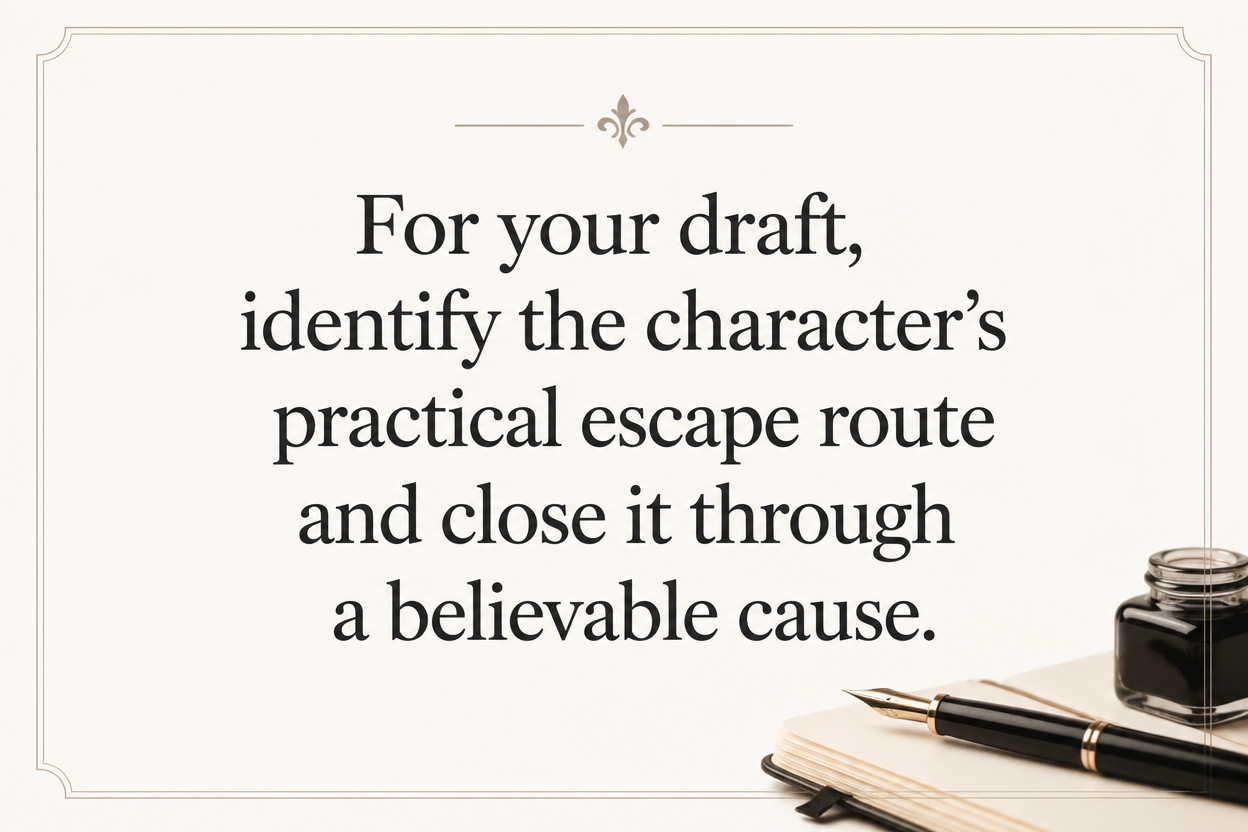
For your draft, identify the character’s practical escape route and close it through a believable cause. A locked door works for a scene. A legal threat, financial dependency, or damaged reputation can trap a character across an entire novel. The latter creates richer choices because escape carries a price.
Desire, Guilt, And Forbidden Knowledge
Gothic characters rarely fear danger from a safe distance. They want something connected to the danger. A scholar might want the missing manuscript, an heir the estate, a lover the truth about a vanished partner, or a child approval from a parent who has caused the family’s suffering.
Give your protagonist a desire that draws them toward the source of fear. This connection prevents the plot from becoming a sequence of random shocks. It also gives you a clean way to raise tension. Each answer should satisfy curiosity while making the character’s desire more dangerous.
Gothic Characters And Inner Conflict
A Gothic protagonist needs a wound that the external horror can expose. The haunted house matters because the character has something to lose inside it. Without that emotional link, supernatural events become stage machinery.
The antagonist may be a ghost, a monster, a corrupt institution, or a person with social power. The strongest Gothic antagonists often combine several threats. For example, a wealthy guardian can control money, reputation, and physical access, a ghost can attack the body while also revealing a crime, and a family can preserve its status by making one vulnerable person carry its shame.
The Unreliable Witness
Unreliable narration fits Gothic fiction because fear distorts perception. A narrator may misread evidence, conceal guilt, suffer from illness, or tell the truth in a way that protects a cherished belief. The technique works when the reader can later trace the distortion through earlier details.
Plant evidence before the revelation. The narrator might describe a portrait without mentioning its damaged face, a letter might contain a date the character refuses to discuss, or another person might answer a question with unusual care. Readers accept a reversal when the clues were present and the character’s blindness had a reason.
The Double And The Divided Self
The Gothic double gives physical form to a character’s denied nature. Robert Louis Stevenson’s Strange Case of Dr Jekyll and Mr Hyde externalizes the conflict between respectable identity and forbidden appetite. Charlotte Perkins Gilman’s “The Yellow Wallpaper” places psychological confinement at the center of its horror, with the room’s pattern becoming tied to the narrator’s deteriorating sense of self.
You can create a double without adding a literal twin. Use a rival, an alter ego, a forbidden diary, a recurring stranger, or a character who repeats the protagonist’s private thoughts aloud. The double should force a choice. A mere visual resemblance has little dramatic value.
Write two columns for your protagonist. In one, record the identity they present to other people. In the second, record the impulse they suppress. Then give the suppressed impulse a scene, object, or character that can act on the page.
Gothic Atmosphere Through Setting And Style
Atmosphere comes from the interaction between place, threat, and point of view. A dark hallway has no meaning until a character knows what happened there, suspects what may happen there, or wants something beyond it. Description earns its space when it changes expectation.
Specific Sensory Details
Choose details that carry evidence. For instance, damp wallpaper can reveal a hidden leak, a neglected room, or a building beginning to fail; the smell of lilies can connect a present scene to a funeral; and a heating system that starts at the same time each night can suggest a practical explanation for a supposed haunting.
I advise writers to limit each atmospheric passage to two or three dominant sensations. A sound, a texture, and a smell usually give the reader enough material to build the room. Long inventories of darkness and fog slow the scene unless each detail changes the character’s behavior.
Sentence Rhythm And Point Of View
Gothic prose often benefits from controlled delay. Keep the viewpoint close enough for the reader to experience the character’s uncertainty. Allow a sentence to move through an observation before naming its threat. Then vary the rhythm when the character sees or understands something that changes the scene.
First person creates immediate psychological pressure, especially when the narrator’s account contains gaps. Third-person limited gives you more latitude into what information reaches the reader while preserving fear. Multiple viewpoints can widen the mystery, though each voice must reveal a different relationship to the central secret.
Read your suspense scenes aloud. Mark every sentence that explains an emotion already visible in action. Cut those explanations and keep the gesture, pause, or decision that lets the reader experience the fear.
Writing Gothic Fiction For Modern Readers
Modern Gothic fiction retains the genre’s central machinery while transforming the institutions that generate fear. A contemporary story may place its haunted house in a luxury apartment, its inherited curse in a family business, or its forbidden archive in a data center. Technology adds new forms of surveillance, disappearance, and uncertain evidence.
The setting still needs a history. For instance, a smart home becomes Gothic when someone with access has tampered with its records, a wellness retreat becomes Gothic when every guest has been selected for a hidden reason, and a social media account becomes Gothic when it continues posting after its owner disappears.
Research And Cultural Responsibility
Gothic fiction often draws on religion, folklore, disability, mental illness, gendered violence, colonial history, and class conflict. Those subjects carry real consequences beyond the page. Research the tradition you borrow from, name the source of its symbols, and avoid using a living culture as a costume for atmosphere.
Take special care with the old habit of treating mental illness as proof of dangerousness. You can write a narrator with paranoia, trauma, or delusion without declaring that diagnosis itself creates violence. Give the character an interior life, meaningful relationships, and choices that carry moral weight.
Packaging And Reader Expectations
Your cover, title, description, categories, and sample pages need to signal the Gothic experience. A pale face, ornate lettering, and a castle may suit historical Gothic fiction. Meanwhile, a clean architectural image, cold typography, and a single unsettling object may fit domestic or psychological Gothic fiction.
Check your cover at thumbnail size on Amazon KDP or your retailer of choice. The image should communicate setting, threat, and genre before a reader enlarges it. Adazing’s cover maker can help you test early directions, especially when you need to compare typography, contrast, and image placement before paying for a full custom design.
Your blurb should name the protagonist, the disturbance, and the consequence of discovering the truth. It should leave one meaningful question unanswered. A synopsis explains the entire plot for a publishing professional. On the other hand, a sales description creates enough pressure for a reader to start chapter one.
FAQs for What Is Gothic Literature? Exploring Themes of Mystery and Horror
What Are The Main Features Of Gothic Literature?
Common features include an oppressive setting, a hidden past, psychological conflict, isolation, forbidden knowledge, supernatural or seemingly supernatural events, and a threat to personal identity or social order. A Gothic story does not require every feature. Choose the elements that create pressure for your specific protagonist.
How Can I Add Gothic Elements To A Contemporary Novel?
Give your modern setting a buried history and make that history interfere with a present goal. Use practical forms of confinement such as debt, surveillance, family control, professional reputation, or digital records. Then add a recurring image or object that connects the current danger to the original wrongdoing.
Does Gothic Literature Need Supernatural Events?
No. Psychological Gothic, domestic Gothic, and many forms of contemporary Gothic leave the supernatural uncertain or exclude it entirely. The central requirement is sustained unease created by hidden knowledge, restricted freedom, and a threat that reaches into the character’s sense of self.
Make The Horror Matter
Gothic literature lasts because its monsters carry human meaning. A ghost can represent guilt, an inherited house can preserve social violence, and a locked room can expose a character’s lack of power. Build the fear around a desire your protagonist cannot abandon, then let every revelation force a harder choice.
Before you revise, write one sentence naming the buried wound in your story and one sentence naming the form it takes in the setting. Those two answers will guide your plot, your atmosphere, your cover direction, and the promise you make to readers.
