
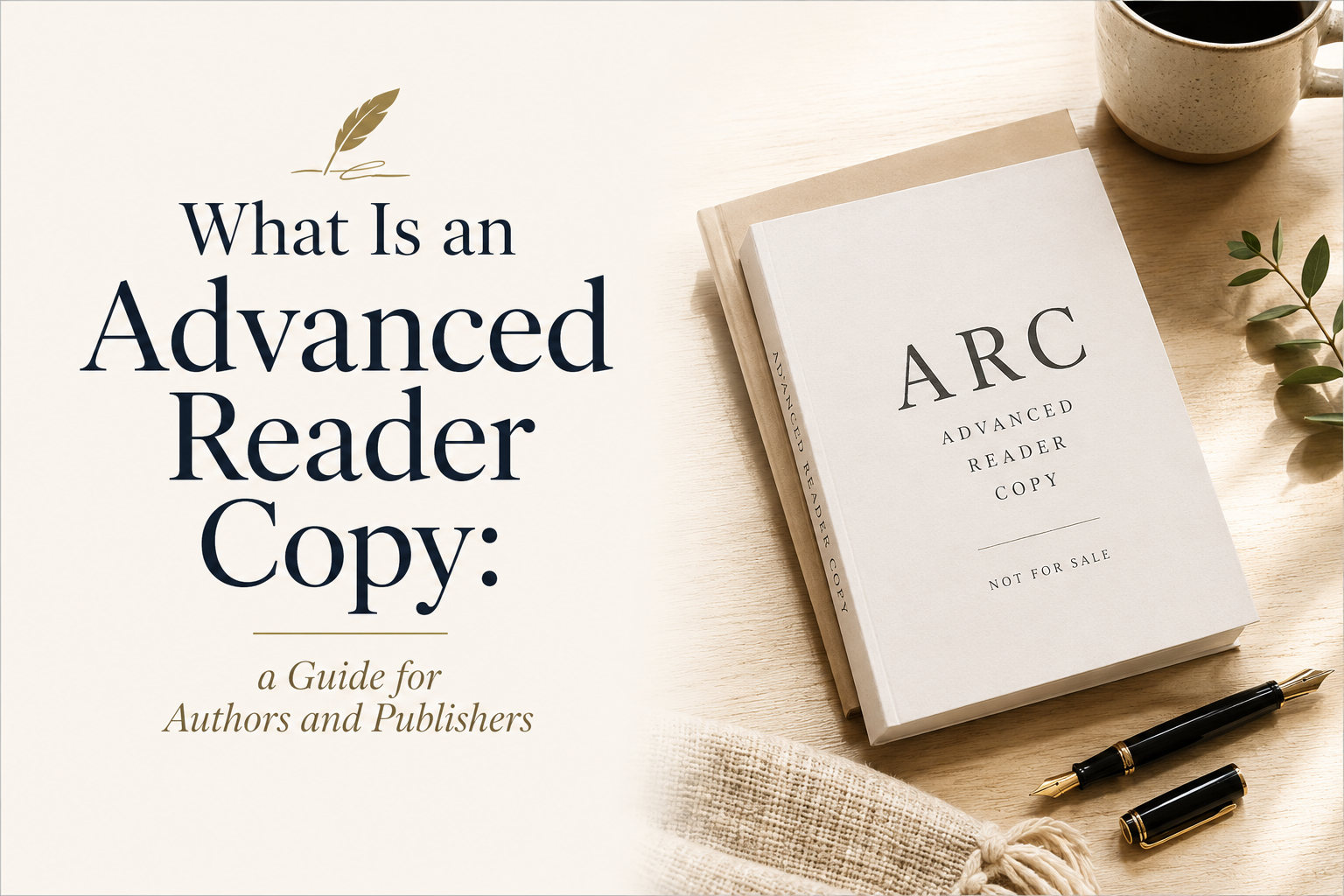
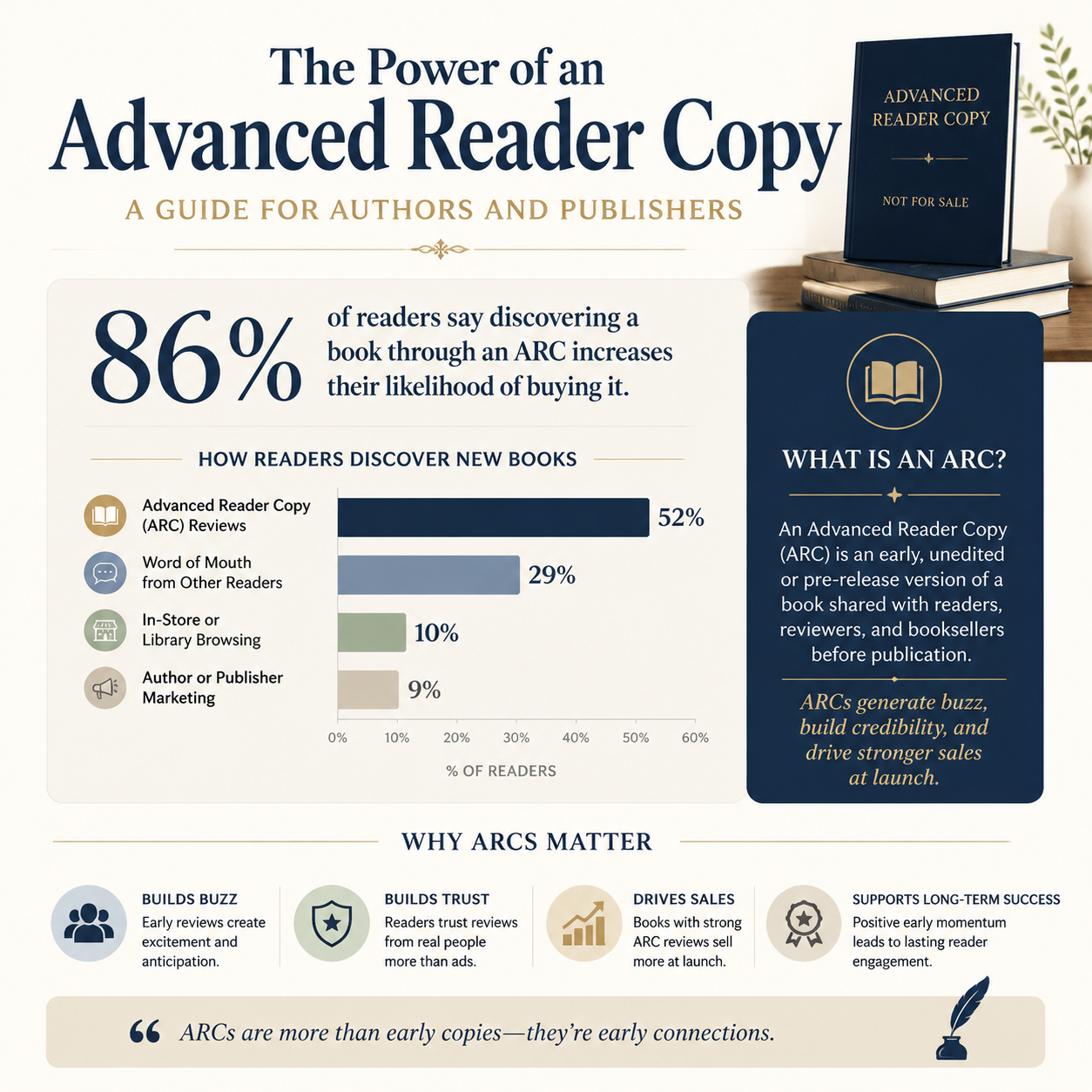
Every author who asks what an advanced reader copy is eventually faces a larger publishing decision: how to put an unfinished book in front of the right readers without weakening the launch. An advanced reader copy, usually called an ARC, is a prepublication version sent to selected readers, reviewers, librarians, booksellers, or influencers before the official release date.
An ARC exists to generate interest before your book reaches retail shelves. Readers use it to decide whether the story works, reviewers use it to prepare coverage, and you use the responses to catch distracting errors or sharpen your marketing. The timing matters because an ARC needs enough polish to represent your book and enough lead time for readers to finish it.
I treat an ARC as a working publishing document rather than a casual free copy. It needs a clear label, a controlled distribution plan, and a specific purpose. Once you decide what you want from your early readers, the format, audience, schedule, and follow-up become much easier to manage.
Table of Contents
What An Advanced Reader Copy Contains
An ARC contains the manuscript readers need to evaluate the book, along with enough publishing information to identify it. For a novel, that usually means the complete text, title, author name, genre, estimated publication date, and a short note explaining that the copy is an advance edition. For nonfiction, include the full manuscript or the sections your readers need to judge the book fairly.
The cover can be temporary, although it should still communicate the genre. For example, a romance ARC with a mystery-style cover creates the wrong expectation before page one. I recommend placing the words “Advance Reader Copy” or “Uncorrected Proof” on the front cover and title page, then adding a short rights statement inside the file.
- Title and author name
- Expected publication date
- Edition label such as “Advance Reader Copy”
- Copyright notice and a statement that the text may contain changes
- Contact information for review questions
- A review request with your preferred publication date
Proofread the ARC before distribution. Readers forgive a missing dedication or a placeholder page more readily than repeated spelling errors, broken chapter links, or a character whose name changes halfway through the story. I would rather send a shorter list of polished chapters than an obviously neglected file.
Proof Pages And Final Pages
An ARC may contain small differences from the finished edition. You might still be correcting a dedication, acknowledgments, front matter, page numbers, or a final round of typos. Those changes belong in the reader note so nobody mistakes the ARC for the final retail edition.
Story-level changes deserve more care. If you send a romance before changing the ending, the early readers may review a version that no longer represents the book. Finish the plot, major character arcs, and chapter order before you distribute copies. Save cosmetic corrections for the later proof stage.
Digital And Print Formats
PDF works well for reviewers who want a fixed page layout. EPUB works better for readers using phones, tablets, or e-readers because the text reflows and the file behaves more like a retail ebook. Print ARCs make sense for literary fiction, cookbooks, illustrated books, and reviewers who need to inspect the physical object.
Your budget should determine the mix. A self-published author can send digital files to most readers and reserve print copies for librarians, booksellers, podcasters, or reviewers who specifically request them. Use a book cover maker, including the tools available through Adazing, to create a clear temporary cover with the ARC label visible at thumbnail size.

Why Authors Send ARCs
Early copies serve three separate purposes, and your request should match the purpose. A review ARC seeks public commentary. Feedback ARCs seek private notes on confusing scenes, pacing, or factual problems. For a launch-team ARC, look for readers who may discuss the book around release week.
One reader can fit more than one role, although you should explain what you want. Asking someone to provide a private editorial opinion and a public review in the same email creates unnecessary pressure. Give the reader permission to decline a review and ask for honest feedback without promising praise.
Reviews And Social Proof
Reviews help prospective readers judge whether a book belongs on their reading list. They also give you language for future marketing. For example, a reviewer who describes your historical mystery as “a locked-room puzzle set inside a failing observatory” has handed you a useful phrase for a newsletter or ad, provided you have permission to quote it.
Reviewers need time. A person reading a 100,000-word novel may need several weeks, especially when the book arrives alongside other review commitments. Set a review date after the reader has had a reasonable reading window. The Federal Trade Commission’s Endorsement Guides explain that material connections should be disclosed, so tell ARC readers to identify their free copy when a platform or publication requires that disclosure.
Editorial Feedback
Feedback readers help you find problems you cannot see after repeated revisions. They may catch a chapter that drags, a technical explanation that assumes too much knowledge, or a secondary character who disappears without explanation. Their comments can guide a final revision when the changes remain within your schedule.
Give these readers a short questionnaire. Ask where they lost interest, which character they trusted, what they expected after the midpoint, and whether any fact or term seemed wrong. Specific questions produce useful answers. “Did you like it?” usually produces a polite sentence and very little else.
Launch-Team Conversation
A launch team creates early discussion through newsletters, reading groups, podcasts, social posts, or personal recommendations. The group works best when members already read your genre and understand the boundaries of honest promotion. Provide approved graphics, a short description, the publication date, and links to the retailer page when it goes live.
A launch team cannot manufacture genuine enthusiasm. If your readers finish the ARC and say nothing, treat that silence as information about your selection or your outreach. A smaller group of engaged readers is more useful than a large list of people who accepted a free file and vanished.
ARC Timing And Reader Selection
Plan the ARC schedule working back from the publication date. For a standard novel, I usually allow six to eight weeks for reading and review preparation. Complex research, a large print component, or a long review process can push that timeline further out. A short nonfiction book, by contrast, can move on a tighter schedule when the audience already knows your work.
Send the ARC after the manuscript has passed its major editorial stages. Developmental editing, copyediting, and layout should be substantially complete. Your readers should spend their time evaluating the book rather than reporting every missing comma.
Reader Categories
Build separate lists for each purpose. For example, a thriller author might recruit mystery bloggers, crime-fiction newsletter writers, library staff, audiobook listeners, and genre readers with established review habits. A business author, on the other hand, might choose subject-matter professionals, podcast hosts, coaches, and readers who regularly recommend books to their teams.
Choose readers by fit rather than follower count. A reviewer with 800 engaged followers who reads your exact subgenre may help more than a general lifestyle account with 50,000 followers. Look at recent reviews, average reading pace, disclosure habits, and the tone of their criticism before you invite them.
Invitation And Tracking
Send a personal invitation that identifies the book, genre, word count, reading window, file format, and requested response. Ask whether the recipient wants a copy before sending one. A simple spreadsheet can track invitations, acceptances, file delivery, reading status, review links, and permission to reuse quotations.
Use unique download links when possible. Watermarked files can discourage casual sharing, although no file protection is perfect. Your message should state that the copy is for the recipient’s personal use and should not be uploaded, forwarded, or sold.
Follow up once after delivery and once near the review date. Keep each message useful and easy to answer. A reader who needs more time should be able to say so without feeling chased.
ARC Production And Distribution
Produce the file readers will actually use. Export the manuscript as EPUB and PDF when your audience uses several devices, then test both on a phone, tablet, desktop, and e-reader. Check the table of contents, chapter links, italics, scene breaks, page headers, images, and any special symbols.
Print readers need a different review. Confirm the trim size, margins, cover alignment, paper choice, and readability at the planned font size. A print ARC can expose layout problems that disappear on a screen, especially in cookbooks, poetry, illustrated nonfiction, and books with tables.
Distribution Channels
You can deliver digital ARCs through a private email attachment, a password-protected page, or a service built for review copies. Services such as NetGalley connect publishers with reviewers and librarians. The cost, however, may be difficult to justify for a first release. Direct delivery gives you more control and less expense. On the other hand, it also creates more administrative work.
Retailer preorder pages and ARC files serve different jobs. An ARC should travel through a controlled route before publication. Never upload an unfinished edition to a public retail listing unless you understand precisely how that platform handles files, reviews, and version changes.
Reader Instructions
Place the instructions in the email and inside the file. State the publication date, preferred review timing, retailer links when available, and the kind of feedback you want. Tell readers that an honest review is welcome and that positive language is never required.
Keep the request short. A reader should find the download link, publication date, and review guidance within a few seconds. If you need detailed editorial notes, send a separate form so the public review request stays clear.
Feedback, Reviews, and Launch Decisions
Read ARC feedback for patterns. One reader’s dislike of your protagonist may reflect personal taste. Five readers who all miss the same motive in chapter three have identified a craft problem. Sort comments into plot, character, pacing, clarity, factual accuracy, formatting, and marketing language before deciding what deserves revision.
Do not revise every sentence because one reader suggests a different style. Your task is to separate a genuine comprehension problem from a preference. I pay particular attention to places where readers describe confusion without sharing the same opinion about the solution. Confusion signals a communication problem; the final fix remains your editorial judgment.
Review requests need ethical boundaries. Never require a five-star review, ask a reader to hide the free copy, or offer money for a favorable rating. Amazon’s Community Guidelines prohibit compensation and other attempts to influence customer reviews. A clean request protects your reputation and gives readers room to respond honestly.
Record useful praise with the reviewer’s permission. Save the exact wording, reviewer name, publication, date, and approved use. You can place a strong quote on your sales page, newsletter, media sheet, or advertising creative. An ARC reader’s language often describes the book more clearly than an author-written slogan.
Once the final edition is ready, send a brief update with the release date and purchase links. Thank readers whether they posted a review, sent private notes, or decided the book was not for them. You are building relationships with people who may read your next manuscript, and trust disappears when every interaction sounds like a sales demand.
FAQs for What is an Advanced Reader Copy: A Guide for Authors and Publishers
When Should I Send An Advanced Reader Copy?
Send it after the main editing and layout work is complete, generally six to eight weeks before publication for a full-length novel. Give reviewers enough time to read and schedule coverage. Short books and established author audiences may work on a shorter timetable.
Does An ARC Need A Finished Cover?
An ARC needs a readable, genre-appropriate cover with a visible advance-copy label. The final cover can arrive later, if design or retailer requirements are still in progress. Avoid a temporary design that promises a different kind of book.
Can ARC Readers Post Reviews Before Publication?
Many readers can post reviews before release. Platform policies and review dates, however, vary. Give readers your preferred date and ask them to follow each site’s posting policy. Never demand a positive rating or payment for a review. An honest review with a clear free-copy disclosure has far more value than suspicious praise.
A Better Use For Your Early Copies
An advanced reader copy gives your book a controlled rehearsal before publication. Send it to readers who fit the genre, ask for a response suited to your purpose, and use repeated feedback to fix genuine problems. Then turn the strongest permitted comments into clear marketing material.
Your ARC does not need expensive software or a large launch budget. It needs a finished story, a readable file, a thoughtful reader list, and enough time for people to respond. Treat those four pieces seriously, and your early copies can improve both the book and the audience waiting for it.
