
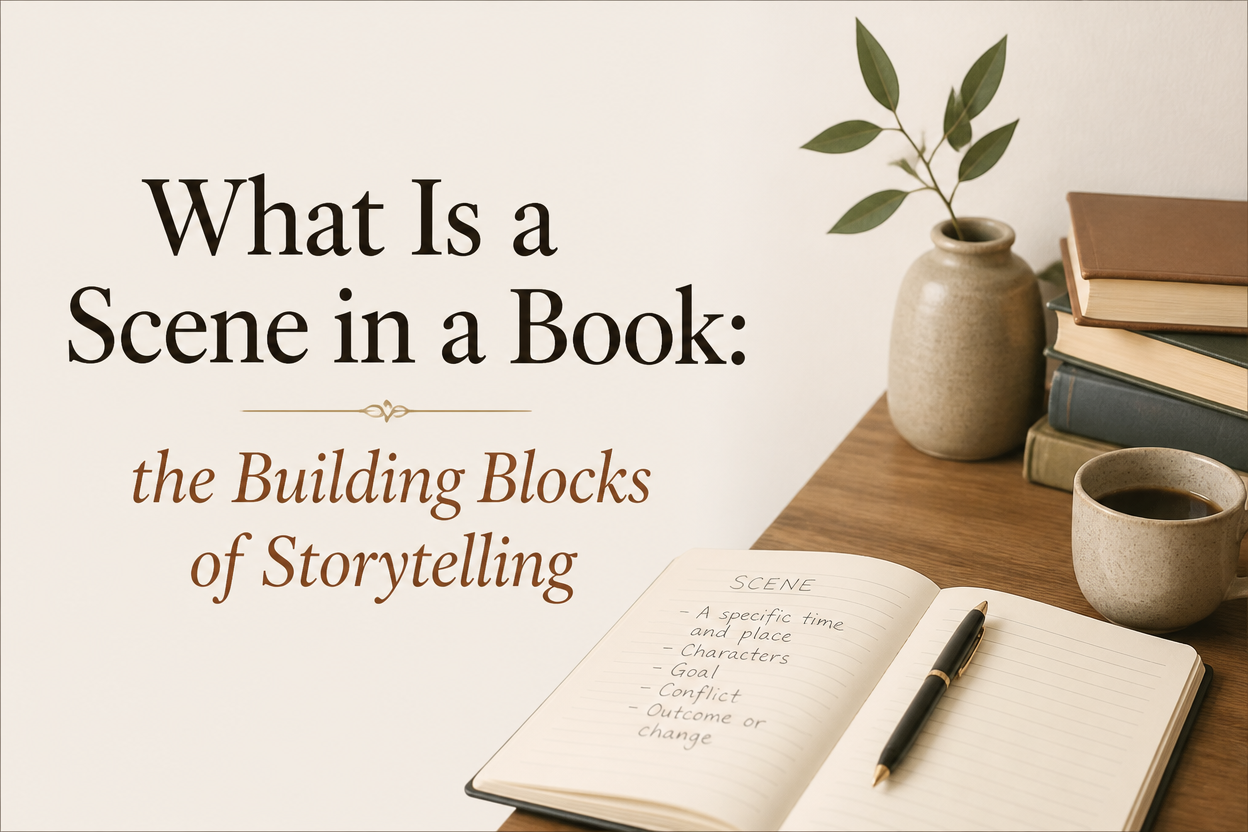
Before you revise a chapter, ask, “What is a scene in a book?” The answer determines whether your pages create movement or merely report events. A scene is a dramatized unit of story in which a character pursues something, meets resistance, and reaches a changed situation. If your chapter contains three separate desires, locations, or turning points, you may have several scenes sharing a single chapter heading.
I treat scenes as the working units of fiction and narrative nonfiction. Chapters provide the reader with a larger shape. Scenes deliver the moment-by-moment experience of choice, pressure, discovery, and consequence. A compelling scene gives the reader a reason to read the next page. A weak scene can contain beautiful sentences and still leave the story standing in place.
The fix begins with precision. You need to know what your viewpoint character wants in the scene, what blocks that desire, what choice follows, and how the situation changes by the final paragraph. Once you can answer those questions, revision becomes a craft problem you can solve on the page.
Table of Contents
The Scene As A Dramatic Unit
A scene presents story in real time, or in a close approximation of it. Characters speak, act, observe, remember, decide, and respond within a specific situation. The reader experiences the pressure as it builds rather than receiving a report after everything has happened.
Consider a detective arriving at a closed diner at midnight. A summary might say, “Mara searched the diner and found evidence connecting the mayor to the robbery.” A scene places Mara behind the counter, gives her a reason to search before sunrise, puts the mayor’s brother outside with a crowbar, and forces her to decide whether the evidence matters more than her safety. The information becomes an event when someone wants something and must pay to get it.
Time, Place, And Viewpoint
Every scene needs a stable sense of time and place. You don’t need to describe every chair in a kitchen. However, you do need enough physical detail for the reader to understand where characters stand, what they can reach, and what the setting makes possible. A storm-damaged bridge creates different choices from a quiet office.
Viewpoint supplies the scene’s emotional filter. A grieving character entering a wedding reception will notice different details from a caterer counting unpaid invoices. Choose one consciousness for the scene unless you have a deliberate reason to shift. Unmarked viewpoint changes make readers focus on orientation rather than the story.
Scene And Summary
Summary compresses time and connects events. Scene expands a meaningful moment so the reader can inhabit it. You need both forms. A year of routine may deserve two sentences. On the other hand, a five-minute argument may deserve ten pages because the argument changes a marriage.
I decide based on consequence. When an event changes a relationship, reveals a motive, removes an option, or creates a new problem, I usually dramatize it. When an event carries the characters from one important moment to another, I summarize it. Read your chapter and circle the passages where a major change happens. Those passages deserve scene treatment.

The Four Forces Inside A Scene
A functional scene contains four forces: a goal, resistance, escalating pressure, and a turn. These forces can appear in a quiet literary conversation, a courtroom exchange, a romantic confession, or a fantasy battle. Volume doesn’t create drama. Conflicting human needs create drama.
The Character Goal
Your viewpoint character needs a desire that exists now. The goal can be concrete, such as getting a signature before the train leaves, or emotional, such as making a sister admit she lied. Vague desires like “she wants happiness” give you little material for the scene. In contrast, a specific immediate aim gives every line and gesture a job.
Write the goal in one sentence before drafting. Use a form such as, “Before this scene ends, Elena wants the landlord to grant her three more days.” The sentence may change during revision, and the scene still needs a controlling intention while you write it.
Resistance And Stakes
Resistance gives the goal shape. Another character may refuse, misunderstand, manipulate, or demand a price. Sometimes the environment may close off an option, or the viewpoint character’s own shame, fatigue, or divided loyalty may create the strongest obstacle.
Stakes answer the reader’s practical question: why does this matter now? A delayed answer matters more when the character will lose custody at dawn. For example, a missed meeting carries more weight when it ends the only chance to expose a fraud. Not every scene needs a life-or-death stake. What it needs is a consequence the character cares about, and the reader can understand.
The Turn And New Situation
A scene should leave the story in a different condition from the one it entered. For example, a character gets the meeting and hears an accusation. A detective finds evidence that implicates her partner. Or a couple reaches honesty and discovers honesty has ended their engagement.
I call this change the turn. It can be a reversal, a revelation, a decision, a loss, or a commitment. Draft the opening condition and closing condition side by side. If they match, the scene probably needs a stronger decision or a sharper consequence.
Scene Structure And Reader Attention
Scene structure gives pressure a direction. I often use a simple progression: entry, pursuit, complications, crisis, and exit. This pattern isn’t a formula for identical scenes. It gives you a diagnostic tool when a draft feels slow or strangely hollow.
Entry And Pursuit
Enter the scene as close as possible to the first meaningful disturbance. Consider a character who walks into a room, hangs up a coat, makes coffee, and thinks about the weather. This may be a routine before the story begins. Start with the knock, the lie, the missing child, or the contract placed on the table.
Once inside, let the character pursue the immediate goal. Dialogue should carry intention beneath the spoken words. For example, a request for coffee may conceal an attempt to delay a departure. Similarly, a question about an old friend may test whether someone has discovered the affair. Give each exchange a pressure point.
Complications And Crisis
Complications should make the original goal harder or alter its meaning. For example, a character searching for a missing will discovers the will has already been signed. A bride seeking an apology learns her father has invited the person she fears. Or a journalist gets the interview and realizes the source wants a story buried.
The crisis arrives when the viewpoint character must choose. Thought can prepare the choice, and dialogue can sharpen it. In the end, only action reveals the character’s position. If the scene ends with the character postponing every decision, the chapter may need to continue until a cost arrives.
Exit And Aftermath
End close to the change. Once the character accepts the offer, rejects the ally, opens the letter, or walks away from the marriage, added explanation often drains momentum from the moment. A brief aftermath can show the cost and point toward the next scene.
Pay attention to exit direction. A scene ending in victory should create a fresh obligation or danger. In contrast, one ending in defeat should reveal a response. The result doesn’t need to be dramatic in a loud sense. What it needs is to alter what the character can do next.
Scene Types Across Genres
Different genres emphasize different kinds of scene pressure. For example, romance depends heavily on emotional movement and changing vulnerability. Mystery depends on information, suspicion, and the consequences of each discovery. Fantasy often asks scenes to carry world rules alongside personal stakes. Memoir scenes need a precise lived moment and a clear relationship to the narrator’s larger understanding.
Action And Confrontation Scenes
Action scenes work through physical objectives and rapidly changing options. Keep geography clear enough for the reader to track bodies, exits, obstacles, and danger. A fight becomes tedious when every blow has equal weight. Choose the two or three physical beats that change control of the situation, then connect them to the character’s fear or purpose.
Confrontation scenes depend on incompatible demands. Two characters may agree about the facts and still fight over what those facts require. Let them use different tactics. For example, one character may threaten, another may charm, and a third may answer every question with silence. The variety gives the exchange shape.
Quiet And Reflective Scenes
Quiet scenes need movement at the level of thought, relationship, or knowledge. A woman folding her father’s shirts can carry a full scene if she begins believing he abandoned her and ends suspecting he protected her. The physical task anchors the reflection. The changed belief, in turn, gives the scene a turn.
Reflection earns space when it creates a decision or changes the reader’s understanding. A page of thoughts that leads nowhere belongs in your notes. Give the character a fact to interpret, a memory to resist, or a choice that reflection makes harder.
Transitional Scenes
Transitional scenes connect major events. Despite that, they still need a reason to exist on the page. Use one to show a relationship changing during a journey, plant a detail that later becomes evidence, or force a character to revise a plan. A car ride that only transports characters can become a scene when one passenger notices the other has removed a wedding ring.
Read the first and last paragraph of every transitional scene. The final paragraph should offer the reader a new question, a shifted alliance, a fresh risk, or a decision that points toward the next event.
Scene Revision For A Stronger Draft
I revise scenes in passes because trying to fix purpose, pacing, dialogue, and line style at once creates needless confusion. Start with the scene’s dramatic job. Write one sentence describing what changes. Then inspect every paragraph for its relationship to that change.
The Scene Test
Ask yourself five questions:
- Who owns the viewpoint?
- What does this character want before the scene ends?
- What resistance makes the goal difficult?
- What choice or discovery changes the situation?
- What question or pressure carries the reader onward?
Answer those questions in your manuscript notes. Vague answers expose vague scenes. You may discover that the scene contains useful material for a later chapter. Its current placement, however, gives it no dramatic job.
Dialogue And Description
Read dialogue aloud. You will hear repeated names, polite greetings, identical sentence rhythms, and explanations characters would never say to one another. Cut greetings unless the greeting itself carries tension. Replace direct explanation with a tactic, a dodge, a silence, or a physical response.
Description should affect the viewpoint character. Consider a surgeon who notices the blood on a cuff, or a child who notices the adults have stopped using her name. A tenant might notice the landlord’s new locks instead. Select details that reveal attention, mood, status, or danger. Adazing’s QuickWrite can help you generate alternate scene prompts when you understand the scene’s purpose and need pressure-tested possibilities. But remember, no tool can decide what your character fears losing.
Chapter Placement And Pacing
After revising individual scenes, review their sequence. Two excellent scenes can cancel each other’s energy when they deliver the same revelation or emotional beat. Track each scene’s result in a short phrase, such as “Mina loses the job” or “Theo agrees to lie.” The chain should show consequences accumulating across the chapter.
Genre changes the acceptable pace. A thriller may require frequent external turns. In contrast, a literary novel may spend longer on a moral realization. Readers still need movement. A scene can move through knowledge, trust, fear, desire, or power even when no one crosses the room.
FAQs for What is a Scene in a Book: The Building Blocks of Storytelling
How long should a scene be?
A scene should last as long as its dramatic change requires. A tense exchange may occupy two pages. In contrast, a family confrontation may need fifteen. Genre, point of view, and chapter rhythm all affect length. Draft the complete change first, then cut entrances, repeated explanations, and aftermath that adds no new pressure.
Can A Scene Have More Than One Point Of View?
It can. An unmarked shift, however, usually weakens reader orientation. A scene with two viewpoints works when the shift has a clear structural purpose, and the transitions are easy to follow. In close third person, I prefer one viewpoint per scene unless the novel’s design has established another pattern.
What Is The Difference Between A Scene And A Chapter?
A scene is a unit of dramatized action with its own goal, resistance, and change. A chapter is a larger container that may hold one scene or several connected scenes. Chapter breaks often mark a shift in time, place, viewpoint, or dramatic question. Treat the scene as the craft unit and the chapter as the reading experience.
Scenes That Move The Story
Your scenes carry the book through choices and consequences. Give each one a present desire, meaningful resistance, and a changed ending. Then revise with enough discipline to cut routine, clarify viewpoint, and preserve the moments when a character must pay for what they want.
When a manuscript feels slow, I don’t begin by adding description or raising the volume of the dialogue. I check whether the scene changes anything. If it doesn’t, combine it with a scene that does, move its useful detail elsewhere, or remove it. Your reader will feel the difference long before you can explain it in a workshop.
