
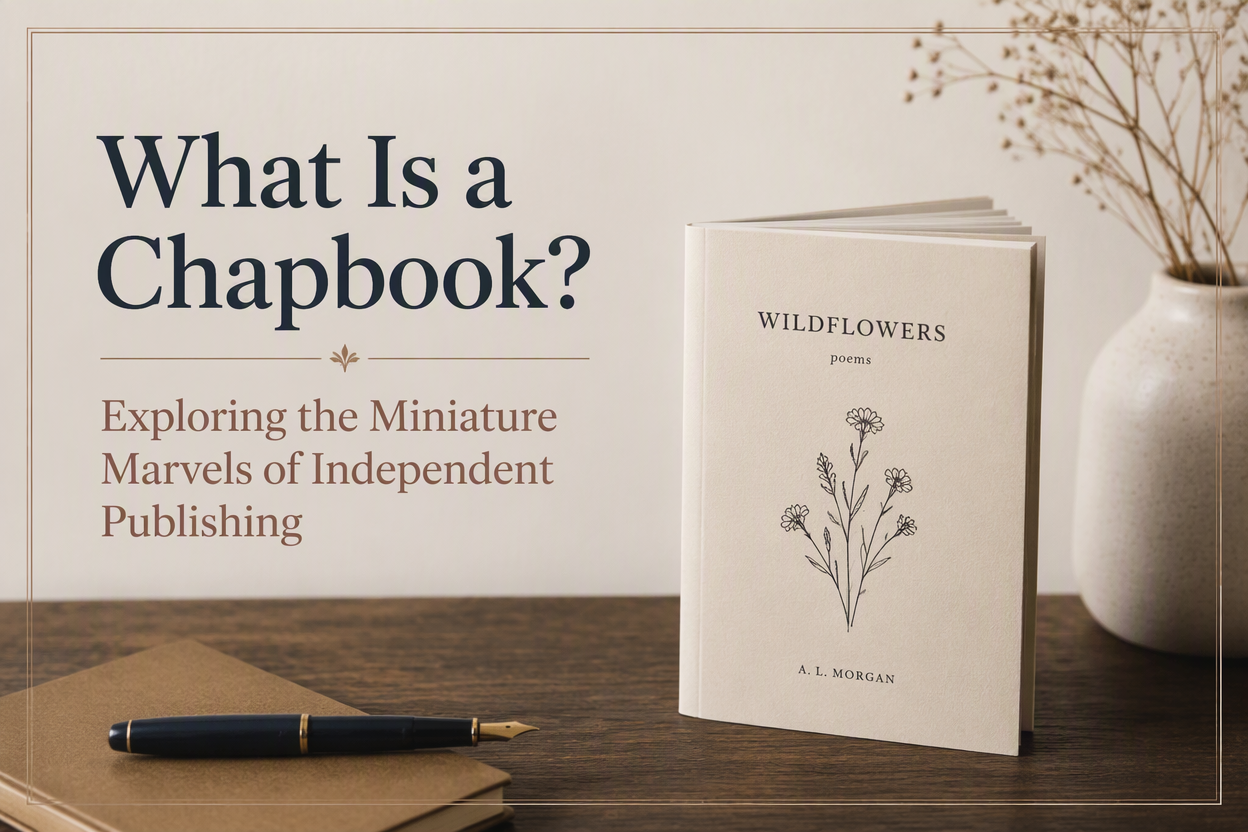
Every poet who has held a slim, hand-sewn booklet eventually asks, “What is a Chapbook?” because the form sits between a pamphlet, a small book, and a literary calling card. A chapbook gives you room for a focused body of work, usually poetry, short fiction, essays, or hybrid writing, without asking you to produce a full-length manuscript.
For an independent author, that size creates a useful publishing opportunity. You can test a theme, reach readers at a live event, submit to contests, or give your audience a physical object that feels personal and finished. The short length also exposes weak writing. Every page carries weight, so selection and sequence matter as much as the individual pieces.
I recommend treating a chapbook as a complete artistic project rather than a shortened book. Give it a clear center, a deliberate shape, and a cover that identifies its genre at a glance. The result can build your readership, sharpen your craft, and create a professional edition you can sell long before a full collection is ready.
Table of Contents
Chapbook Definition And Purpose
A chapbook is a small-format publication containing a limited, cohesive group of works. In contemporary literary publishing, the term usually describes a poetry collection of roughly 15 to 40 pages. Conventions vary by press, contest, genre, and binding method. Short fiction, flash fiction, creative nonfiction, visual poetry, and translated work can also fit the form.
Page count alone does not create a chapbook. For example, a stack of unrelated poems printed in a small booklet may be short. What it lacks is the shape readers expect from a collection. A strong chapbook gives the reader a concentrated experience. The poems may share an image system, a location, a speaker, a question, or a change that becomes visible across the pages.
A Focused Reading Experience
Think of the form as a short book with a narrow beam of light. For example, your collection might examine a parent’s illness, a year spent in a particular city, the language of work, or the emotional aftermath of a single relationship. You do not need to explain the subject in a preface. The ordering, recurring images, and shifts in voice should allow the subject to emerge through the work.
For your first draft, gather more pieces than you expect to use. Read them aloud, sort them by emotional movement, and mark repetitions in imagery or phrasing. Then cut the poems that repeat an idea without adding pressure or depth. A chapbook often grows stronger when it contains fewer pieces with more space around them.
Common Chapbook Formats
Traditional poetry chapbooks may use saddle stitching, perfect binding, folded sheets, or hand-sewn bindings. A digital chapbook can be a carefully designed PDF or an ebook. Print remains central to the form, since readers often encounter chapbooks at readings, book fairs, workshops, and small-press events.
Your format should follow your audience and budget. For example, a hand-sewn edition can feel intimate and distinctive. The trade-off is production time. A professionally printed booklet gives you consistency and a cleaner retail product. Before ordering copies, print one proof at its final size and inspect the margins, page breaks, paper weight, and cover thumbnail.

Chapbook History And Literary Tradition
The word chapbook comes from chapman, an old term for a traveling peddler who sold inexpensive goods and printed materials. Historical chapbooks circulated widely in Britain from the sixteenth century onward, carrying ballads, folktales, religious material, news, jokes, and practical information to readers who bought them from itinerant sellers or local shops. Encyclopaedia Britannica’s history of the chapbook describes the form as a cheaply produced booklet sold by chapmen.
These early publications were built for circulation. Their small size kept production and transport costs low, and their subjects were easy to understand or discuss. They reached readers outside formal literary institutions. That history still matters to independent authors because the chapbook has always connected writing with direct exchange between maker and reader.
From Street Literature To Small Press Publishing
The modern literary chapbook developed through little magazines, poetry communities, university presses, and independent printers. Small presses adopted the form because it allowed them to publish emerging writers without the production costs attached to a full collection. Authors gained a physical publication that could support readings, submissions, and future book projects.
The form also protects experimentation. A full-length book asks readers to spend several hours with your approach. A chapbook can introduce an unusual structure, visual element, or compressed genre blend in a package that feels manageable. That makes it a useful place to take a formal risk with discipline.
The Handmade Book Tradition
Handmade chapbooks continue the older connection between writing and physical craft. A poet may print a limited run with letterpress, bind each copy by hand, or add a small illustration or colophon. McGill Library’s digitized chapbook collection shows how varied the form has been, with subject categories that stretch from household manuals and songbooks to prophecies and travel narratives.
You do not need specialist equipment to honor that tradition. Choose a trim size, paper stock, and binding method that you can reproduce consistently. A simple booklet with clean typography will serve your writing better than an elaborate object that opens badly or hides the text in a crowded layout.
Reasons Authors Publish Chapbooks
A chapbook can give your writing a public life before you have enough material for a full collection. It can also help you understand how readers respond to a focused project. I often recommend the form to authors who have a strong sequence of poems, a group of flash pieces, or a short work that deserves physical treatment.
The format supports several publishing goals:
- Build a body of work: A chapbook gives you a finished publication to include in your author biography, submission packet, and reading materials.
- Test a theme: You can explore an idea in 20 to 35 pages before committing to a longer manuscript.
- Reach readers in person: A low-priced booklet works well at readings, workshops, conferences, and local markets.
- Create a gift edition: A signed, numbered run can give loyal readers a special object connected to your larger catalog.
- Develop your publishing skills: You will practice editing, interior layout, cover design, printing, pricing, and fulfillment on a manageable scale.
The trade-off deserves attention. A chapbook usually earns less per unit than a full book because its audience is smaller and per-page production costs can run steep. You also need to decide whether the project belongs in your main catalog, under a special imprint, or as a limited edition. Write down the purpose before you design the cover, since that decision will shape the print run, price, and sales channels.
Chapbooks And Full-Length Collections
A chapbook can function as a sample of a future collection, though publishing the same material twice requires a plan. You might revise several poems for the full manuscript, publish a related sequence, or treat the chapbook as a complete early edition that remains available to collectors. Readers should understand what they are buying from the product description.
For a first project, I would choose one of two paths. Publish a self-contained sequence that will remain distinct from your next book, or use the chapbook as a small edition of work that you will substantially revise later. Avoid presenting an unchanged chapbook as a new full collection unless the edition history is clear.
How To Create A Chapbook
Start with the manuscript, not the template. Read every piece aloud and identify the collection’s center in one sentence. A useful description might be, “These poems follow a daughter learning the vocabulary of her father’s dementia,” or, “These stories examine how service workers perform friendliness under financial pressure.” That sentence gives you a test for every inclusion.
Shape The Manuscript
Arrange the pieces so the reader experiences movement. An opening poem should establish the voice or central tension. The middle can complicate the initial promise through changes in pace, perspective, or form. The final piece should leave a lasting pressure or image, even when the collection ends with uncertainty.
Read the sequence in one sitting, then remove the titles and read the first lines in order. This exposes tonal gaps and repeated openings. I also print the table of contents and mark each piece by subject, tense, length, and emotional temperature. Patterns become visible on paper that go unnoticed in a word processor.
Design The Interior And Cover
Use generous margins, readable type, and consistent page numbers. Poetry needs breathing room, so resist the urge to fill every page. Short prose needs careful control of line length and paragraph spacing. Check whether a poem breaks across pages, whether a visual element reproduces clearly, and whether blank pages occur where the binding requires them.
Your cover should communicate the collection’s genre and tone at thumbnail size. For example, a quiet literary poetry chapbook may need restrained typography and one strong image. Horror microfiction calls for a different visual signal. Adazing’s book cover tools can help you test concepts early, especially when you need to compare type treatments and image placement before paying for final production. Use a template as a starting point, then check the result against books your readers already buy.
Proof, Print, And Price
Order a physical proof even when you plan to sell a digital edition. Read the proof away from your screen and ask two trusted readers to mark confusing page turns, typos, and design problems. A screen can hide a pale font, a cramped gutter, or a cover title that vanishes under ordinary light.
Price the chapbook from your real costs. Include editing, design, proofing, printing, packaging, transaction fees, and replacement copies for damaged orders. For example, a limited handmade edition can command a higher price because labor and materials belong to the product. A standard paperback needs a price that feels reasonable beside comparable poetry and short-form books.
Ways To Publish And Promote A Chapbook
You have several viable publishing routes. A small press may provide editorial support, distribution, and contest visibility. A contest submission can offer recognition and a print run, though the deadline and manuscript rules may be strict. Self-publishing gives you control over content, schedule, price, and edition size, along with responsibility for every production decision.
Study each press before submitting. Read recent winning titles, review the required page count, check rights language, and confirm whether the press accepts simultaneous submissions. For example, a press that publishes 20-page experimental poetry may be a poor fit for your 60-page novella, regardless of its reputation.
Build A Simple Sales Plan
Give the chapbook several places to find readers. Sell signed copies through your website, carry a small stock to readings, contact independent bookstores with a concise sell sheet, and offer copies to relevant writing groups. If you publish through Amazon KDP, treat the listing as one sales channel among several. The product page needs a clear description, accurate categories, strong keywords, and a cover that works at thumbnail size.
Promotion works best when it reflects the form. Share a short excerpt, record yourself reading one piece, explain the collection’s organizing question, or show a page from the physical edition. Ask ARC readers for specific feedback on the sequence and presentation. Their comments can improve the sales copy before launch. A chapbook’s limited audience still makes broad review campaigns less useful than direct contact with readers who already follow the subject.
Use The Chapbook To Support Your Larger Catalog
A chapbook can introduce readers to your voice and point them toward a full-length book, a newsletter, a workshop, or an upcoming reading. Add a brief author note or catalog page when it serves the reader. Keep the focus on the chapbook, then offer one clear path to find your other work.
Track which settings produce genuine conversations and repeat sales. For example, a poetry reading may outperform a large online discount because the form benefits from personal context. A themed newsletter may sell more copies than a general announcement. Record the results and adjust your print run rather than guessing at demand.
FAQs for What is a Chapbook? Exploring the Miniature Marvels of Independent Publishing
How Long Is A Chapbook?
Many literary chapbooks run from about 15 to 40 pages, with poetry presses often setting their own limits. Page count depends on the press, binding, trim size, and genre. Check a publisher’s current guidelines before editing toward a target.
Can A Chapbook Contain Fiction?
Yes. Short fiction, flash fiction, essays, translations, comics, and hybrid work can fit the form when the pieces create a coherent reading experience. A single novella or long story may also appear as a chapbook when the press defines the project that way.
Can I Self-Publish A Chapbook?
Yes. You can create a print edition, an ebook, a PDF, or several editions for different readers. Choose the format after you understand your budget and sales setting. A local reading may favor affordable stapled copies. Collectors may respond to signed, hand-bound editions.
Make The Small Format Count
A chapbook gives you a compact publishing project with real artistic and commercial value. Its size demands selection, sequence, and rigorous design, so you can use the process to strengthen both your manuscript and your publishing judgment.
Choose a focused body of work, define its purpose, create a physical proof, and place the finished edition in front of readers who care about its subject. I recommend starting with the strongest 20 to 30 pages you have, then shaping the collection until every piece earns its place.
