
Manuscripts that begin before the main story send readers looking for an answer to a familiar craft problem: what are prologues, and when do they belong? The answer affects how you shape your reader’s first promise. A prologue is an opening section that sits before the main narrative and supplies information, tension, or a viewpoint the first chapter cannot deliver as effectively. In practice, it earns its place only when it changes how the reader understands the story that follows.
I see authors add prologues for three common reasons. They want to create immediate suspense, explain a past event, or present a scene from a different point of view. Each reason can work. Each can also produce a slow opening that delays the character, conflict, and emotional problem your first chapter needs.
Think of a prologue as a deliberate change in distance. You might show the murder before introducing the detective, visit a kingdom’s founding myth before following the heir, or reveal a future disaster before returning to an ordinary morning. The device gives you reach across time, knowledge, and perspective. Use it with discipline, then test whether the story gains more than it spends.
Table of Contents
What A Prologue Does
A prologue gives the reader information that carries unusual weight before the main narrative begins. It can establish a threat, introduce a mystery, frame a historical event, or create dramatic irony by allowing the reader to know something a central character has yet to discover.
The word comes from the Greek roots for “before” and “speech.” In classical drama, a prologue introduced the situation before the action began, as Encyclopaedia Britannica records in its entry on prologues. Modern fiction has expanded the form. The underlying job stays familiar: give the reader a meaningful frame for the story ahead.
Information Beyond The First Chapter
Your prologue may take place decades before chapter one. It may follow a minor character who never appears again. It may show an event the protagonist cannot witness, such as a spaceship entering an enemy system or a child being hidden during a palace coup.
The distance matters. If the prologue follows the same character, in the same setting, during the same sequence of events as chapter one, you may have written a first chapter with an unusual label. That choice creates friction for the reader because the book opens twice.
Read the prologue and chapter one back-to-back. Write down the information each section gives the reader. If both sections introduce the same setting, conflict, and character goal, combine them unless the separation creates a clear dramatic effect.
A Contract With The Reader
Every opening signals what kind of reading experience lies ahead. Begin with political history, and you promise a story where systems and power matter. Open on a violent scene involving an unknown victim, and you promise danger and investigation. A brief myth about a cursed bloodline promises that the past will press against the present.
Readers remember those promises. If the main book never returns to the material raised in the prologue, the opening feels decorative. Draft the prologue’s promise in one sentence, then identify the scene, reveal, or decision in the main story that fulfills it.

When A Prologue Earns Its Place
A prologue earns its place when removing it weakens the reader’s understanding or reduces the story’s tension. The test has little to do with length. A 600-word prologue can be unnecessary, and a 3,000-word prologue can carry the premise of a single historical fantasy.
Useful Distance In Time
Time gives you a strong reason to use a prologue. A scene from the protagonist’s childhood can explain a wound that shapes every later decision. Show a battle from a previous generation, and you reveal why two nations still distrust each other. Jumping forward instead lets you show the cost of failure before the narrative returns to the moment when the characters still have choices.
Give the time shift a purpose beyond atmosphere. “This happened long ago” lacks pressure. “This old decision created the danger my protagonist faces now” gives the material a job.
Useful Distance In Knowledge
A prologue also works when the reader needs knowledge the viewpoint character cannot reach. In a mystery, you might show the crime and then follow the investigator who has no idea what occurred. In a horror novel, you might reveal the creature’s first appearance before introducing the family moving into its territory.
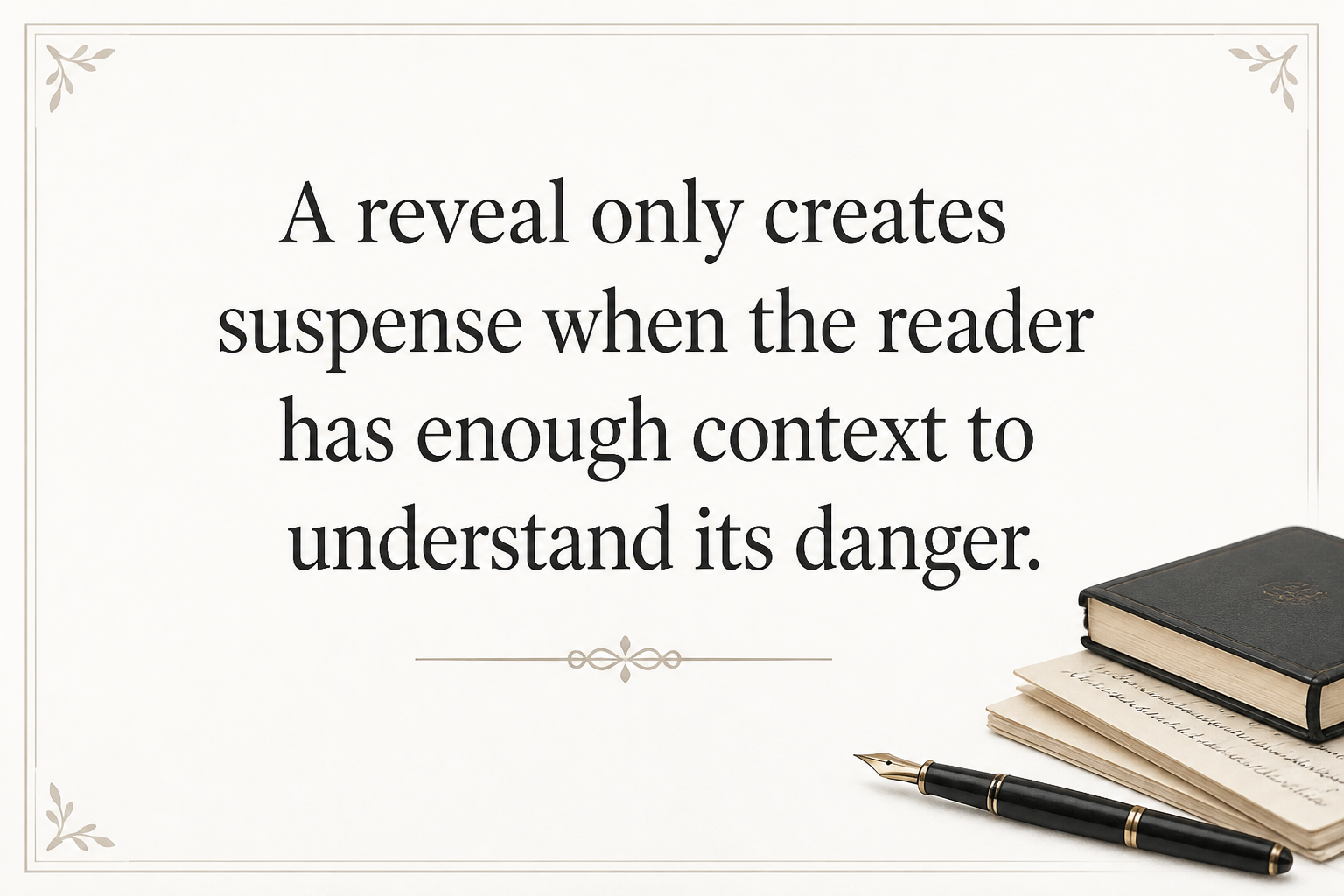
Handle this information carefully. A reveal only creates suspense when the reader has enough context to understand its danger. Name the person, object, or event with enough precision for the stakes to take shape. Confusion rarely produces curiosity for long.
I recommend asking whether the prologue gives the reader something to wonder about or merely withholds an answer. Curiosity creates forward motion. Withholding creates irritation when the reader cannot tell what matters.
Prologue Forms Across Genres
Genre sets expectations for what a prologue can accomplish. For example, a fantasy reader may accept a legend, prophecy, or historical battle because the genre often depends on layered history. Romance readers usually need emotional connection with the central relationship early, so a prologue should sharpen that relationship’s stakes rather than postpone the meeting for several chapters.
Thrillers often use prologues to present a crime, threat, or victim. The scene needs a precise disturbance. A masked figure entering a house provides less usable tension than a mother discovering that her locked bedroom contains a child’s shoe from a missing-person case.
Science fiction can use a prologue to establish a technological or political event that changes the world. Keep the scene embodied. Put a character under pressure while the reader learns what has changed. A page of explanation about an interstellar treaty rarely holds attention as well as a diplomat choosing which colony to abandon.
Historical fiction may benefit from a short opening tied to a documented event. The material should connect directly to the fictional character’s later problem. MasterClass, in its guide to writing a prologue, describes common uses such as setting context and creating suspense. Craft advice still depends on your genre, readership, and manuscript.
Fantasy And Historical Fiction
Worldbuilding tempts authors into writing a prologue that explains everything. Resist the encyclopedia impulse. Give the reader one charged moment that reveals how the world works through consequence. For example, a soldier might break an ancient law and pay for it in the same scene. A queen hears the name of a dead god spoken aloud. A village watches the river flow uphill for the first time and understands that something has gone wrong.
Then let chapter one introduce the world at human scale. Readers can absorb history more readily after they care about someone living inside it.
Mystery, Thriller, And Horror
Suspense depends on controlled information. A prologue can show the reader a danger that the protagonist will later approach, creating dramatic irony. End the scene with a change that raises the cost of the search that follows. A body vanishes, a witness lies, or a door opens that nobody should be able to unlock.
Keep the viewpoint stable and the scene specific. Mystery readers will forgive a short delay before the detective appears when the opening crime creates a strong puzzle. They will resent a vague threat that exists only to make the book sound ominous.
Common Prologue Failures
The most common prologue problem is distance without purpose. The author wants a grand opening, so the manuscript starts with a royal execution, an ancient battle, or a prophecy. Chapter one then moves to a farm, office, or classroom where the story becomes personal. The opening scene may be vivid. The reader still has no reason to invest in it until much later.
The False Start
A false start gives the reader a scene that the story cannot sustain. The prose may be polished, and the premise may sound promising. The prologue’s characters, tone, and conflict still disappear once chapter one begins. Readers have to reset their expectations before they can settle into the actual narrative.
Print the prologue and chapter one separately. Read chapter one without the prologue. If the chapter still establishes a clear character, desire, obstacle, and problem, ask what the prologue contributes beyond extra information. You may find a paragraph worth moving into the first chapter rather than a separate section worth preserving.
The Information Dump
An information dump places background ahead of drama. It explains a dynasty’s full history, lists the rules of magic, or describes a war in broad summary. Readers do need context. They rarely need all of it before a character faces a problem.
Cut every sentence that only explains history. Keep the details that alter a choice, create danger, or deepen a mystery. Then look for a scene where the remaining information can arrive through conflict. Your world will feel larger when characters have something to lose.
The Unpaid Mystery
Some prologues raise a question the novel never answers. This happens often with symbolic dreams, anonymous narrators, and ominous fragments. Mystery carries a cost. Each unanswered question asks the reader to remember, wait, and trust you.
List every question your prologue raises. Mark the chapter where each receives an answer or meaningful development. Questions with no destination need revision, removal, or a deliberate payoff added to the manuscript.
Drafting And Revising Your Prologue
Draft the prologue after you understand the central story, even if you plan to place it first. You need to know which information creates tension and which information merely satisfies your own curiosity about the fictional world. Early drafting often produces history. Revision turns selected history into pressure.
A Focused Drafting Test
Write the scene with a clear viewpoint character, a specific immediate goal, and a consequence that changes the reader’s expectations. Give the character something to lose within the scene. A prologue can be brief. It still needs movement.
Use the same standards you apply to chapter one. Open near a decision or disturbance. Ground the reader in a physical setting. Keep the prose concrete. End with a development that makes chapter one more urgent.
A Revision Checklist
During revision, answer these questions in writing:
- What does the prologue reveal that chapter one cannot reveal naturally?
- Which character owns the scene, and what does that character want?
- What question does the reader carry into chapter one?
- Where does the manuscript return to the prologue’s promise?
- Would the story gain speed if the material moved into chapter one, a later chapter, or a brief epigraph?
Ask two beta readers to begin with the prologue and two others to begin with chapter one. Compare where each group feels oriented, curious, or confused. A similar test applies to the cover: view the opening page at thumbnail size when you prepare your cover through Adazing’s book tools, keeping in mind that cover presentation and manuscript order stay separate decisions. A strong cover may earn the click, and the opening pages still have to earn the read.
Do not defend the prologue because you spent time writing it. Defend it only because the finished book needs it. If the opening works better as chapter one, give it that job and revise the surrounding pages to match.
FAQs for What Are Prologues? Understanding Their Role in Storytelling
How Long Should A Prologue Be?
A prologue should be as long as the scene requires and no longer. Many effective prologues run a few pages. A longer opening can work when it contains a complete dramatic event. Measure it by tension, clarity, and relevance. If the scene takes twenty pages to deliver one piece of background, look for a more active form.
Can a Prologue Have a Different Point of View?
Yes. A different viewpoint can give the reader knowledge the main character lacks or show an event outside the protagonist’s reach. Signal the shift through a clear voice, setting, and time marker when needed. Return to the main viewpoint with enough continuity that the reader understands why the opening matters.
Should Every Novel Have A Prologue?
No. Many novels begin more effectively with chapter one because the main character, conflict, and narrative voice arrive together. Add a prologue when it creates a distinct dramatic advantage. Remove it when it delays the story, repeats chapter one, or asks readers to care about material the novel never develops.
Give Your Opening A Clear Job
A prologue works when it changes the reader’s relationship to the story ahead. It can create dramatic irony, establish a buried cause, or place a threat in view before the protagonist understands it. Loose history has no claim on the reader simply because the author wrote it well.
Read your prologue beside chapter one, name its promise, and track the manuscript’s answer to that promise. When the scene creates pressure that the first chapter needs, keep it. When it delays the book you actually want to write, cut it with confidence.
