
Your reader understands types of symbolism through repeated images, choices, and consequences long before you explain what any symbol means. For example, a locked door can represent fear, secrecy, privilege, or a character’s refusal to change, depending on the story. Whichever meaning it takes on, the door gains its force from use, context, and pressure.
Symbolism gives a book a second line of meaning beneath the visible plot. For example, a dying houseplant in a mystery might track a detective’s neglected family life. Similarly, a repaired watch in a romance can carry a relationship’s history better than a page of backstory. Give a river a place in literary fiction, and it can mark distance, memory, danger, or renewal.
I recommend treating symbolism as story machinery rather than decoration. Choose an image your character can encounter naturally, connect it to a specific emotional problem, and let its meaning change as the character changes. Your reader should feel the pattern before you name it.
Table of Contents
What Symbolism Does For A Story
Symbolism turns an ordinary detail into a pressure point. The object remains part of the physical world. At the same time, it carries an idea that matters to the character. Consider a wedding ring, which can be jewelry, evidence, a promise, a burden, or all four in the same novel.
The strongest symbols create an exchange between the concrete and the abstract. You give the reader something visible, hearable, or touchable, then attach emotional and thematic weight through repetition. Picture a character who keeps washing a coffee mug after her brother dies. Washing it becomes a habit she can’t let go of, and the action tells the reader more than a paragraph declaring her grief.
Symbolism also compresses meaning. A recurring image can carry history without forcing you to explain every layer in dialogue. Readers enjoy making connections, and those connections draw them into the story. By supplying part of the meaning themselves, they come away with an experience that feels personal.
Use a symbol to sharpen a conflict already present in the manuscript. For example, an abandoned orchard fits a story about inheritance and family rupture. Similarly, a cracked phone screen suits a story about fractured identity or a relationship conducted through partial truths. Pick a symbol with no tie to that conflict, and it feels imported from a symbolism dictionary, an artificiality readers usually sense.
Theme And Image
Start with the thematic question beneath the plot. You might ask whether safety requires surrender, whether ambition damages intimacy, or whether memory deserves trust. Then search for physical images that can carry that question through scenes.
If your novel is about control, look at labeled jars, rigid schedules, sealed windows, or carefully pruned trees. A memoir about migration might call for suitcases, translated recipes, train routes, or a family photograph with someone missing. Either way, the image gives the theme a body.
Meaning Through Repetition
A single mention rarely creates a meaningful symbol. Repetition builds recognition, and variation builds interpretation. Say you show the same red scarf in a child’s early memory, in a box of belongings after a death, and in the final scene when the protagonist gives it away. Across those three moments, the scarf gathers meaning because its context changes.
Track each recurring image in your scene list, recording where it appears, who notices it, what the character wants in that moment, and what changes afterward. When an appearance adds atmosphere without adding pressure, delete it.

Major Types Of Symbolism In Fiction
Writers use several forms of symbolism, and a single image can belong to more than one. The useful distinction comes from how the symbol enters the story and how the reader learns its meaning.
Object Symbolism
Objects are the most familiar symbolic tools because they can recur without feeling forced. For example, a safe may represent secrecy, trust, authority, or a hidden past. Place a child’s red shoe in a grieving household, and it can stand for innocence, loss, or a parent’s refusal to accept reality.
Give the object a practical function first. In practice, a lock should keep someone out before it represents secrecy. Likewise, a knife should cut food before it suggests violence. This grounding in concrete use protects the symbol from becoming a prop that exists only to announce a theme.
Color Symbolism
Color can establish a pattern across a book. Its meaning depends heavily on genre and culture. Consider white, which can suggest purity in one scene and sterility or surrender in another. Green covers even more ground, signaling growth, envy, money, illness, or the unnatural.
Choose a limited palette, since two or three recurring colors give readers a pattern they can follow. If every color carries a special meaning, the page starts to resemble a paint chart, and the story loses focus.
Nature And Seasonal Symbolism
Weather, landscapes, animals, and seasons can echo a character’s inner conflict. For example, a drought can accompany a family’s emotional starvation. Spring cuts two ways, promising renewal and uncovering the damage winter concealed. Similarly, a crow can represent death in one tradition and intelligence or survival in another.
Keep nature independent of the character, so rain still affects traffic, crops, clothing, and setting. When weather exists only to mirror emotion, readers may see the author moving pieces on the stage. Let the environment create practical complications alongside its thematic meaning.
Traditional symbols can help readers enter a story. Their familiar meanings also come with baggage. For example, a rose may suggest love, secrecy, beauty, or decay. Research the cultural context of an image before assigning it a role, especially when your story uses religious, national, or Indigenous symbolism.
Character Actions As Living Symbols
The most persuasive symbols often appear in what characters do. Picture a character who repairs broken appliances, perhaps out of a belief that every relationship can be saved. When another character throws away photographs, she may be controlling memory rather than escaping it. In both cases, action gives symbolism motion.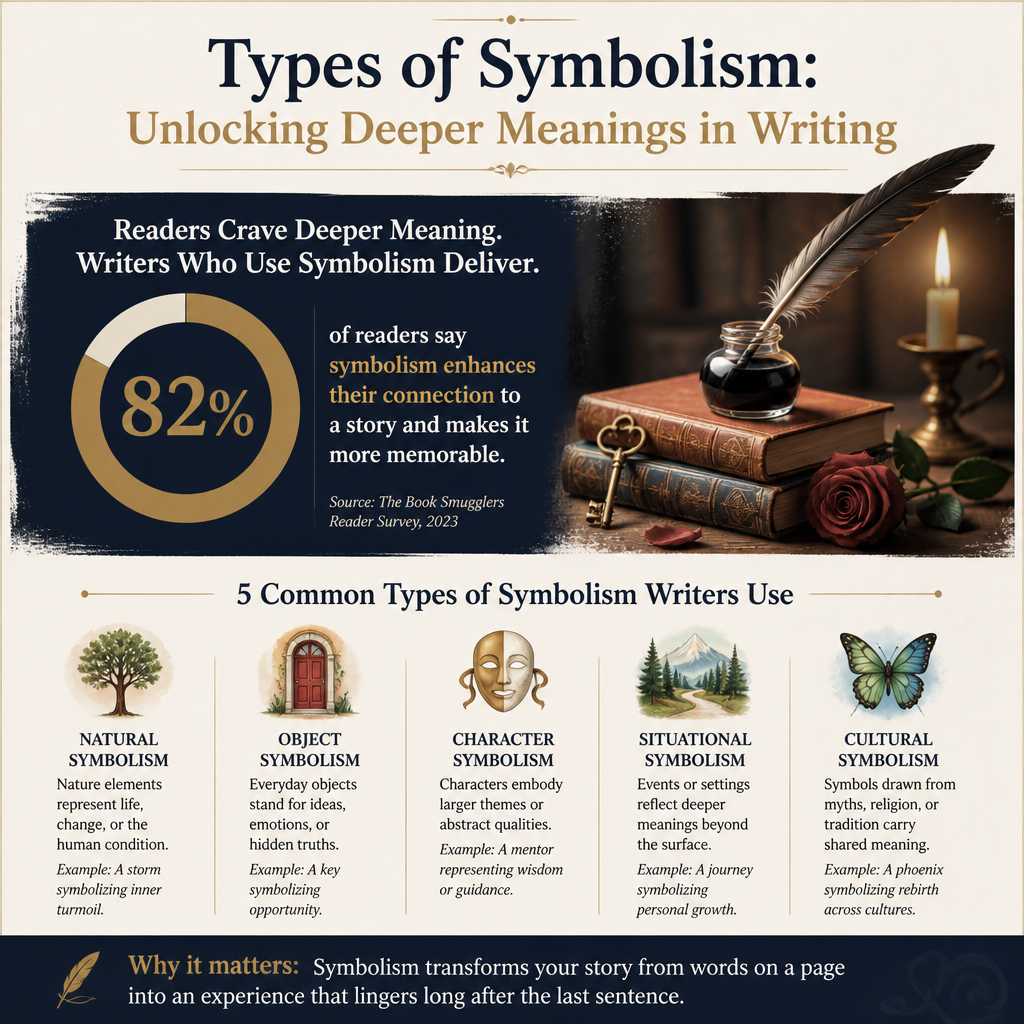
During revision, I look for repeated behavior by asking what the protagonist touches, saves, hides, cleans, destroys, or refuses to name. Those verbs may reveal the thematic pattern more clearly than the nouns in your setting description.
Ritual And Habit
Ritual carries symbolic weight because it repeats under pressure. For example, a father sets one extra plate at dinner after his daughter disappears. Similarly, a singer warms up with the same song before every performance. The same logic applies to a widow who keeps buying two train tickets.
Place the ritual at moments when its meaning can shift. Early in the book, the extra plate might express denial. Later, setting it might become an act of remembrance. Have the father remove it near the ending, and the gesture might signal acceptance, anger, or a new form of love.
Choices Under Pressure
A symbol becomes powerful when the character must choose what to do with it. Suppose a woman inherits a house filled with her mother’s unfinished paintings. Selling the house may represent freedom, betrayal, financial necessity, or an attempt to escape artistic comparison. The house turns into an active symbol once the decision costs her something.
Build a scene around the choice rather than explaining its meaning afterward. In that scene, the character can hesitate over the paintings, misread another person’s reaction, or handle them in a way that surprises the reader. Meaning grows through conflict.
Dialogue can carry symbolic meaning too. For example, a character who keeps saying, “I remember,” may be defending a version of the past. Refusing to use someone’s name can signal a different move, such as asserting distance or trying to erase a relationship. Watch for repeated phrases as you revise and test whether they grow heavier with each use.
Symbolism Across Genre And Form
Genre changes how much interpretive work readers expect from a symbol. Consider literary fiction, which often permits ambiguity across many chapters. In contrast, a thriller needs symbolic details to support tension and clue placement. Romance readers may welcome a recurring object that marks emotional intimacy, provided it develops alongside the relationship.
In fantasy, symbols can become part of the world’s rules. Take a crown, which may carry literal magic, political authority, family history, and moral danger. You need to establish which meanings operate inside the fictional world and which meanings belong to the reader’s interpretation.
Nonfiction calls for even more discipline with symbolism. For example, memoir writers can select an object that represents a period of life. That object still has to stay grounded in documented experience. Similarly, a leadership book might return to a bridge as a recurring image. In that case, each appearance should clarify a real decision, obstacle, or change.
Symbolism In A Book Cover
Your cover can introduce the book’s symbolic language before a reader opens the first page. A single object, color, or visual gap may communicate genre and emotional promise. Put a red door on a dark cover, and it suggests a different reading experience from a sunlit family table.
Test the cover at thumbnail size on an Amazon product page, where the symbol must remain legible beside dozens of competing covers. Adazing’s book cover tools can help you test concepts early. Only you can decide whether the image belongs to your story. Compare the draft with successful books in your category and ask whether your symbol supports the genre promise or fights it.
Symbolism In Titles And Blurbs
A title can make a recurring symbol memorable. For example, The Night Circus, The Road, and Beloved use compact images or charged words that invite interpretation. Rather than explaining the symbol, your title should raise a question that the unfolding plot can answer.
Use the blurb to place the symbol near the conflict. If your description centers on a locked room, it should tell readers what the room threatens, who wants access, and what the protagonist risks. Without stakes, a symbol reads as atmosphere. Tie it to a decision, and it gives readers a reason to keep reading.
A Revision Method For Stronger Symbols
Symbolism becomes easier to manage when you revise it as a system. I recommend a four-pass process that keeps the image connected to character, plot, and theme.
Pass One: Find The Pattern
Read your manuscript with a highlighter or search function, marking repeated objects, colors, sounds, gestures, locations, weather patterns, and phrases. Hold off on assigning meaning at this stage. For now, count appearances and record the scene for each one.
Look for concentration around turning points. A recurring image that appears only in quiet description may need a stronger connection to the plot. On the other hand, a symbol that shows up at every major decision already has useful structural support.
Pass Two: Define The Pressure
Write one sentence for each recurring image by completing this prompt: “This image matters because the character is trying to…” Finish it with a verb and a specific desire. For example, “The river matters because Mara is trying to leave her family” gives you material to work with. By comparison, “The river represents change” only gives you a label.
Then write a second sentence about how the meaning changes. Perhaps the river first represents escape, later danger, and finally a boundary Mara chooses to cross. A changing meaning keeps symbolism from becoming a repeated signpost.
Pass Three: Remove Explanation
Search for sentences that interpret the symbol immediately after you present it. Some explanation may help in a complex story. Repeat it too often, however, and it drains the mystery. Before you state the theme, give the reader the image, the character’s reaction, and the consequence.
Read the scene aloud and listen for abstract nouns such as freedom, grief, identity, and redemption, which often weigh symbolic writing down. Swap a few of them for physical action. Maybe the character locks the gate, folds the letter, or leaves the light on. Those small choices can carry the emotional work.
Pass Four: Test The Payoff
Review the final appearance of each major symbol. Has the image changed, gained context, or forced a decision? A recurring object deserves a final use that feels earned, and that payoff can be quiet. For example, a character may stop performing an old ritual, give an object to someone else, or see a familiar place without the old story attached to it.
Ask two beta readers what they noticed and what they think it means. Their answers will show whether the pattern reaches the page. Readers don’t have to catch every symbol. What matters is that the major ones register through emotion and consequence.
Common Symbolism Problems
Heavy-handed symbolism usually comes from explaining an image before the story has earned it. Picture a character who sees a caged bird and immediately thinks about her lack of freedom. A better approach is to give her a practical reason to visit the bird, then let the cage affect a later choice.
Another problem is inconsistency. Suppose a blue dress represents calm in chapter two and danger in chapter seven without any change in context. Symbolic meaning can shift when something triggers the change, so show the event that alters the character’s relationship to the color.
Overloaded symbols create a separate problem. For example, a mirror can represent vanity, identity, fractured memory, gender, aging, and social performance across a long novel. Choose the meanings your plot can support, since readers cannot track an image carrying every theme in the manuscript.
Borrowed symbols also need care. A raven, red rose, broken mirror, or storm arrives with familiar associations. You can lean on them as long as your story adds a specific history. Perhaps the raven has a behavior that belongs to this character’s world. Similarly, the rose could grow in soil tied to a family event. Personal detail turns a familiar image into yours.
Finally, resist adding symbols during every revision pass. Every manuscript needs clear objects with no job beyond being there. Let a chair be a chair, and a meal be a meal. Symbolism gains authority when the reader trusts the physical world around it.
FAQs for Types of Symbolism: Unlocking Deeper Meanings in Writing
What Are the Main Types of Symbolism In Writing?
Common forms include object symbolism, color symbolism, nature symbolism, seasonal symbolism, animal symbolism, setting symbolism, ritual symbolism, and symbolic character actions. A single image can work across several forms. For example, a river may function as a setting, a natural image, and a boundary tied to a character’s decision.
How Do I Add Symbolism Without Making My Writing Feel Forced?
Start with a recurring problem in the character’s life, then choose an image that can appear naturally during scenes. Before adding thematic weight, give the image a practical function. Repeat it at meaningful turning points, change its context, and cut appearances that do not affect a choice, emotion, or consequence.
Should I Explain What A Symbol Means?
Use explanation sparingly. Your reader can usually understand a symbol through repetition, character reaction, and plot consequence. Explain only when the cultural context, fictional rules, or narrative complexity demands clarity. A symbol works best when the reader discovers its meaning through participation.
Give Your Themes Something Concrete
Symbolism works when an idea becomes part of the character’s physical life. Choose an image, give it a practical role, repeat it under pressure, and let its meaning change as the plot unfolds. Then revise until the symbol supports the story without asking the reader to admire the machinery.
Rather than more symbols, your book needs the right few images placed where choices matter. I recommend finding one recurring object in your current draft today, tracking every appearance, and rewriting the weakest scene so the object creates pressure. A concrete detail can carry an entire theme when your story gives it somewhere to go.
