
Foreshadowing gives your reader a promise before the plot explains it. A misplaced letter, a character who refuses to enter a certain room, or a casual mention of a storm can prepare the story’s next turn and make the eventual reveal feel earned.
The device works because readers are constantly forming predictions. Few of them guess the exact event. They do sense when a detail carries weight, and the best foreshadowing builds that pressure without waving a sign over the sentence.
I treat foreshadowing as a contract with the reader. Early in the draft, I plant information, give it a natural reason to exist, and pay it off later. Across a novel, you can use several types of foreshadowing, as long as each one grows out of the character, the genre, and the scene.
Table of Contents
Foreshadowing Creates A Promise
Foreshadowing is a literary device that hints at a later event through details, dialogue, imagery, structure, or character behavior. The Encyclopaedia Britannica entry on foreshadowing describes it as the arrangement of scenes and events that prepares the reader, to some degree, for what happens later in the story. The hint may be obvious on a second reading and nearly invisible on the first.
Your task is to create anticipation without stealing the reader’s discovery. For example, a murder mystery can mention a rare poison in chapter two. In a romance, one character might keep an old photograph close without explaining why. Establish early in a fantasy novel that iron disrupts a certain kind of magic, and you give the climax a rule to test. Each detail points forward and still does real work in the current scene.
Promises Through Objects
Objects make strong foreshadowing because readers can remember them. Picture a silver lighter tucked in a detective’s desk drawer, then found at a crime scene fifty pages later. A child’s red scarf can do the same job, passing as a splash of color until the final chapter reveals who left it beside the river.
Give the object a reason to appear before it matters. In the detective’s case, the lighter can start a fire long before anyone connects it to a crime. Losing the scarf gives the child something to complain about, so its first mention reads as ordinary family noise. A detail that exists only to plant a clue feels artificial, especially when the prose draws attention to it.
Promises Through Dialogue
Dialogue can forecast danger through a warning, a boast, a secret, or an offhand statement. For example, a soldier says, “I never miss twice,” and the line becomes meaningful after his first failed shot. In another case, a mother tells her daughter, “Your brother always comes home before dark,” making the sentence more unsettling once evening arrives.
Keep the speaker’s motive in view, since people rarely announce the theme of their own downfall in polished language. What they say usually grows out of fear, pride, habit, or incomplete knowledge, and a believable line shaped by those pressures carries more weight than a carefully engineered prophecy.
When you revise a chapter, underline details that could matter later, then ask whether each one has a present purpose and a future possibility. Any clue that exists only to point toward the plot can go.
Direct Foreshadowing In Genre Fiction
Direct foreshadowing tells the reader that trouble or change is coming. It can appear as a prediction, prophecy, warning, dream, headline, chapter epigraph, or explicit threat. Readers accept direct signals readily in genres that establish a strong relationship with fate, such as fantasy, horror, thriller, and mythic fiction.
The danger comes from revealing too much about how the promise will be kept. Picture a narrator who says, “By dawn, three people would be dead.” That line builds suspense around identity and cause, and naming the killer, weapon, location, and motive in the very next scene leaves the reader little to uncover.
Prophecy And Prediction
Prophecy works best when its language permits more than one interpretation. For example, a ruler hears that “the crown will fall beneath the eastern star” and assumes an enemy will invade from the east. The actual meaning may involve a child born under that star, a literal crown dropped from a balcony, or a political system collapsing under its own weight.
Give the prophecy a cost by letting someone misunderstand it, exploit it, resist it, or build a life around avoiding it. Once a prediction changes how characters behave, it stops being decoration and becomes plot.
Warnings And Threats
A warning creates a boundary. Consider a groundskeeper who insists that no one open the locked greenhouse. In a tenser setup, a veteran urges the protagonist to leave town before the church bell rings three times. Either line works only when the reader understands why crossing that boundary matters.
Let the warning collide with desire. Take a protagonist who enters the greenhouse because the missing child left a shoe inside. In the other story, the detective heads back to town the moment the only witness calls from the church. The choice should arise from character pressure, so the eventual danger feels like a result of the story rather than a punishment delivered by the author.
Direct foreshadowing suits a high-speed thriller where the reader wants immediate danger. In contrast, a quiet family drama may need a smaller signal, such as a parent rehearsing an apology or a character packing an extra suitcase. Keep each clue in step with the book’s overall intensity.
Subtle Foreshadowing Through Pattern And Image
Subtle foreshadowing hides inside repetition, setting, symbolism, and sensory detail. The reader may register the pattern without naming it. When it returns later with a changed meaning, the earlier scenes gain depth.
Symbolic foreshadowing works when the image connects to the book’s central conflict. For example, a cracked window can suggest a family’s fractured trust. Growing beautiful flowers in poisoned soil, and the garden, can mirror a community built on concealed harm. Either image still needs a concrete role in the scene before it can carry thematic weight.
Repetition With Variation
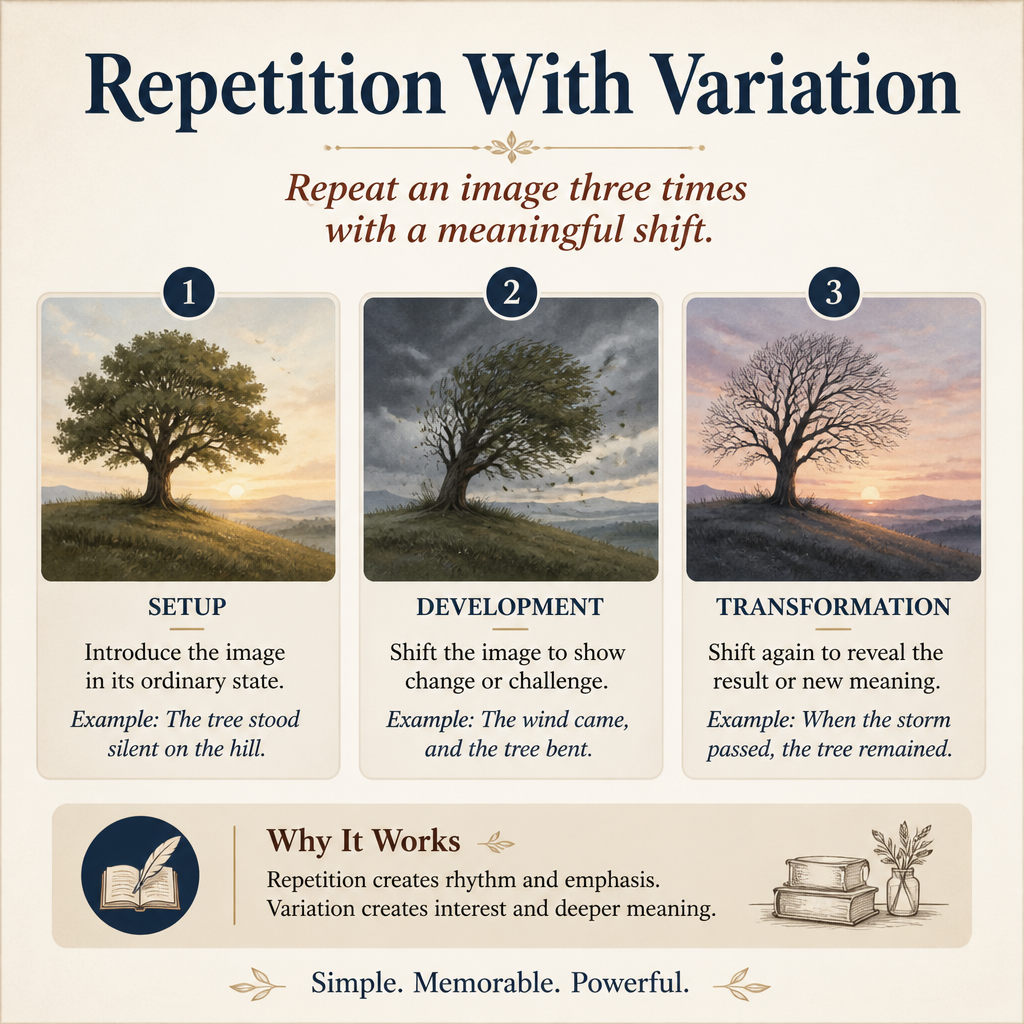
Repeat an image three times, letting its meaning evolve from one scene to the next. Take a train whistle, which first stirs hope in your protagonist. Later, the same whistle cuts through an argument, and by its third appearance it signals the departure of someone who cannot return. Traced across the novel, that sound becomes a thread, and every recurrence reshapes the reader’s understanding.
Repetition requires restraint. If every chapter includes the same raven, clock, or blue door, the symbol becomes wallpaper. Choose a few appearances, vary the context, and allow the reader to notice the pattern without explaining it in dialogue.
Setting As A Warning
Place can forecast events through physical conditions. Consider a bridge with missing boards. Long before anyone steps onto it, the reader braces for a dangerous crossing. Seal one room of a house away from the family, and the closed door hints at buried history. In a coastal village built below the tide line, the future problem is obvious. The characters may still have practical reasons for staying.
Use the setting to build pressure before the plot needs it. For example, the unreliable bridge can first appear during an ordinary delivery. Later, let the tide reach the lower steps as a family sits down to eat. Details like these establish the world and quietly prepare the reader for later trouble.
During revision, list every repeated image and location, noting the first appearance, each return, and the final use. When an image never develops, give it a progression or cut it.
Character-Based Foreshadowing
Character behavior often creates the strongest foreshadowing because it grows from choice. Consider how a compulsive liar will eventually twist the one fact everyone depends on. Put a generous friend under enough pressure, and old favors may suddenly come due. Someone who avoids conflict can do even more damage, since every conversation they refuse to have feeds a larger crisis.
Behavior carries more conviction than explanation. Telling us about a character’s temper does little. Show them folding a napkin with slow precision after an insult, and the trait takes shape. When the restraint finally breaks, the event feels connected to the person we have watched.
Flaws Under Pressure
Plant the flaw in a low-stakes scene before you test it in a high-stakes one. For example, a protagonist who hides a small mistake from a colleague may one day hide a dangerous truth from the police. Let a hero treat every favor as a debt, and refusing help could cost them an ally.
Give the character chances to choose differently. Foreshadowing becomes stronger when the reader sees the available path and watches the character reject it. Whatever follows then grows from agency, which gives the emotional payoff more force.
Skills And Secrets
Skills can forecast action scenes without making the hero feel magically prepared. Consider an amateur climber who stops to repair a loose boot lace. In a quieter story, a librarian might recognize military shorthand at a glance. Give an anxious driver a habit of memorizing street layouts, and a car chase suddenly has a foundation. Because these details already belong to the character’s life, they can pay off without strain.
Secrets work through omission and defensive behavior. Take a character who leaves every family photograph face down. That habit alone is a clue. Picture a witness who remembers the color of a stranger’s gloves and draws a blank on the face. Such selective memory may mean the witness is protecting someone. Avoid having the character explain the secret before the plot earns the answer.
For each major character, write three lines: a repeated behavior, a concealed fact, and a pressure point. Place each element in an early scene with a believable surface purpose. Then design a later choice that forces the element into the open.
Payoffs, Red Herrings, And Revision
Foreshadowing earns its place through payoff. The later event should answer the earlier hint, deepen it, or deliberately overturn the reader’s first interpretation. A clue that never returns feels like a loose thread, however beautifully it was written.
Red herrings require the same discipline as genuine clues. They should emerge from the story’s circumstances and point toward a believable misreading. For example, a suspicious neighbor who really is repairing a broken fence can mislead the reader for a chapter. In contrast, a random stranger introduced only to attract suspicion will feel like a trap.
Planting And Paying Off
During revision, keep a foreshadowing ledger that records the detail, its first appearance, the reader’s likely interpretation, and the eventual payoff. This simple record exposes two common problems: clues with no destination and payoffs with no preparation.
Once you know the ending, reread the opening chapters, and you will spot places to plant small signals. Slip them in through action, setting, or dialogue, and resist copying the answer into the opening scene. Readers want a trail to follow, and a transcript of the final chapter leaves them nothing to discover.
Testing The Reader’s Experience
Ask beta readers where they first sensed the reveal coming. Their answers show you how visible the pattern is. If nobody noticed any preparation, add a clue. If every reader cracks the mystery too early, soften the wording, add a competing interpretation, or move one signal a few chapters down the line.
Genre expectations affect the test. For example, mystery readers search for evidence. In romance, attention settles on emotional barriers and signs of commitment. Pick up a horror novel, and you start noticing rules, thresholds, and changes in the ordinary world. The same clue can feel subtle in a literary novel and loud in a thriller.
I also recommend reading the manuscript in two passes. On the first, read for pleasure and mark moments where expectation builds. The second pass belongs to your editor’s eye, so inspect every planted detail closely. When a scene feels too obvious, Adazing tools such as QuickWrite can help you generate alternate clue language. Your final choice should still come from the character and the story’s established world.
Before publication, check the first three chapters, the midpoint, and the final quarter. Those locations carry much of the reader’s sense of direction. A well-designed cover and blurb can bring the right audience to the book. Once those readers arrive, the manuscript has to reward the expectations the packaging created.
FAQs For Types Of Foreshadowing Every Writer Should Know
How Much Foreshadowing Should A Novel Include?
Use enough to make major turns feel prepared and few enough to preserve discovery. I usually examine each major reversal and ask whether the reader has received at least two plausible signals. A warning might sit in the foreground. Beneath it, a repeated image or character habit can do quieter work.
Can Foreshadowing Be Too Obvious?
Yes. A clue becomes too obvious when it has no present purpose and the prose pauses to announce its importance. Give the detail a reason to exist in the scene, then let later events increase its meaning. You can also place a second interpretation beside it so the reader has a reasonable path to follow.
What Is The Difference Between Foreshadowing And A Hint?
A hint usually points toward information the reader can discover soon. Foreshadowing prepares the reader for a later event, pattern, or emotional turn across a larger stretch of the story. The terms overlap in everyday craft discussion. Of the two, foreshadowing generally carries more structural weight.
Make Every Early Detail Earn Its Future
Strong foreshadowing lets an ending surprise the reader and still feel inevitable. Details can live in character behavior, objects, setting, dialogue, and repeated images. Give each one a present purpose, then pay it off through a choice that changes the story.
When you revise, return to the chapters before every major reveal and find the moments a reader might have felt it coming. Strengthen those moments without explaining them. Your goal is simple: after the final page, the reader should want to look back and see that the story was telling the truth all along.
