
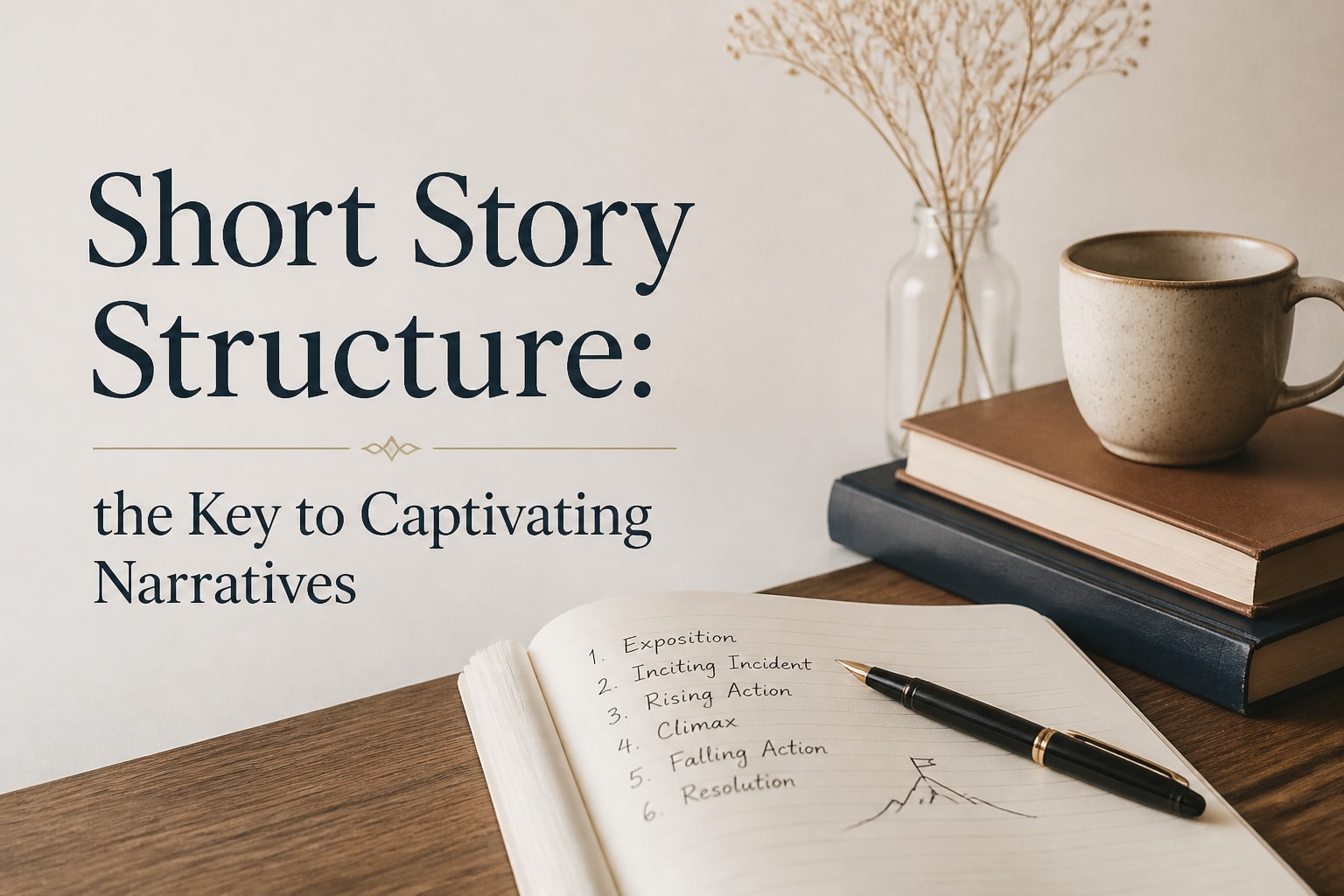
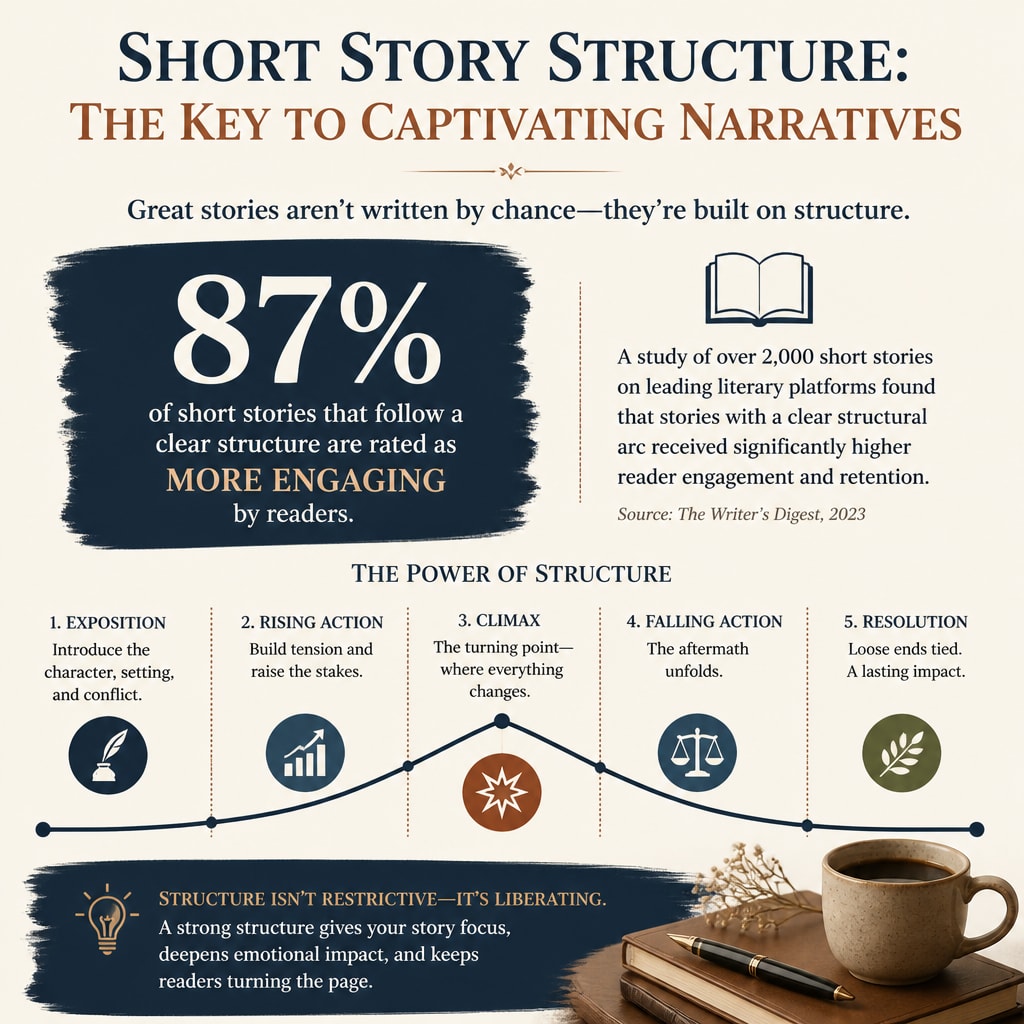
In a strong opening, short story structure does more than arrange scenes. It builds tension around a human want and drives the protagonist toward a choice before the reader’s attention wanders. This urgency matters because a short story has little room to wait. In a novel, you can spend pages letting a relationship or mystery build weight. Short fiction has to earn the same investment in far fewer pages, so each scene needs to change what the protagonist understands, wants, or risks.
This requirement trips up writers who treat short fiction as a compressed novel. They introduce several characters, explain a sprawling history, visit three locations, and then rush the ending because they have spent their word budget. A compelling short story avoids such crowding by following a narrower emotional and dramatic movement. To find this movement, pick one central disturbance, hand your protagonist a meaningful decision, and let each paragraph raise its price.
With so much resting on one decision, I recommend building your outline around change rather than page count. Ask what your character believes at the start, what event cracks this conviction, and what final choice reveals who they have become. Those three answers give you a working frame before you spend hours polishing sentences you might later cut.
Table of Contents
The Story Engine and Central Pressure
Short stories need pressure from the first page. It can come from a deadline, a secret, a threat, a desire, or a contradiction the protagonist can no longer ignore. Whatever the source, it has to demand a response the protagonist cannot postpone.
Start by naming the disturbance in a single sentence. For example, a recently widowed baker finds a wedding ring inside a loaf prepared for a stranger. From one image, you now have a person, a discovery, and a mystery with several threads. Who placed the ring there? Why does the baker recognize it? What happens if she delivers the loaf?
Those unknowns gain shape when the discovery collides with a specific want. Suppose the baker wants to keep her family business alive after her husband’s death. Now she must choose between guarding the shop’s reputation and revealing a secret to save someone else from a damaging marriage. This single conflict can carry the whole plot, so you don’t need five subplots to create depth.
One Protagonist with a Difficult Want
Give your protagonist a want you can state in plain language. Consider a protagonist who wants to keep the shop, find her brother, confess the affair, leave the town, or get through the dinner without revealing the diagnosis. A clear goal lets the reader judge each scene by whether the character inches closer to it.
Add a deeper need beneath what your protagonist openly wants. In the baker’s case, she may want to save her shop and need to stop hiding from grief in her work. This inner movement gives the ending emotional weight, even if the external plot stays small. Write both the want and the need into your outline before drafting so you keep sight of what gives the ending its weight.
A Problem That Tightens
Your first complication should leave the original problem harder to solve. For example, finding the ring opens a mystery. Stakes rise when the baker realizes the ring belongs to her sister. They climb again when she finds out her sister intends to marry the person behind an old family wound.
To keep this escalation honest, check whether each new event leaves your protagonist with fewer options. A good complication closes one door and makes another door more expensive to open. If the protagonist can return to ordinary life without losing anything, the story’s pressure has leaked out.

The Opening and the First Turn
Your first paragraph should place the reader inside a situation already in motion. Open on a choice, discovery, interruption, or problem with real consequences attached. Description can wait until the reader has a reason to care about the room.
The difference becomes clear in two possible openings. “Mara had worked at the bakery for twenty years, and the town had changed around it” supplies background without immediate tension. In contrast, “Mara cut into the wedding loaf and found a gold ring pressed into the center” drops a puzzle straight into the reader’s lap. The ring line also plants small mysteries for you to resolve over the coming pages.
Background with a Purpose
Backstory earns space when it changes the meaning of the present scene. For example, Mara’s twenty years at the bakery start to matter once she recognizes the ring as her sister’s. Before this recognition, those decades are only information waiting for a reason.
To hold history back until it earns a place, draft the opening with only the facts the reader needs to understand the disturbance. On revision, mark each sentence explaining the past. Keep any line sharpening the current decision, and move the rest into later scenes or cut them. A short story cannot carry a museum of backstory on its first page.
The First Turn
The first turn changes the protagonist’s understanding of the problem. In Mara’s case, the ring passes for an anonymous object until she spots the initials engraved inside the band. Those initials turn curiosity into personal danger.
Since danger needs time to unfold, place the turn early enough to leave room for its consequences. No rigid page rule applies here, since literary fiction and suspense distribute information differently. What matters is a clear shift from ordinary circumstances to a situation already coming apart. Once the shift lands, the protagonist can no longer stand still.
The Middle and Escalating Choices
The middle of a short story works through decisions. Each one should reveal character and leave a harder choice waiting behind it. Without such a decision, even beautifully written mood and scenery belong in the margins of your draft.
Suppose Mara’s first decision is to hide the ring. The silence protects her sister’s privacy and also draws Mara into the upcoming wedding as an accomplice. She then has to choose whether to confront her sister, contact the groom, or attend the ceremony in silence. Each option carries a different moral cost.
Cause and Effect Between Scenes
Write a one-line consequence beneath each scene in your outline. Phrase it as a chain, where the protagonist does X, another person responds with Y, and the protagonist then has to weigh Z. The chain exposes scenes sitting beside the plot without driving it.
Driving the plot means each conversation reshapes the next, and each failed attempt alters how the protagonist tries again. Even a quiet story needs movement in the form of changed knowledge, changed relationships, or changed willingness to act.
Information and Suspense
Suspense depends on controlled knowledge. Writers manage it in three ways, giving the reader more information than the protagonist, less, or the same amount at a different pace. Each arrangement shapes a distinct reading experience.
Mara’s situation shows how far those arrangements can pull a single premise apart. In a mystery, you would withhold the identity of the person who placed the ring. A psychological version reveals this person early and holds back Mara’s reason for protecting them. Write it as literary fiction, and the reader learns both facts early, so tension builds around whether Mara can live with the decision they make. Pick the unknown your ending can resolve with the most force.
With the unknown chosen, read the draft once and mark each reveal. If several paragraphs explain the same fact, combine them. When the final reveal arrives without preparation, plant a physical detail, a line of dialogue, or a behavior earlier so it feels earned.
The Climax and Emotional Turn
The climax arrives when the protagonist must act under the greatest pressure. Pressure at this level can arrive without a chase, an argument, or a public confession. When the story has prepared the choice, a woman deleting a message, opening a door, signing a form, or telling one precise truth can carry the full force of a climax.
Those small acts gain force when they grow out of the protagonist’s earlier decisions. For example, Mara has hidden the ring, lied to her sister, and watched the wedding approach. At the ceremony, she can hand over the ring, remain silent, or reveal why she kept it. The strongest choice grows from her established character and makes her pay for it.
The External and Internal Payoff
Give the ending an external result and an internal result. The external result settles what happens to the ring, the wedding, or the shop. Its internal counterpart reveals what Mara now understands about grief, loyalty, or her own need for control.
Neither result has to be tidy. Consider how a successful confession might end a marriage and preserve a sister’s trust. Saving the family business might even require Mara to sell it. Short fiction often gains power by resolving the central decision and letting the characters’ larger lives continue past the last page.
The Final Image
A final image can carry the story’s emotional residue. Picture Mara placing an ordinary loaf in the display case and leaving the wedding cake untouched in the kitchen. An image like this gives the reader something concrete to hold after the decision.
For the strongest effect, tie the image to the story’s central object or action. Leave its meaning unexplained and trust the details you planted earlier to carry it. End the draft the moment the emotional movement finishes.
The Revision Pass for Short Fiction
Revision is where short story structure takes its final shape. I start by writing the protagonist’s want, the first disturbance, the turning point, and the climax as single sentences. A vague summary usually signals a structural problem, so save line edits for later.
Once those four sentences hold up, I check each scene for a change in knowledge, desire, or risk. Some scenes carry two or all three. Any scene showing none has to earn its place through exceptional voice or leave the draft.
The Compression Pass
Cut repeated explanations, arrival scenes, routine greetings, and dialogue giving two characters information they already share. Save your space for details revealing character under pressure. A single trembling hand can carry more than a paragraph explaining fear.
Dialogue needs the same economy, so read it aloud. People rarely answer exactly what they are asked, especially when an honest reply threatens their self-image. Give each speaker a private goal for the exchange, then revise any line sounding like authorial explanation.
The Clarity Pass
Check pronouns, time shifts, scene entrances, and the order of revelations. Confusion in these areas can build suspense for a sentence or two before it hardens into distance. Readers should spend their curiosity on what a character will do next, and never on who just entered the room.
To catch those slips, ask three test readers to mark the moments when the story’s pressure climbed and when their attention sagged. Skip asking whether they liked it, since their exact points of confusion or impatience give you more useful revision material than general praise.
Beyond test readers, a few tools can help during this stage. I use a basic outline for structure, a read-aloud pass for rhythm, and writing software such as Adazing’s QuickWrite when I need prompts to test alternate scenes or character motives. I treat its suggestions as raw material for revision and keep only those fitting my protagonist’s established character.
FAQs for Short Story Structure: The Foundation of Captivating Narratives
How long should a short story be?
Length depends on the publication, contest, and genre, so check the submission guidelines before setting a word count target. From a craft standpoint, a short story ends once the central decision has produced its emotional and dramatic result. Until then, add scenes only when they increase pressure, deepen the choice, or change the reader’s understanding.
Does every short story need a twist ending?
No. A twist works best when the story plants evidence and then recasts earlier events. Twist-free endings can satisfy just as fully through an earned realization, an irreversible choice, or a quiet consequence. Let the protagonist’s movement decide the form, and skip any surprise added purely for effect.
How do I fix a short story that feels too broad?
Choose one protagonist, one central disturbance, and one unavoidable decision. Next, remove secondary characters with no stake in the decision. From there, combine locations, compress the timeline, and move background into scenes where the past reshapes present action.
Structure That Leaves a Mark
Captivating short fiction depends on concentrated change. To build it, give a character a specific want, interrupt it with a problem, tighten the available choices, and end with a costly decision. When each part serves the same pressure, the structure stays visible.
To keep the pressure steady, draft the story in scenes and revise from the inside out. Begin with the protagonist’s change, then move to cause and effect, information, pacing, and language. When each scene earns its space, your short story can feel larger than its word count, since the reader carries its unresolved human dilemma beyond the final line.
